

Directed by Laura Ulloa, BfNA explores and designs for the reciprocal dynamics between environments, cognition and collective adaptation.

[About Us]
Architecture for Human Behaviour
The Science of Space

3
4
5
0
4
9
9
0
1
%
of variance in a child's learning progress can be linked to the physical quality of the classroom. Space is not the background of equity. It is one of its instruments.
Barrett et al. (2015) / HEAD Project / Salford / n=751
+
0
1
2
4
5
6
0
4
9
%
improvement in cognitive performance has been documented in environments with better ventilation, daylight, thermal comfort, and material/biophilic quality.
Allen et al. (2016) / Harvard CogFx Study
ESG + ROI
Environmental intelligence links health, performance, retention, inclusion, climate responsibility, and long-term asset value / turning buildings into measurable social and ecological infrastructure.
WHO / WELL / GWI / post-occupancy research

Our Philosophy
[What Space Does]
The body reads an environment before it explains it. Light, air, acoustics, density, thresholds, movement, texture and rhythm continuously shape attention, stress, memory and behaviour. Architecture is therefore never neutral.
[Environmental Intelligence]
A building is not sustainable solely because it consumes less energy. It must also sustain bodies, communities and ecosystems. BfNA links environmental performance to cognition, inclusion, neurodiverse accessibility, social resilience and long-term ecological adaptation.
[Enriched Environments]
Enriched environments are not luxuries. They support attention, play, learning, recovery, social contact and resilience. For BfNA, environmental quality must extend beyond exceptional projects into schools, housing, healthcare and public infrastructure.
Our Approach
[Sensing, Mapping, Building.]
BfNA operates as a neuro-motion social experience laboratory working across architecture, behaviour, movement and environmental adaptation. Three interconnected systems nourish the practice: neural science observation, real-time data collection and environmental sensing; adaptive behavioural and spatial analysis; and experimental material ecologies developed through embodied research and contextual construction.
01
{MEASURE}
[behavioural sensing / environmental observation / neural science methods / real-time conditions]
We combine behavioural mapping, environmental sensing, movement analysis, neural science methods and real-time observation systems to identify how environments support or weaken attention, recovery, social interaction and adaptation.
02
{EVALUATE}
[spatial intelligence / behavioural analysis / environmental performance / adaptive feedback systems]
Occupied environments become learning systems. Spatial intelligence emerges through perception-action loops, environmental feedback and lived experience. Data informs future design, health strategies, ESG frameworks and adaptive spatial systems.
03
{MATERIALISE}
[ecological and bio-materials / contextual construction / embodied environments / adaptive structures]
Material is climatic, cultural and behavioural information. Through contextual material research, adaptive structures and embodied experimentation, BfNA develops environments connecting ecology, memory, construction and human behaviour.

Laura Ulloa
From Invisible Cities / Invisible Forces, Mindwalks and Minor Mind to built and competition-winning projects developed with Sou Fujimoto Architects, Dietmar Feichtinger, Wilmotte & Associés, Ferrier Marchetti and Fuksas across multiple typologies and scales, from hybrid buildings to major infrastructural and territorial developments ranging from 25,000 to 600,000 sqm, her work investigates how environments shape cognition, movement and collective behaviour through shifting conditions of continuity, interruption and adaptation.
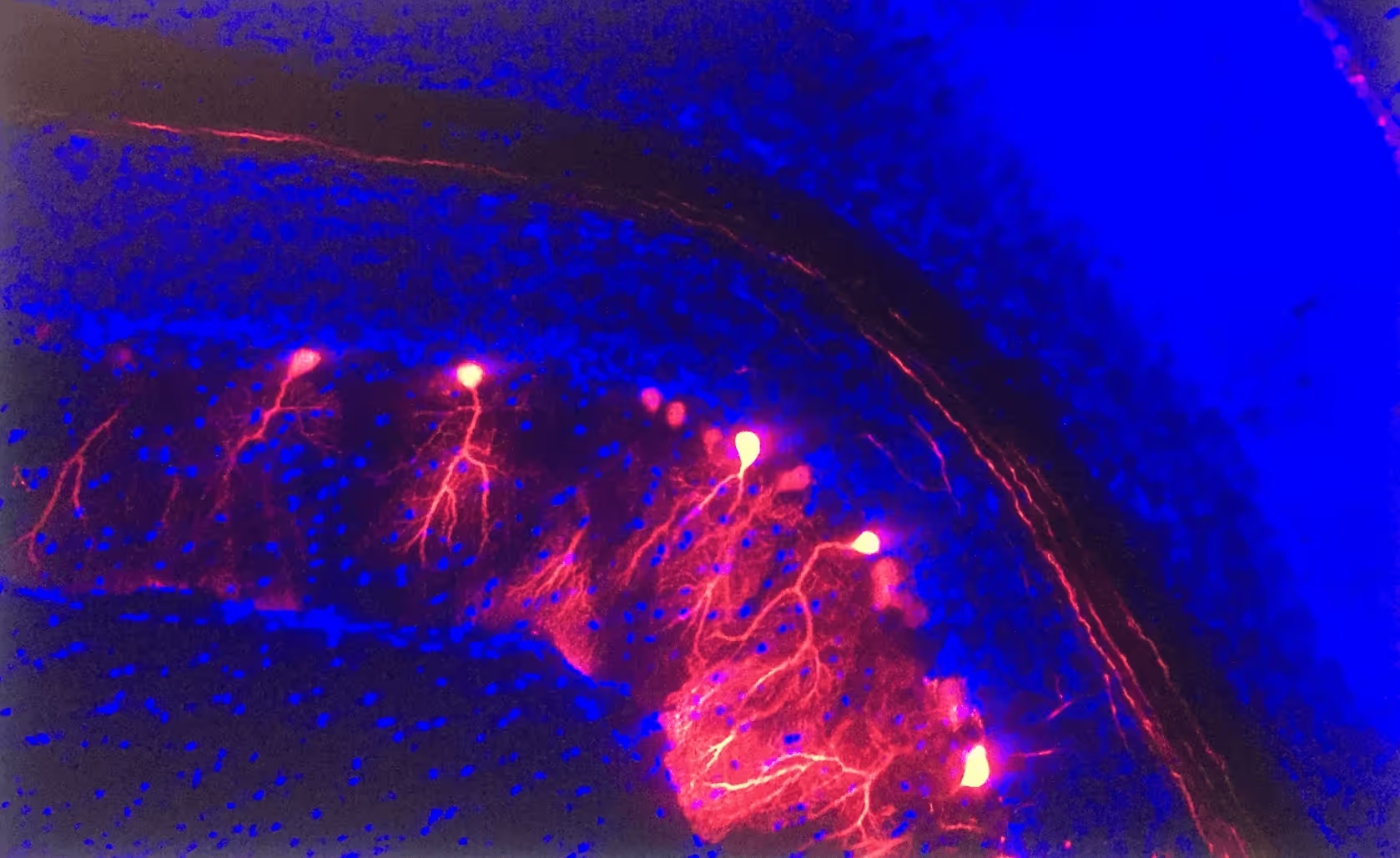
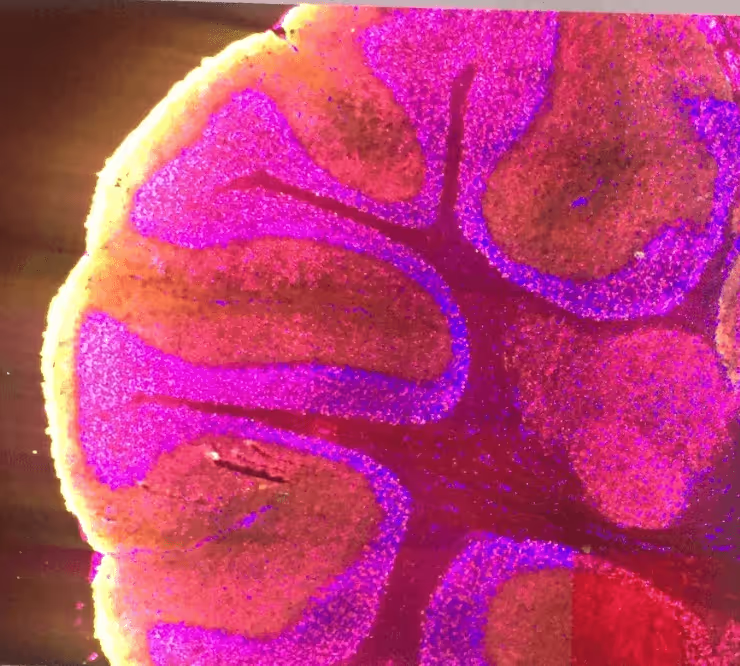
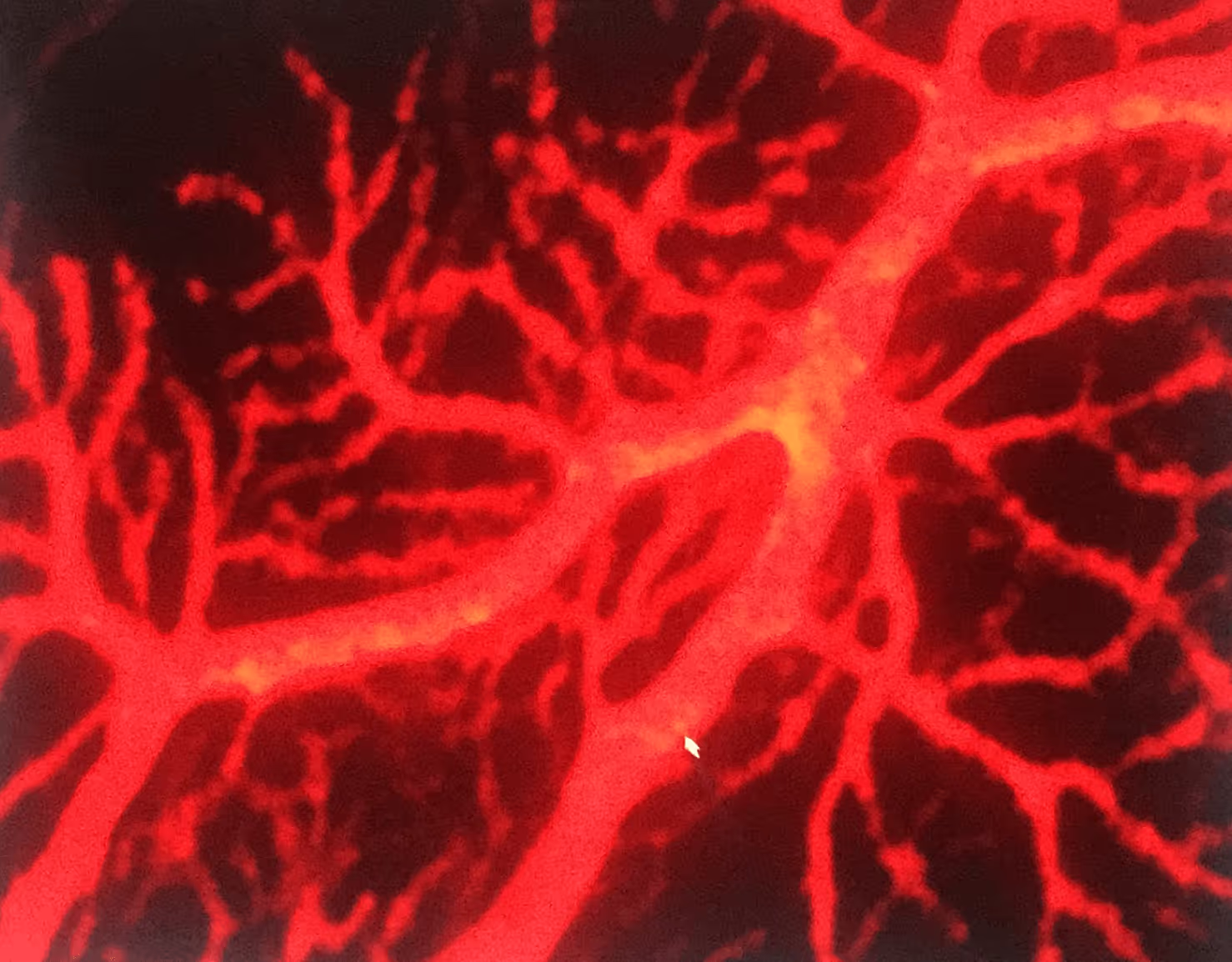
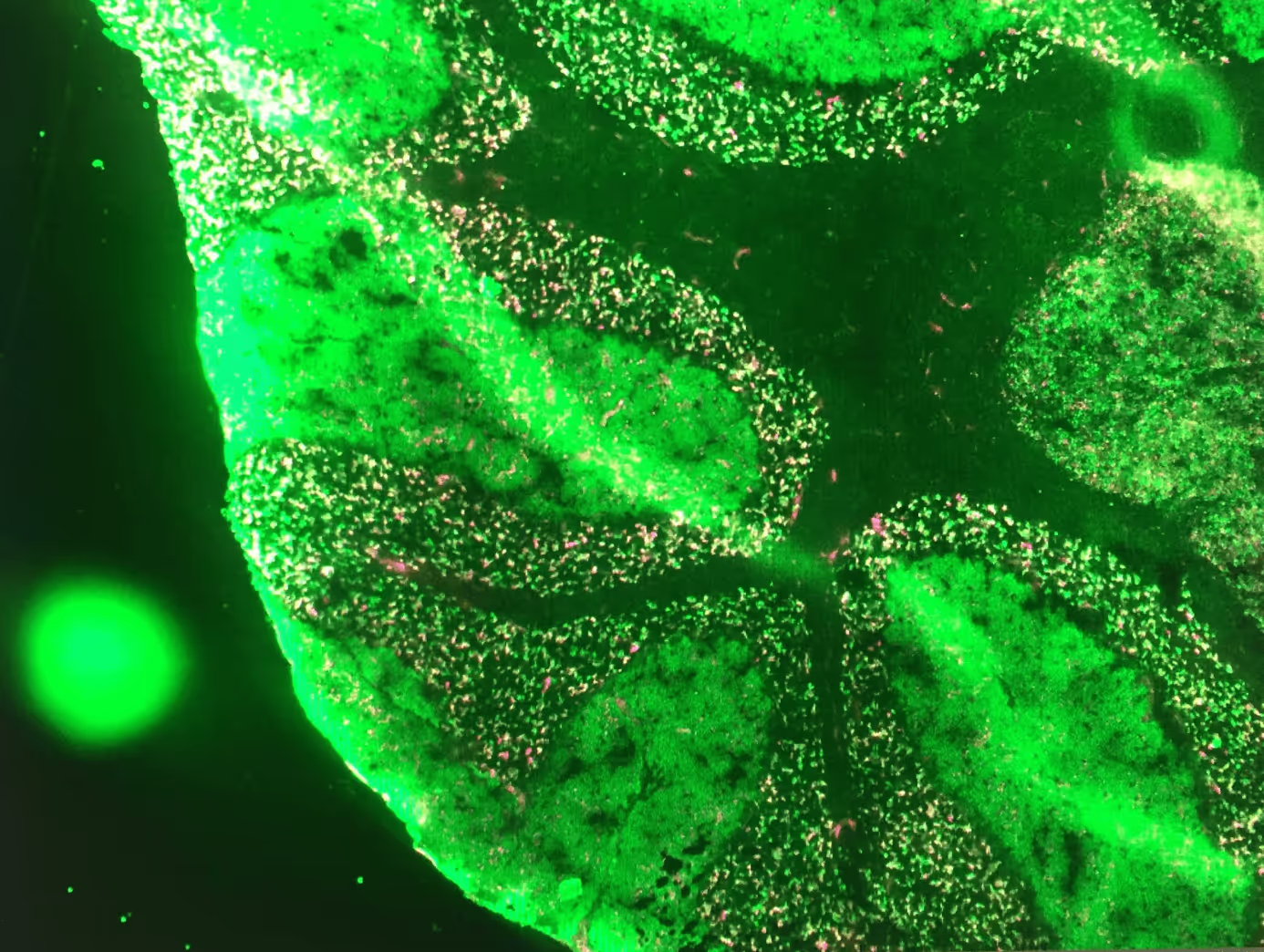
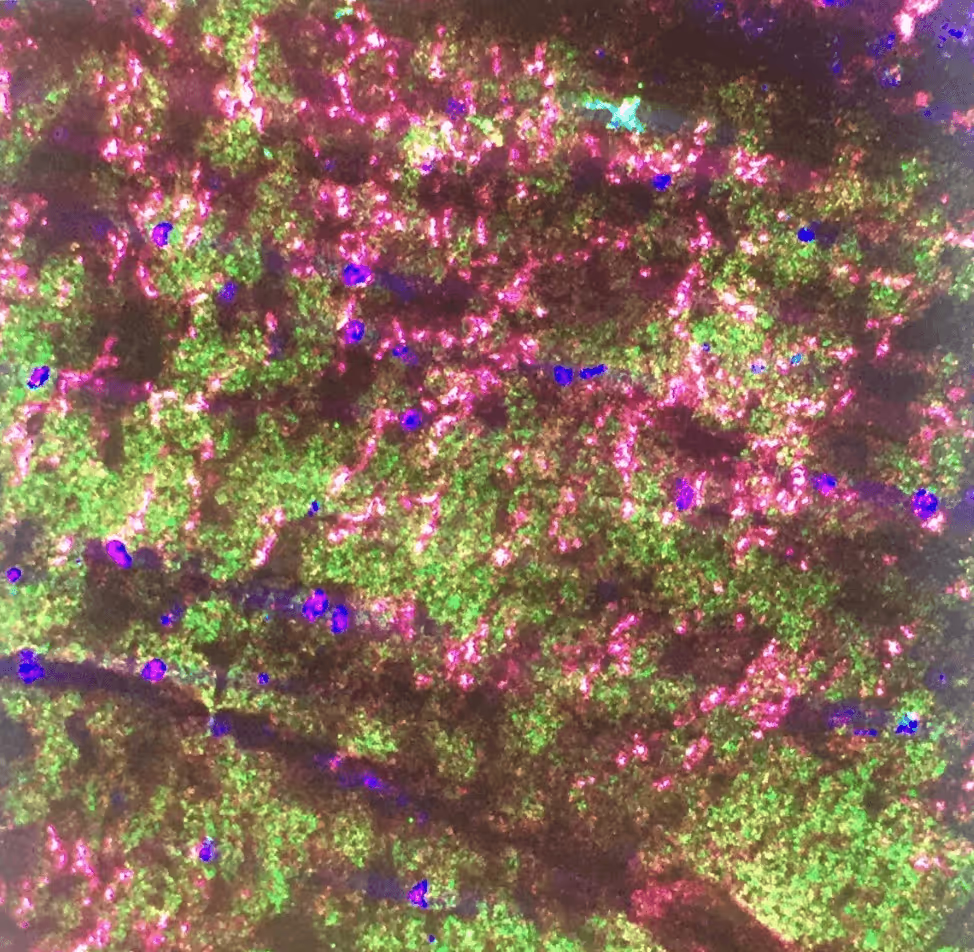
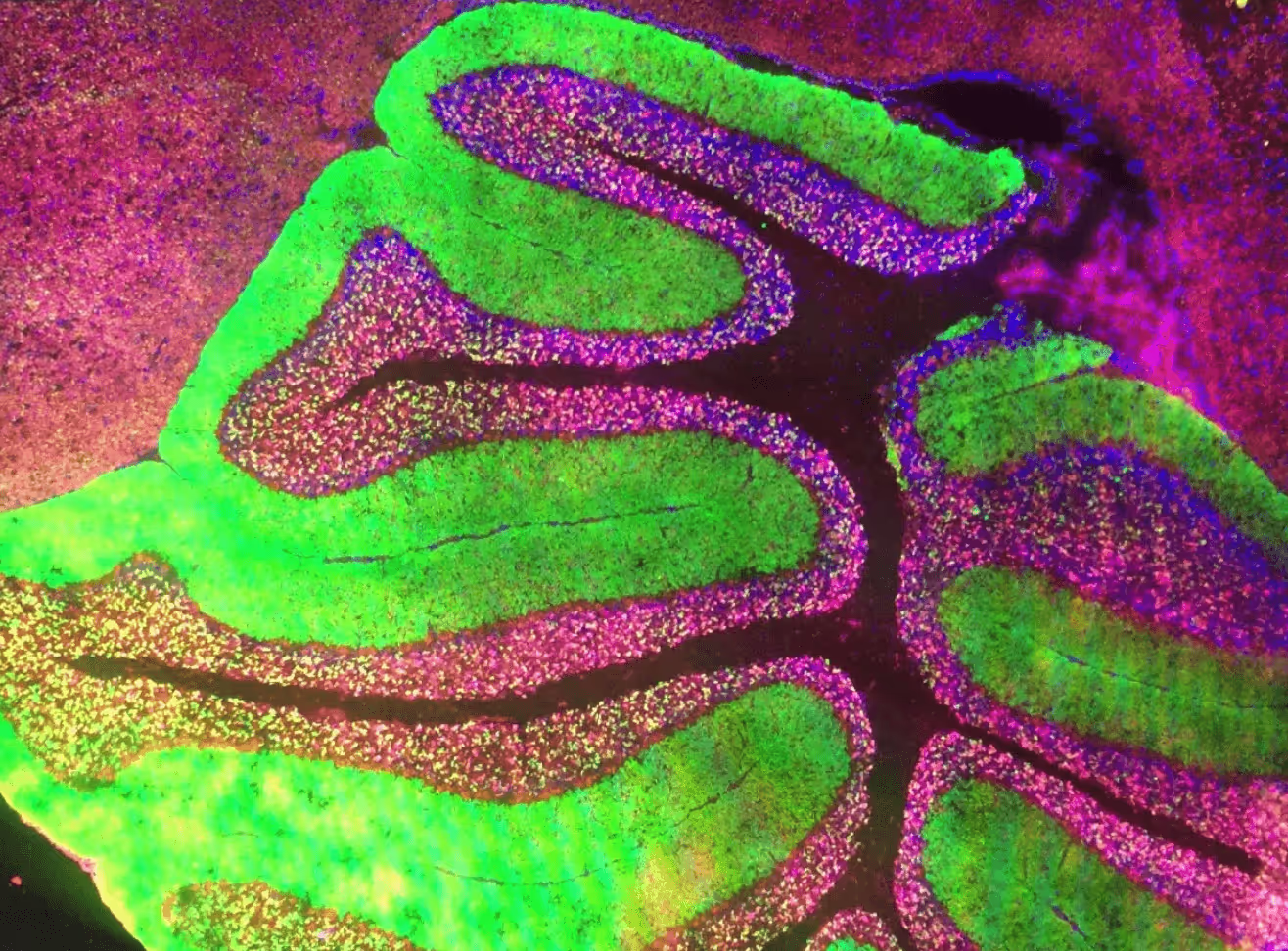
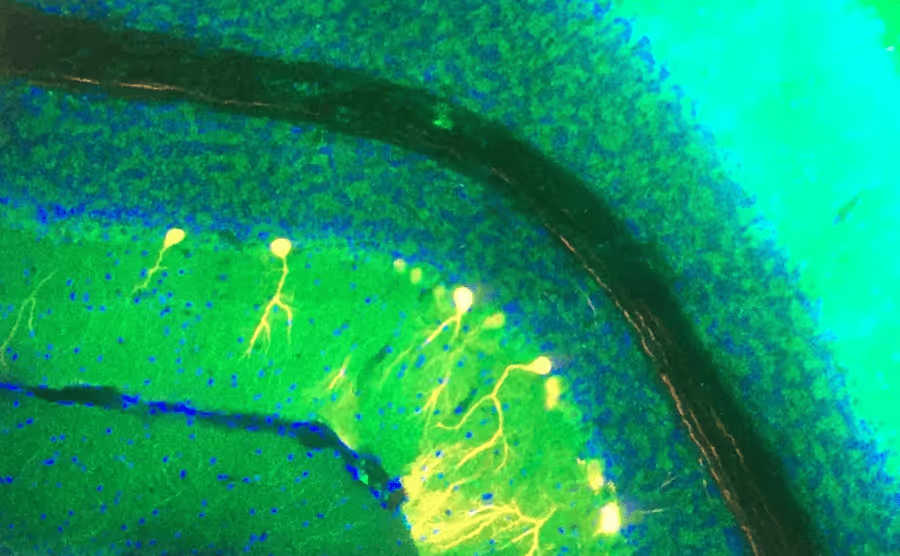
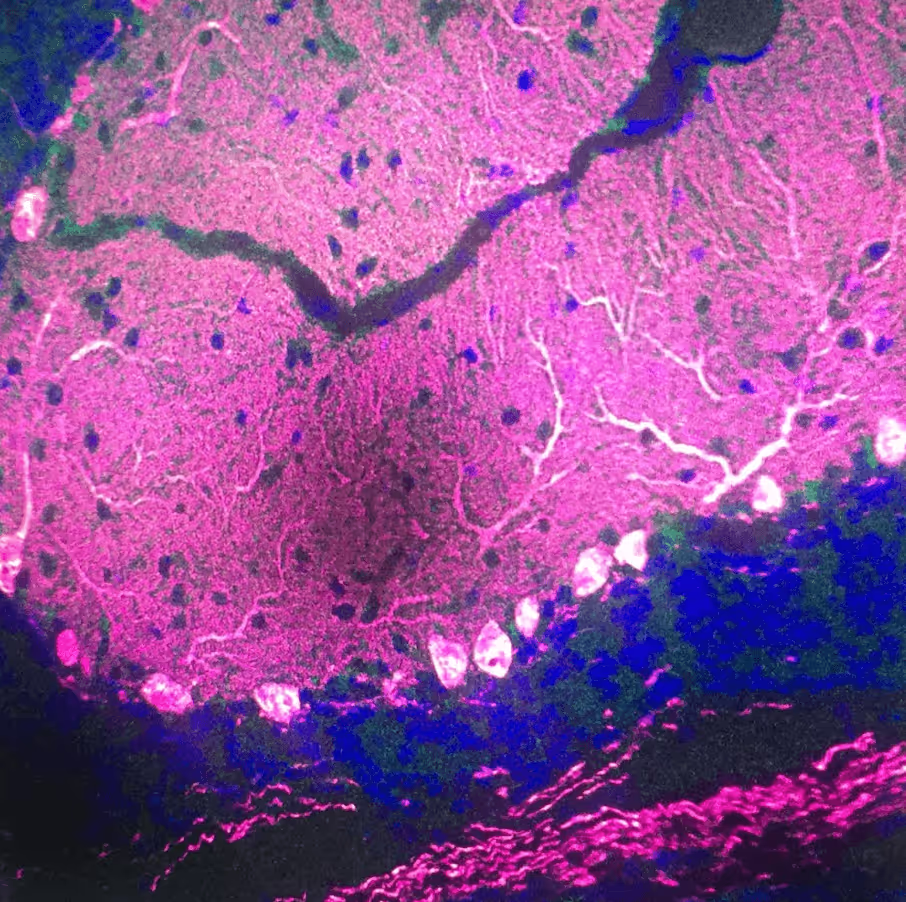
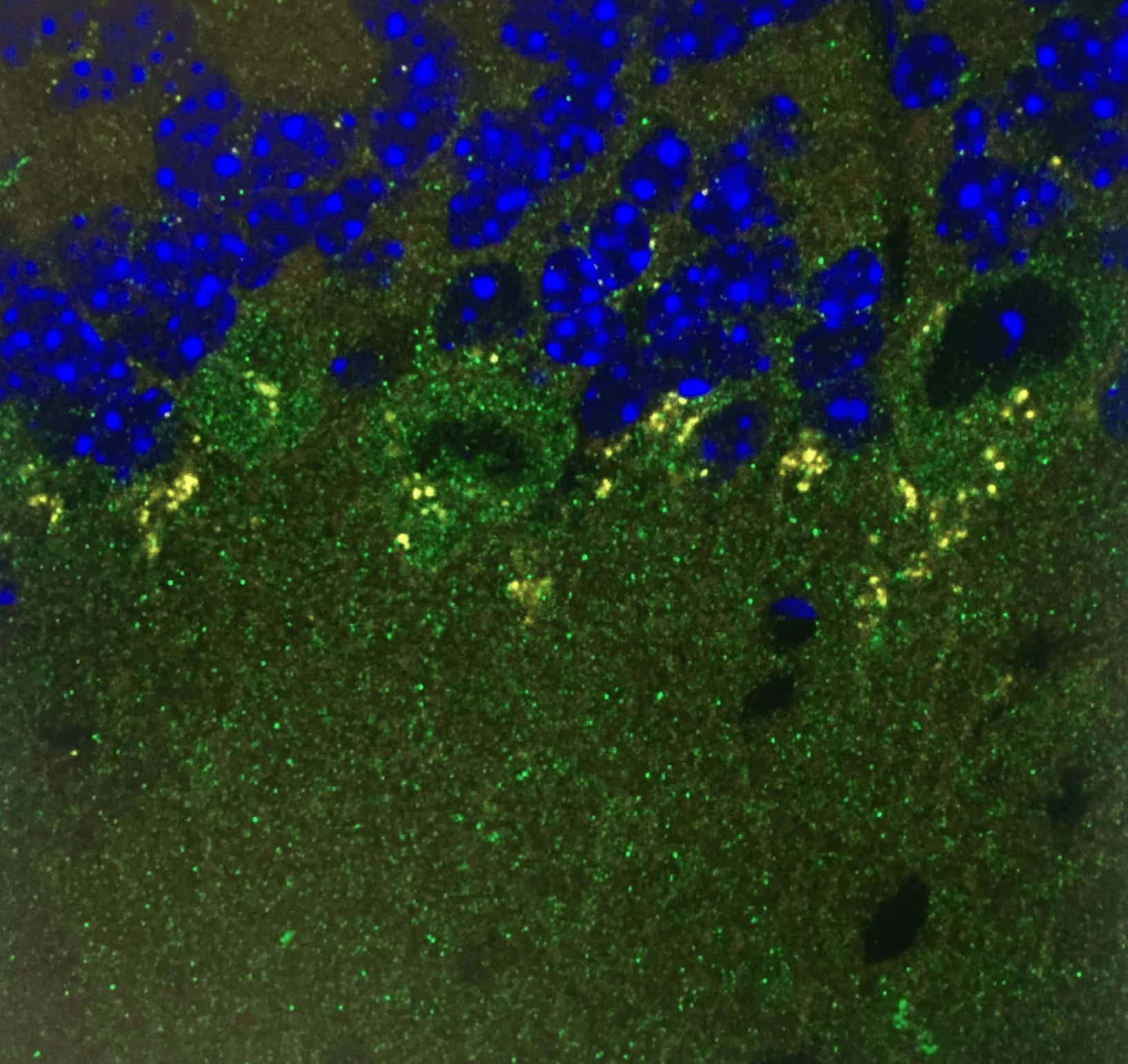
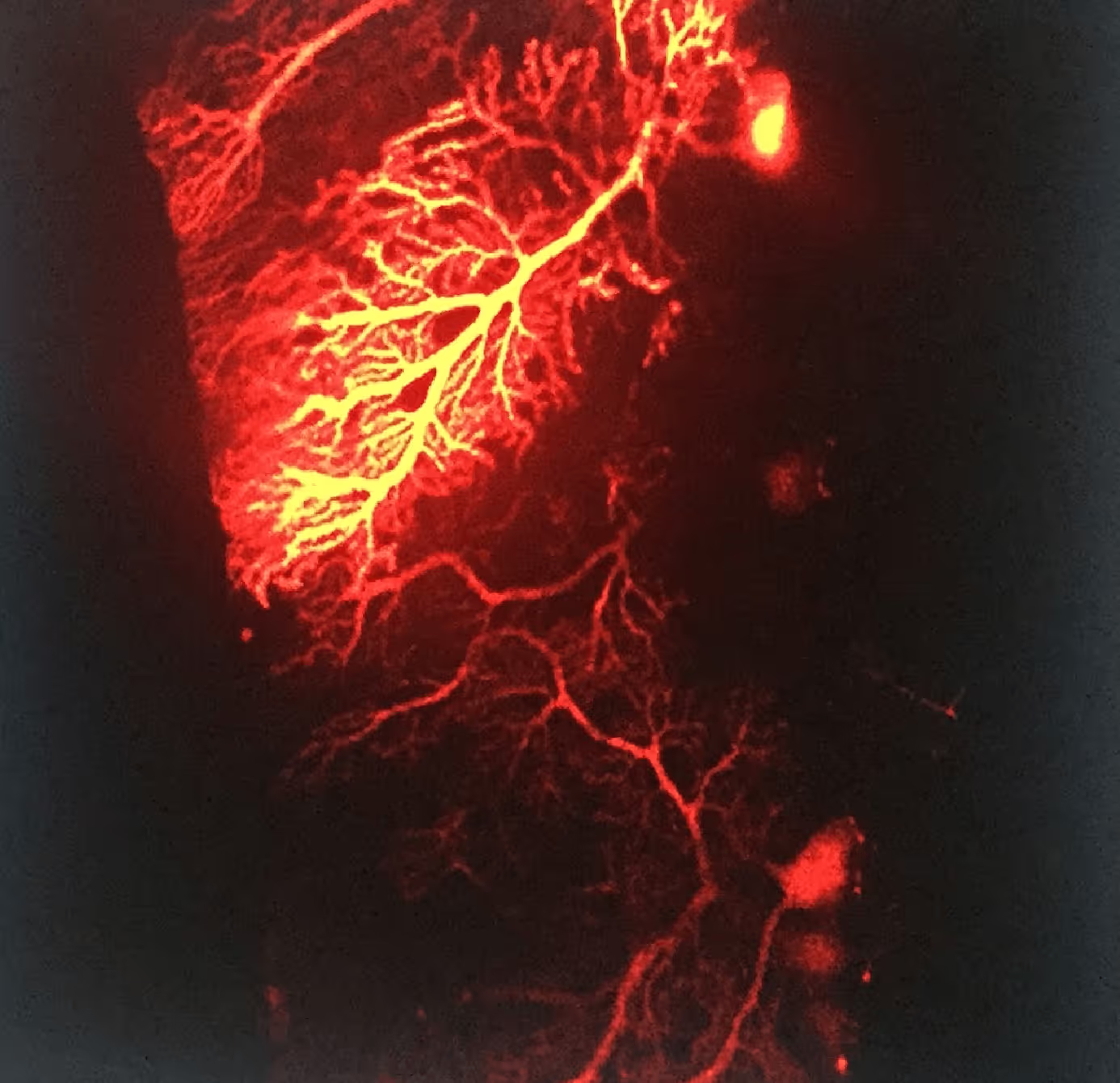
Parallel to international teaching and pre-PhD neural science research at Erasmus MC within Prof. Dr. Chris de Zeeuw’s “Bidirectional Cerebellar Control of Everything” laboratory, these trajectories converge through BfNA, Neural Continua and the HEI research system.
Meet The Founder
Laura Ulloa, Founder, Bureau for Neural Architecture
Architect · Urbanist ·
Neural Science Researcher ///
Board Member of Environmental and Social Impact Associations · Teaching and Project Collaborator Earth Institute Auroville UNESCO chair
Neural Science Researcher ///
Board Member of Environmental and Social Impact Associations · Teaching and Project Collaborator Earth Institute Auroville UNESCO chair

[Biography]
Laura Ulloa is a Colombian architect, urbanist and neural science researcher whose work operates between architecture, behaviour and environmental intelligence. Born in Bogotá, based in Paris, daughter of an architect and a psychologist, her trajectory evolved through Berlin, Vienna, Delft, Shanghai, Rotterdam and Paris, moving between TU Wien, TU Delft, Tongji University Shanghai and Erasmus MC Rotterdam alongside extensive field research across Asia.
Partners
{Academic and Project Partner}
Earth Institute
UNESCO Chair context for earthen architecture, CSEB construction and contextual materiality.

[ Contact ]
Website:
https://www.earth-auroville.com{Project and Research Partner}
Association Ana-Nour
Solidarity association advancing neuroeducation and environmental dignity in West Africa.

[ Contact ]
Website:
https://www.ana-nour.org{Project and Research Partner}
Défi Habitat
French association dedicated to inclusive housing for young adults on the autism spectrum. BfNA contributes spatial and neural-sciences expertise for sensory-calibrated, dignified, therapeutic living environments.

[ Contact ]
Website:
https://www.defihabitat.com/{Digital Partner}
Cavolo Studio
Digital studio crafting websites and tools for impact-driven organisations across science, ecology and social innovation.

[ Contact ]
Website:
https://cavolostudio.com/{Co-Founder and Associate Ecology}
Neural Continua
Research platform exploring minds, materials, movement and environmental perception.

[ Contact ]
Website:
https://neuralcontinua.org
Research Archive
Neural Continua [ 2026 ]
Collaborative research project by Laura Ulloa and Kristoffer Stefan, exploring the reciprocal dynamics of bodies, materials and space.
Documented as a 2026 collaboration. BfNA’s current research and practice are developed independently.
[ Contact ]
https://neuralcontinua.orgQuestions ? We’ve Got Clarity.
Can architecture alter cognition?
Light, acoustics, density, thresholds and spatial organisation continuously influence attention, stress regulation, memory and behavioural adaptation across workplaces, schools, healthcare and domestic environments.
Why do environments regulate behaviour?
Behaviour emerges through continuous interaction between bodies, movement and environmental conditions. Housing, public infrastructure and collective spaces shape how people anticipate, interact, recover and adapt.
What makes an environment enriched?
Enriched environments support cognitive stimulation, neuroplasticity, recovery and social interaction through sensory diversity, movement, ecological integration and adaptive spatial conditions.
Can movement reshape perception?
Movement reorganises orientation, prediction and environmental awareness. From urban mobility systems to museums, landscapes and transitional spaces, cognition emerges through embodied spatial experience.
How does spatial continuity affect memory and stress?
Rhythm, interruption, thresholds and environmental coherence influence cognitive load, anticipation and emotional regulation across hospitals, workplaces, educational systems and urban environments.
Can environments become adaptive systems?
Environmental intelligence enables architecture to respond dynamically to behavioural, ecological and physiological conditions through observation, sensing and adaptive feedback across buildings, territories and infrastructures.
© 2026 Bureau for Neural Architecture. Developed by Cavolo Studio.
Privacy Policy & Legal Notice
