








Directed by Laura Ulloa, BfNA explores and designs for the reciprocal dynamics between environments, cognition and collective adaptation.
Neural architecture studies how environments act on the nervous system and how bodies, cultures and social life transform space in return.
A school, hospital, home, street or workplace is never neutral: it can regulate stress, support attention, invite encounter, create isolation or sustain care.
BfNA reads these conditions through neural sciences, environmental observation and design.
What We Do
{practice 01}
01
Current
[Innovation Strategy]
Next
[Product Development]
Consulting / Design / Measurement
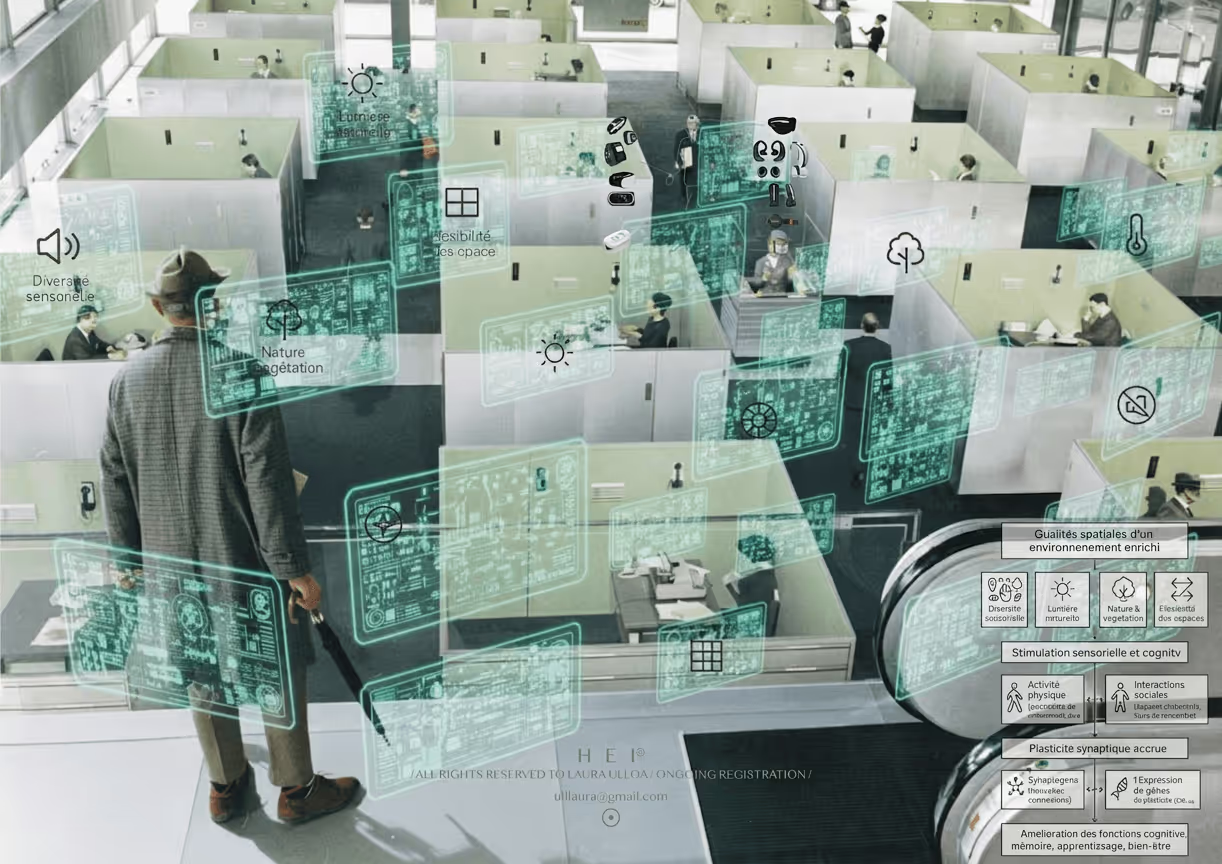
We work with architects, developers, public actors and investors to understand what environments do before, during and after occupation. From competitions to ESG, BfNA translates neural sciences and behavioural evidence into design decisions.
{practice 02}
02
Research / Applied R&D
Research is not separate from practice. A school reveals attention and play; a hospital reveals stress and recovery; a workplace reveals social contact and fatigue. BfNA turns environments into evidence for future design.
Designed for Adaptation
[ Designing Movement.
Measuring Transformation. ]
Measuring Transformation. ]
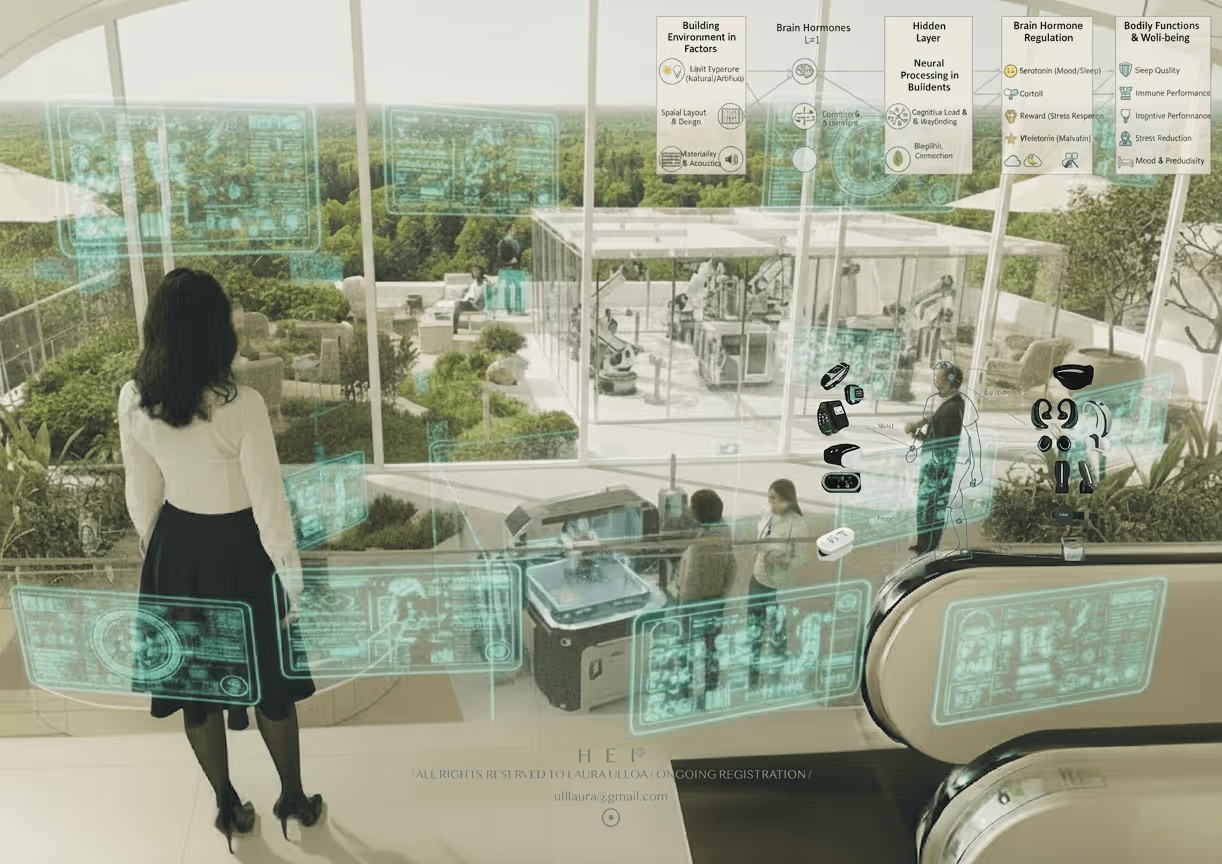
BfNA is an independent research and design practice exploring how architecture transforms human experience.Through architecture, neural science, environmental sensing and behavioural observation, BfNA investigates the relationships between space, perception, movement, physiology, cognition and wellbeing. Research moves between scientific knowledge and real environments, translating evidence into spatial strategies and measurable design outcomes. The aim is to understand not only how environments perform, but how people transform within them. The objective is not only to design spaces, but to design conditions for healthier adaptation between people, ecologies and environments.
{research lenses}
4
5
14
2
4
9
3
4
4
+
research lenses connecting architecture, environment, human performance and neural science
{projects delivered}
3
4
5
5
4
9
9
0
1
+
projects across architecture, research and social impact
{years of practice}
0
1
2
0
1
2
5
4
9
+
years connecting architecture, urbanism and neural science research
{research programs}
1
2
3
8
4
9
active research ecosystems: BfNA / HEI /
Partners & Collaborators





Ongoing

© 2026 Bureau for Neural Architecture. Developed by Cavolo Studio.
Privacy Policy & Legal Notice
