
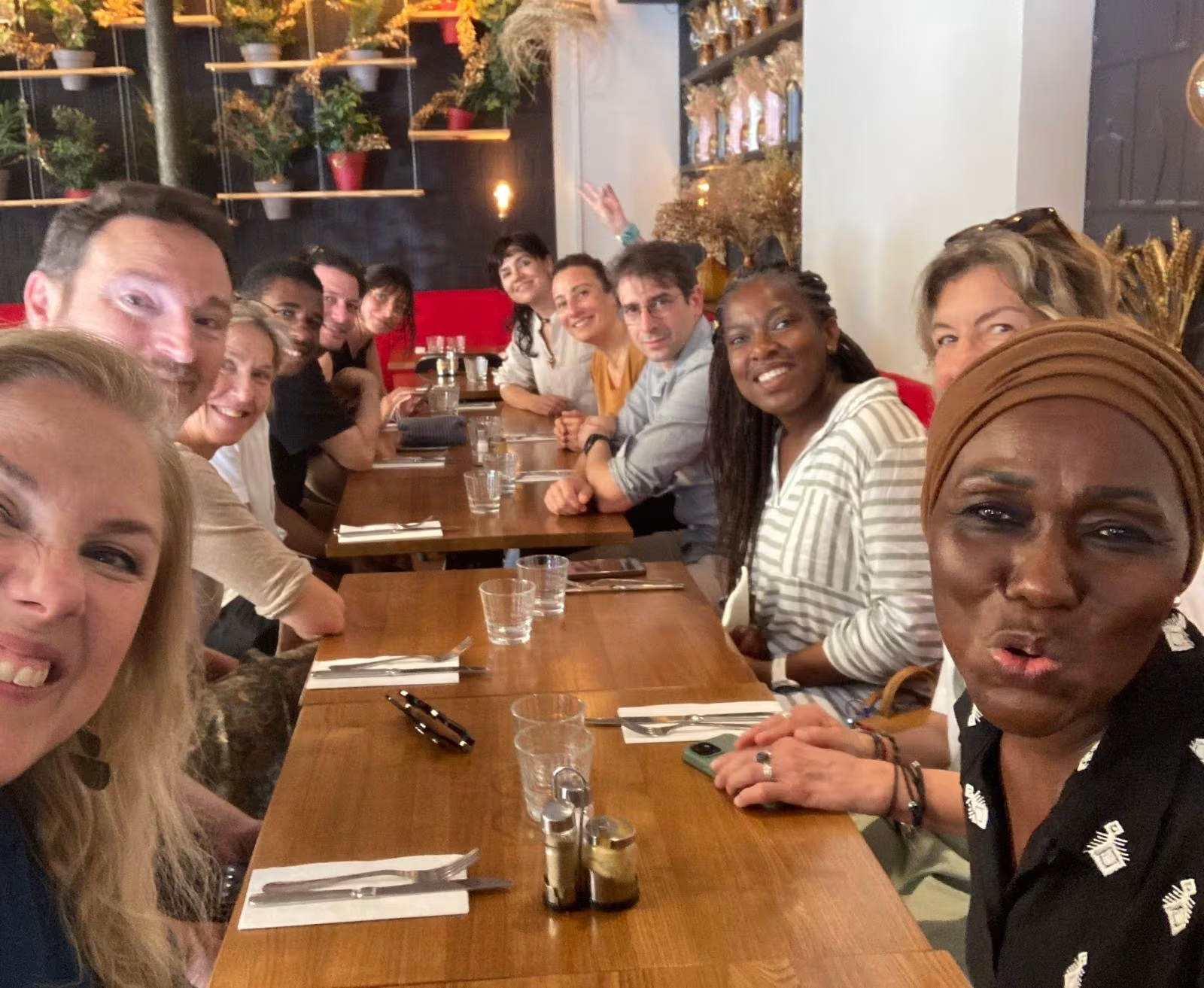

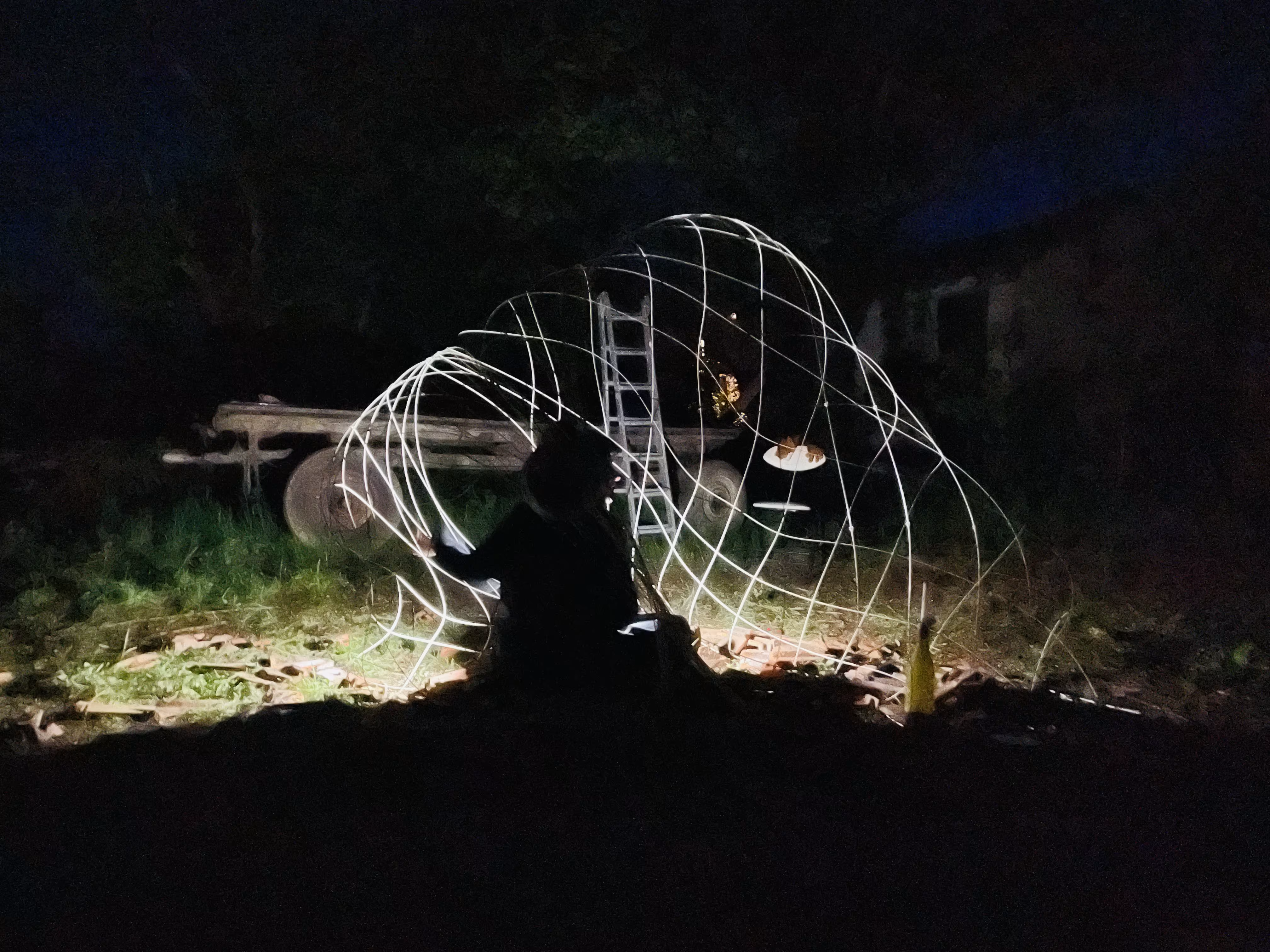
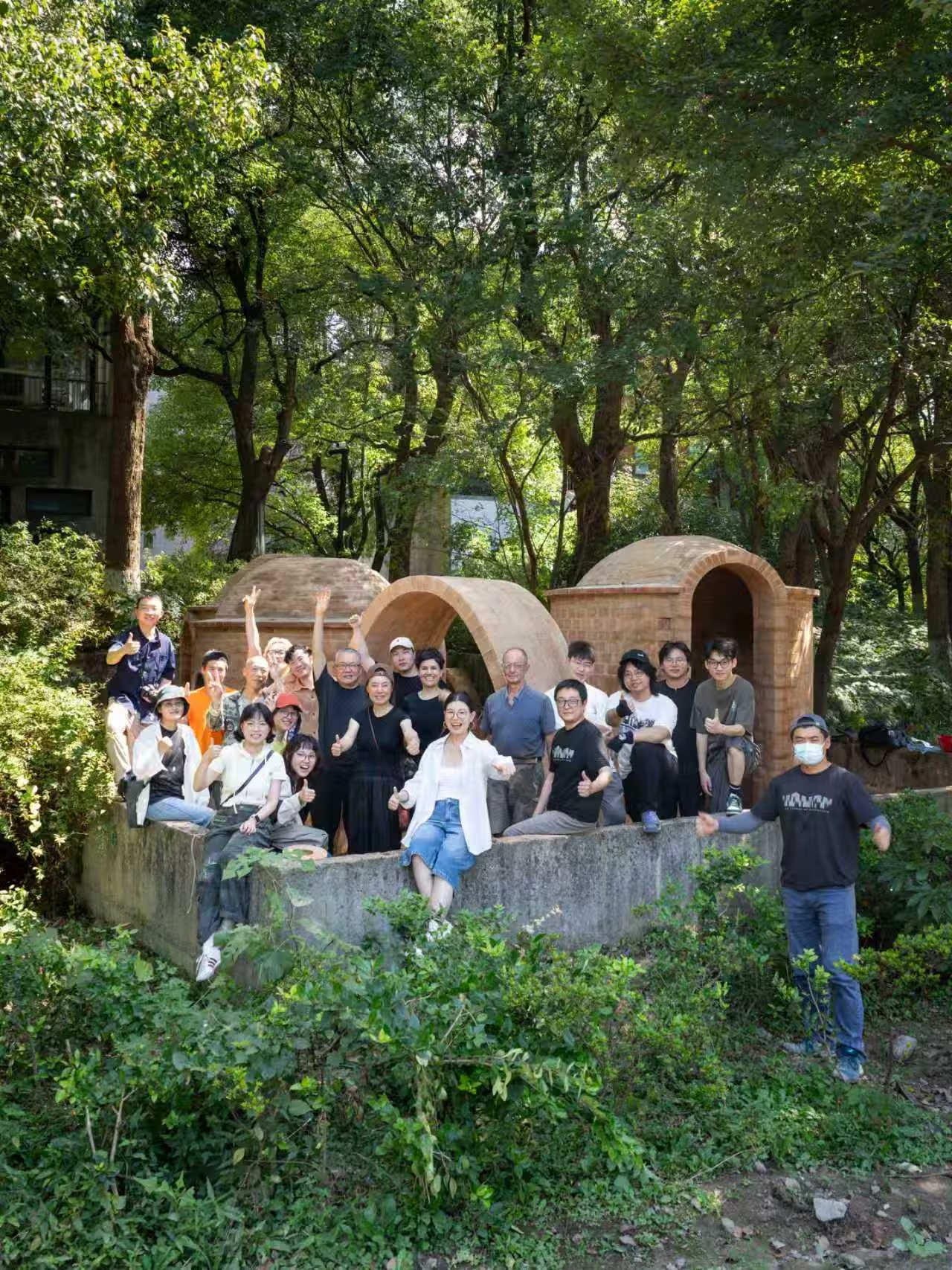
Directed by Laura Ulloa, BfNA explores and designs for the reciprocal dynamics between environments, cognition and collective adaptation.


Environments for Autism-Spectrum Young Adults
Social Impact / Neural Architecture
France
France
Association Défi Habitat / BfNA
Ongoing Collaboration
Ongoing Collaboration / Défi Habitat / neurodiverse housing research
[Summary]
Neurodiverse housing research / sensory regulation, autonomy, retreat, routine and social contact for autism-spectrum young adults.
[Team]
Association Défi Habitat
[Temporal Arc]
Immediate (sensory comfort) · Daily (routine/autonomy) · Long-term (housing stability + social inclusion)
[Direction of Effect]
REGULATE (sensory load) · ORIENT (predictability) · SUPPORT (autonomy + social contact)
[Neural Tags]
A3 = Acoustic comfort · L2 = Threshold light design · S1 = Social contact activation · B1 = Restorative environment
[Biological System]
Sensory regulation · Autonomic regulation · Predictive processing · Neuroception · Social cognition
[Description]
Inclusive environmental research investigating neurodiverse spatial conditions, behavioural regulation and adaptive social environments for autism-spectrum communities.This research investigates how architecture can support neurodiverse perception, sensory regulation, autonomy and social interaction through adaptive environmental design. Focusing on autism-spectrum young adults, the project studies acoustics, thresholds, lighting, movement patterns and environmental stressors to develop more inclusive behavioural environments rooted in dignity, accessibility and long-term adaptive functioning.Ongoing Collaboration / Défi Habitat is developed as a neurodiverse housing and care framework, translating sensory thresholds, retreat, predictability and domestic autonomy into measurable spatial protocols.
[Key Figures]
Typology: Social Impact / Neural Architecture · Autism-spectrum young adults · sensory regulation · inclusive housing · environmental dignity · Association Défi Habitat
[Neural Analysis]
NEURODIVERSE DOMESTICITY: Housing for autistic young adults must be read through sensory gating, predictability, retreat and autonomy, not through generic inclusion language.
NEURODIVERSE REGULATION [A3][L2][S1][T1]: Autism-spectrum housing must be grounded in sensory variability, predictability and autonomy, not generic inclusion. Tola et al. (2021) maps the relationship between ASD and the built environment; light/colour studies and sensory-design research show why glare, flicker, contrast, reverberation, transition zones and retreat spaces matter. For BfNA, the aim is not to normalise behaviour, but to reduce avoidable environmental violence so residents can regulate, choose contact, withdraw, return and build daily praxis.
[Social Impact]
SOCIAL: The project supports autonomy, dignity and daily regulation for neurodiverse residents and carers.
[ROI Sustainability]
ROI: Better calibrated environments may reduce crisis, improve independence and lower care burden.
IMPACT: Better-adapted environments can reduce stress, caregiver burden and institutional mismatch while supporting long-term social and residential stability.
[Applied R&D Lens]
Define spatial thresholds for acoustic exposure, visual complexity, retreat, routine and social contact.
Citations:
Giulia Tola et al. (2021), "Built Environment Design and People with Autism Spectrum Disorder", IJERPH, https://pmc.ncbi.nlm.nih.gov/articles/PMC8003767/ · Anjali S. Nair et al. (2022), sensory impact of light and colour in indoor environments for autistic children, https://pmc.ncbi.nlm.nih.gov/articles/PMC9748440/ · Magda Mostafa, ASPECTSS Design Index research on autism and architecture · Association Défi Habitat / BfNA internal collaboration context.
Copyright:
Project Credits: Association Défi Habitat / BfNA; Team: Association Défi Habitat .Laura Role: Laura Ulloa / BfNA - ongoing collaboration, neural architecture framing and research development.Image Credits: © Association D.Source: source to be confirmed.Project Credits & Copyright Notice: Every effort has been made to identify and acknowledge architects, consultants, collaborators, photographers, visualisation studios and other contributors associated with each project. Project descriptions have been rewritten and curated by Bureau for Neural Architecture (BfNA). Architectural works, photographs, renderings, drawings, trademarks and visual material remain the property of their respective authors, studios, photographers, visualisation teams and rights holders. Contributors are credited wherever information is available. Rights remain with their respective authors and rights holders.
© 2026 Bureau for Neural Architecture. Developed by Cavolo Studio.
Privacy Policy & Legal Notice
