


Directed by Laura Ulloa, BfNA explores and designs for the reciprocal dynamics between environments, cognition and collective adaptation.
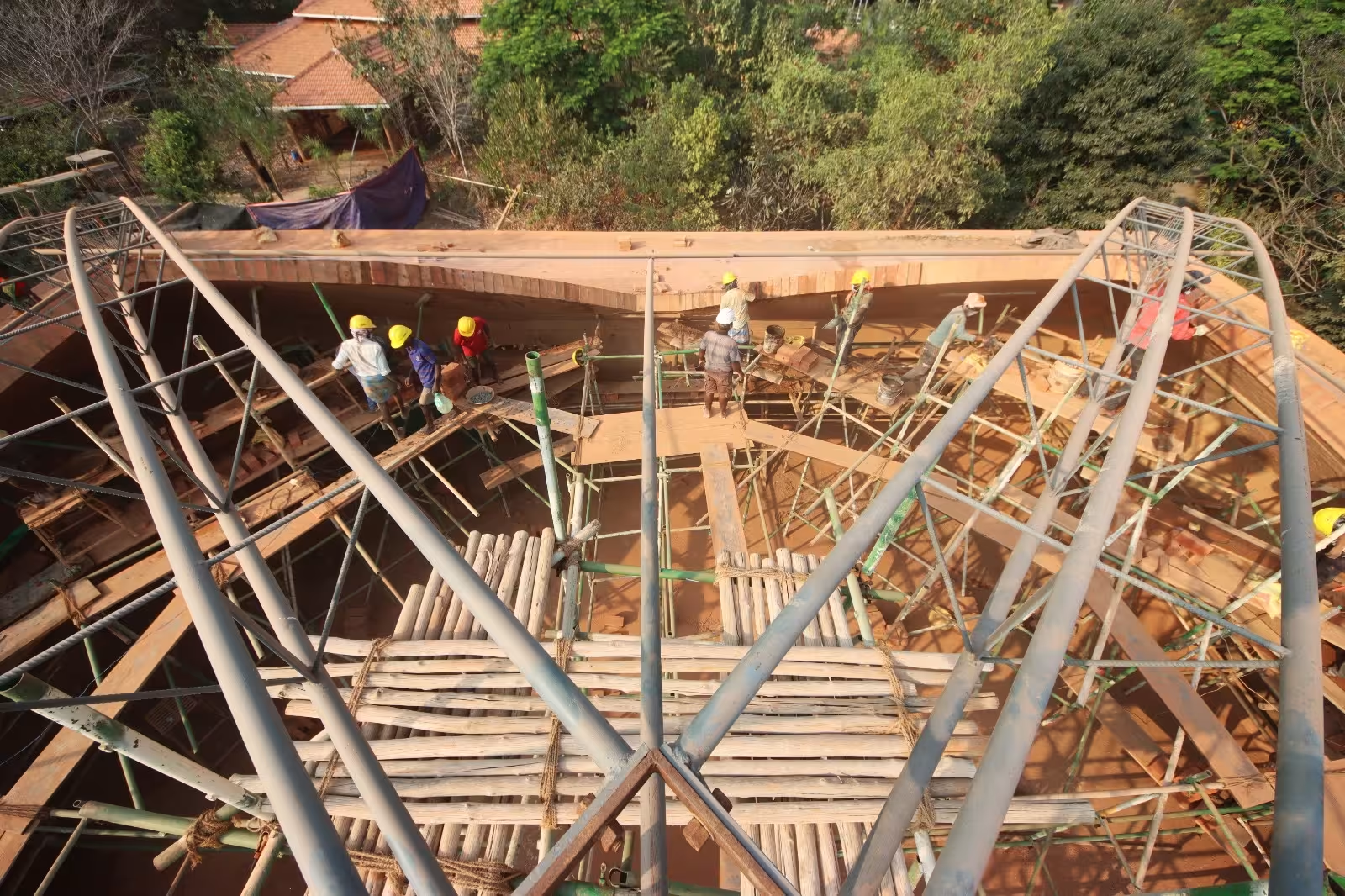

Vipassana Dome_18m_Earth Institute Auroville in Tiruvannamalai / India
Architecture / Material Research
Tiruvannamalai
India
Auroville Earth Institute reference / BfNA neural reading
Research / Concept
Ongoing Collaboration / 18.2 m Vipassana Cloister Dome / earthen contemplative enclosure
[Summary]
An 18.2 m earthen Vipassana dome without water / silence, enclosure, thermal inertia and collective attention as contemplative spatial research.
[Team]
Auroville Earth Institute · BfNA / Laura Ulloa - ongoing collaboration, neural architecture reading and research development · extended project team to be confirmed from AVEI archive.
[Temporal Arc]
Immediate (sensory regulation) · Seasonal (thermal/climatic behaviour) · Long-term (ritual memory and place attachment)
[Direction of Effect]
RESTORE (attention/recovery) · REGULATE (thermal/sensory comfort) · ENCODE (sacred landscape memory)
[Neural Tags]
B1 = Restorative environment · B3 = Biophilic/material volume · S2 = Place memory · T2 = Thermal regulation
[Biological System]
Interoception · Autonomic regulation · Memory encoding · Attention · Sensorimotor orientation
[Description]
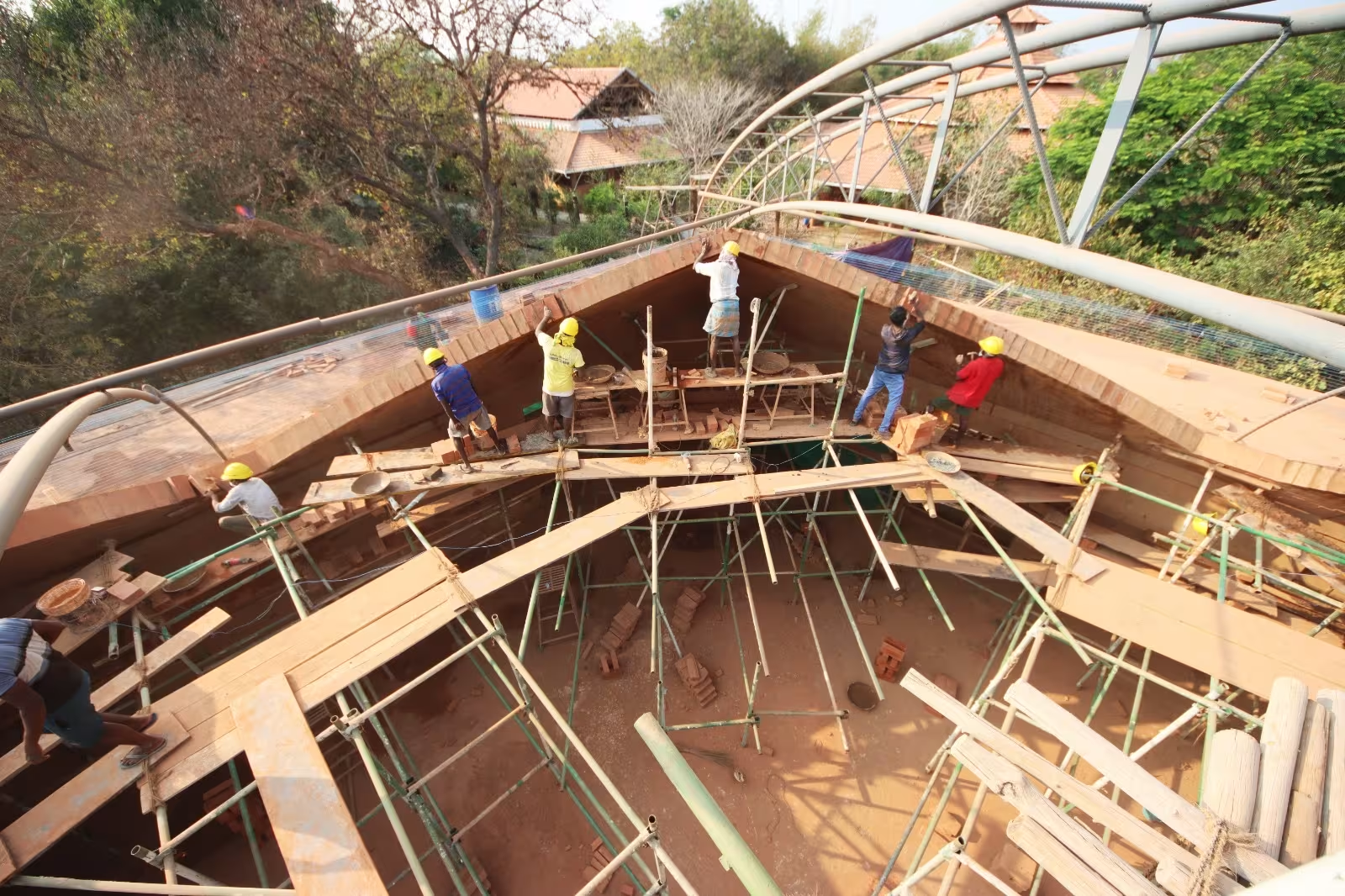
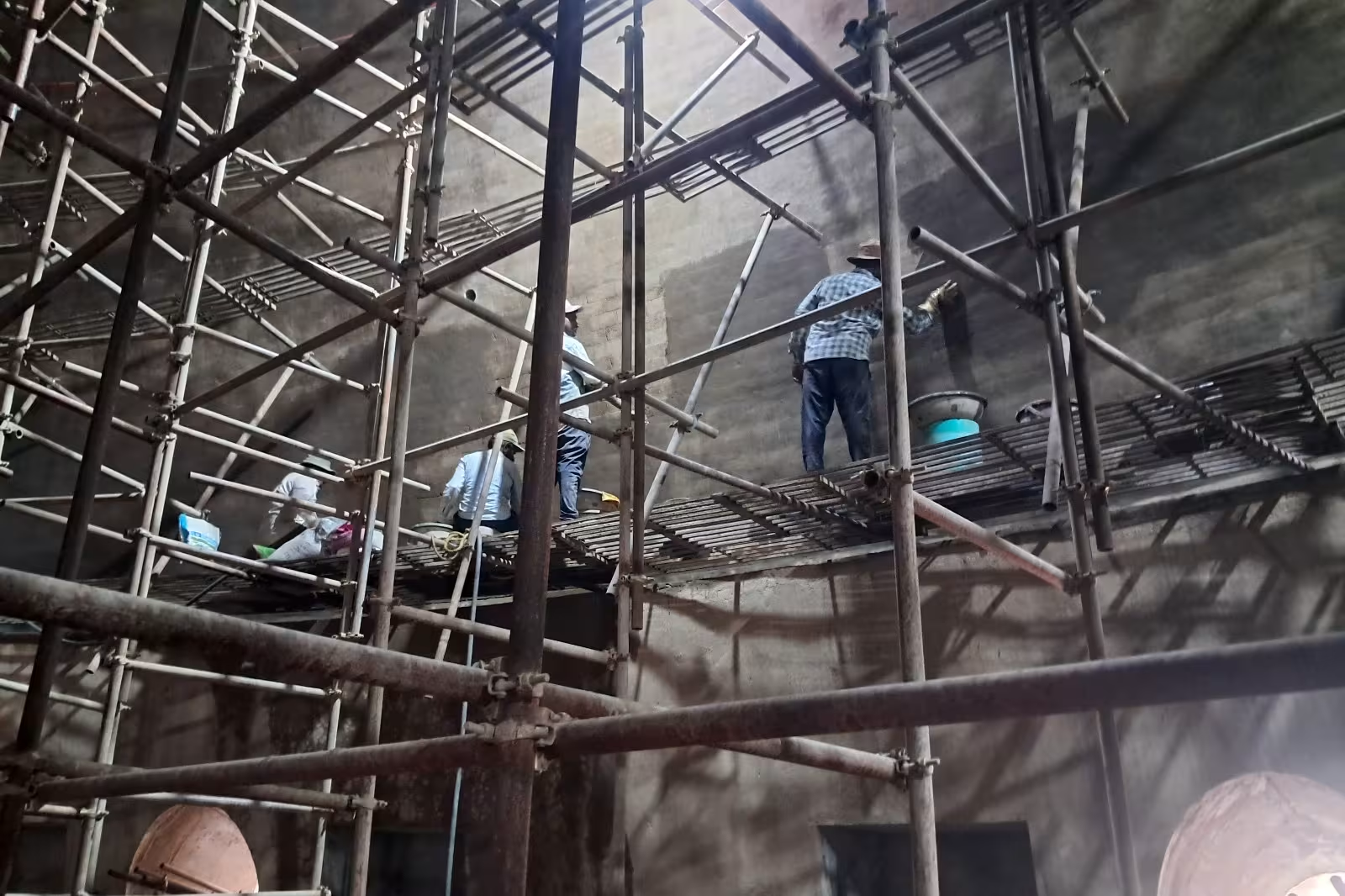
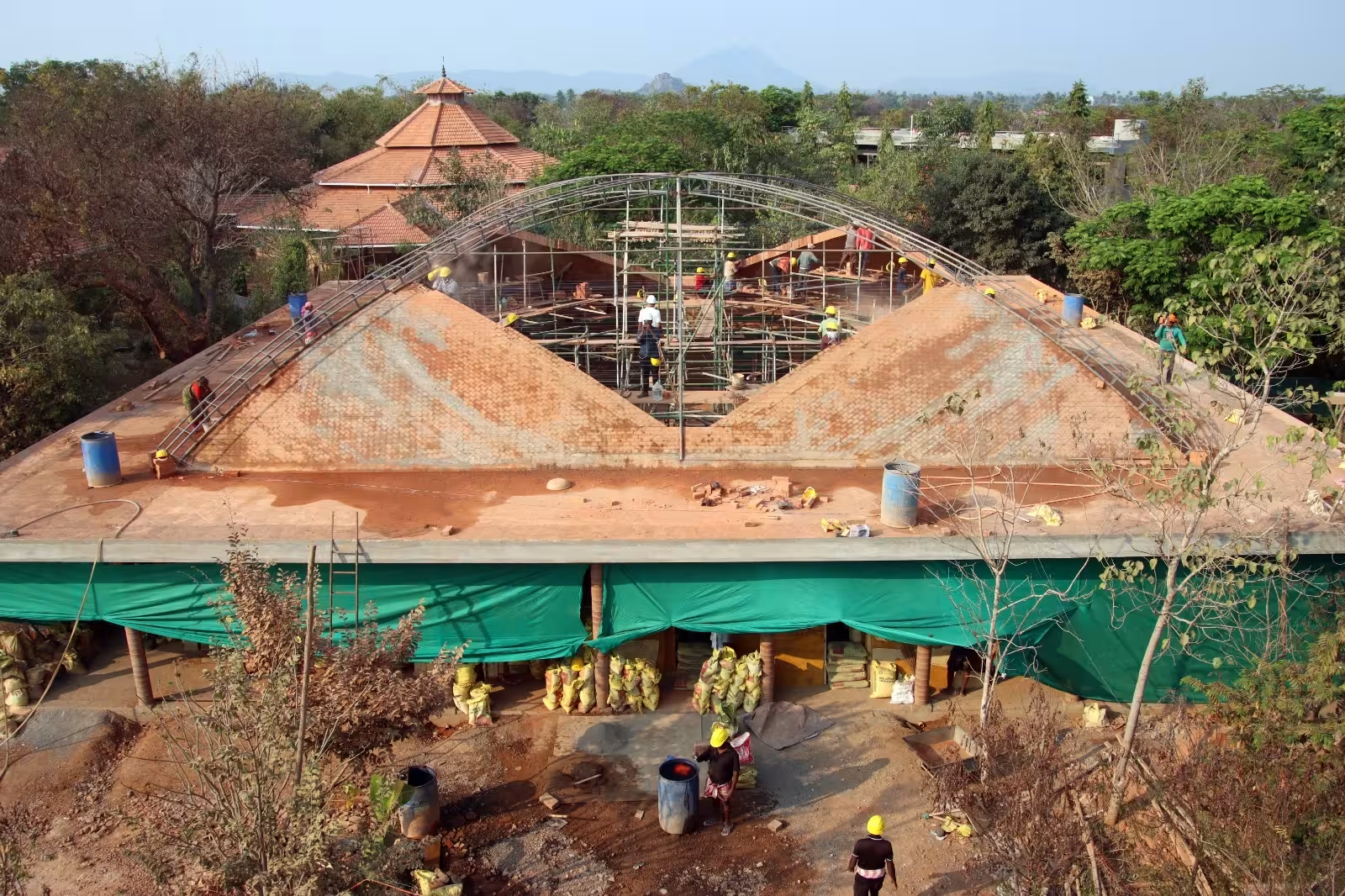
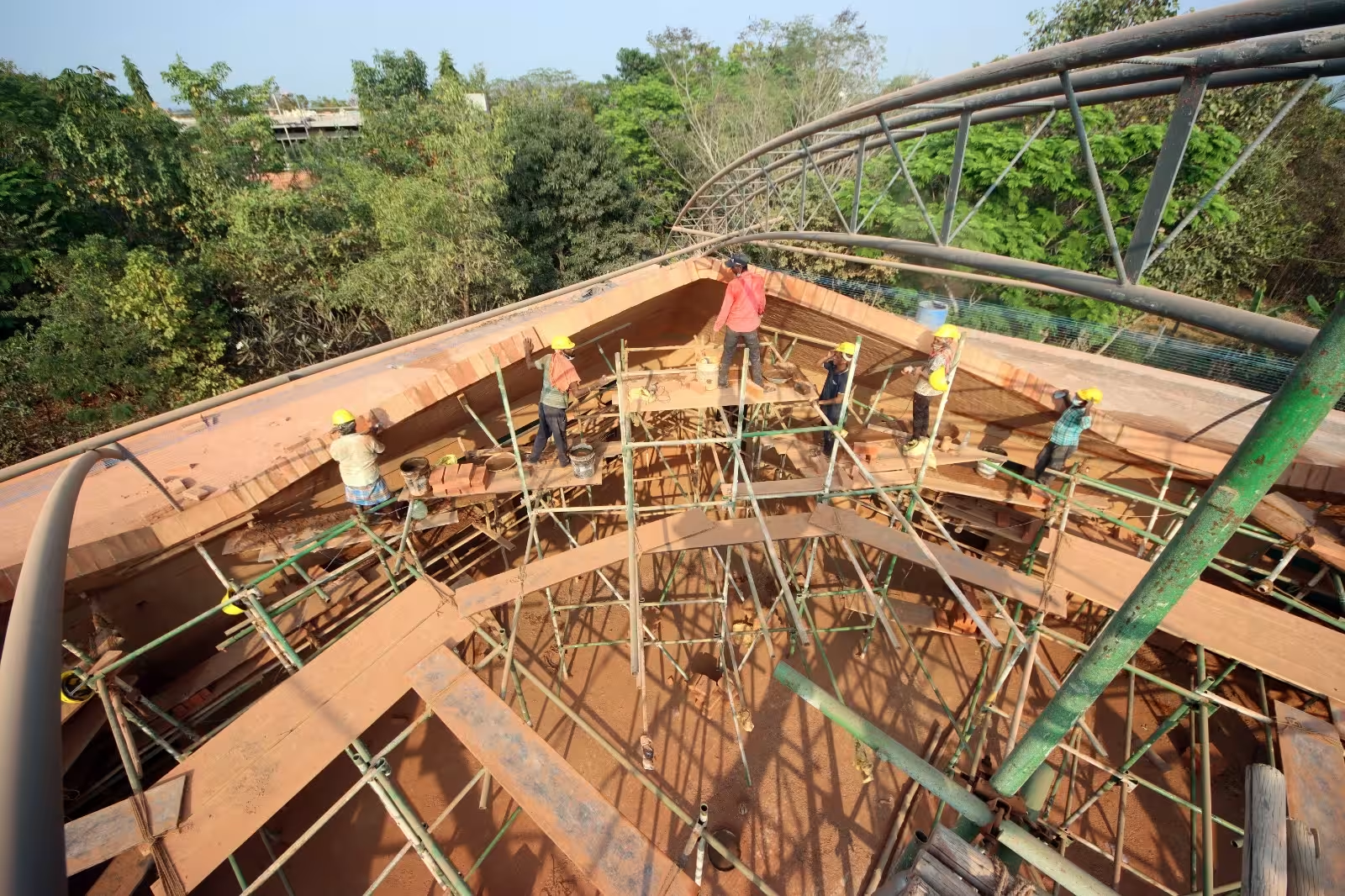
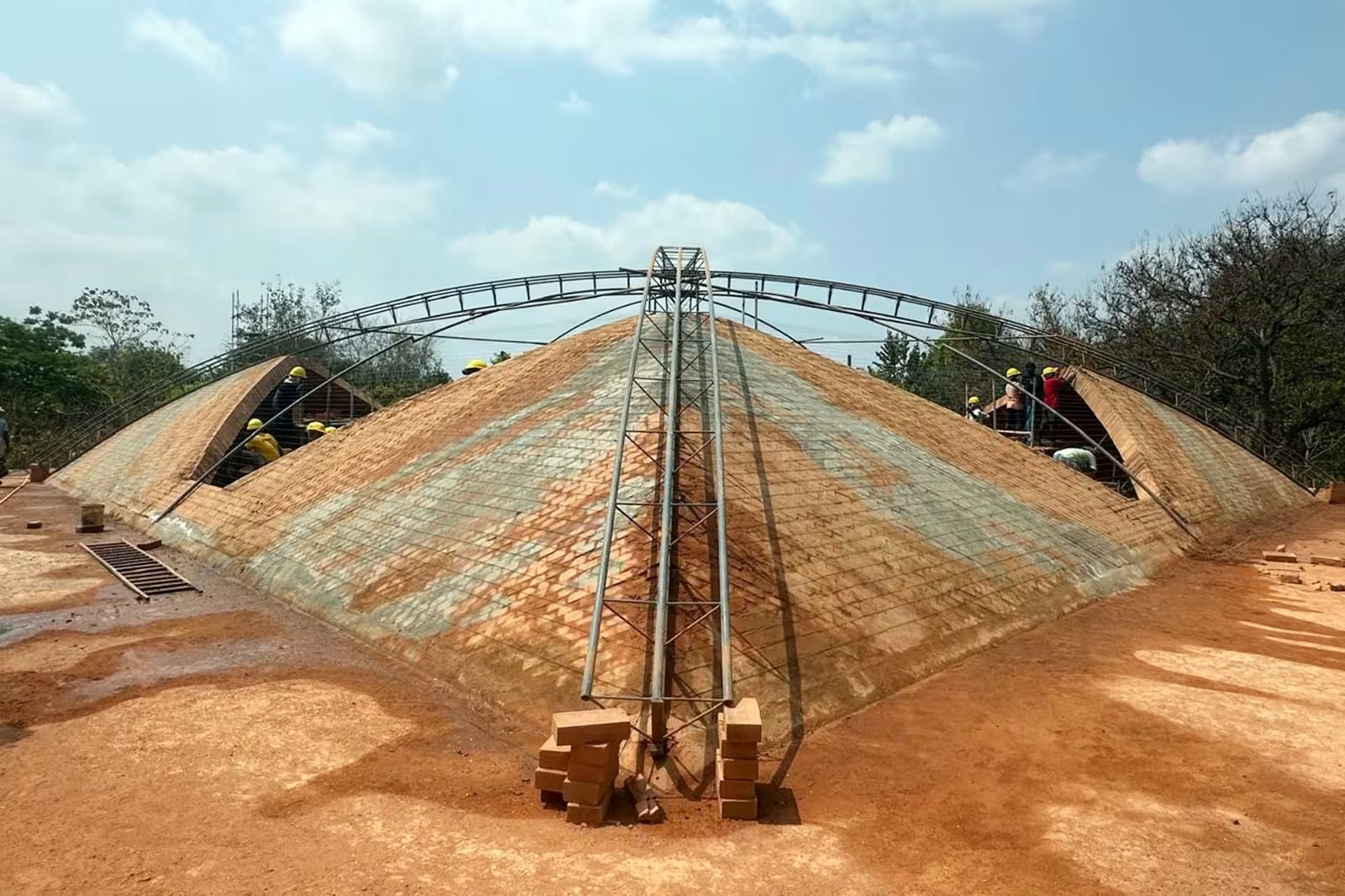
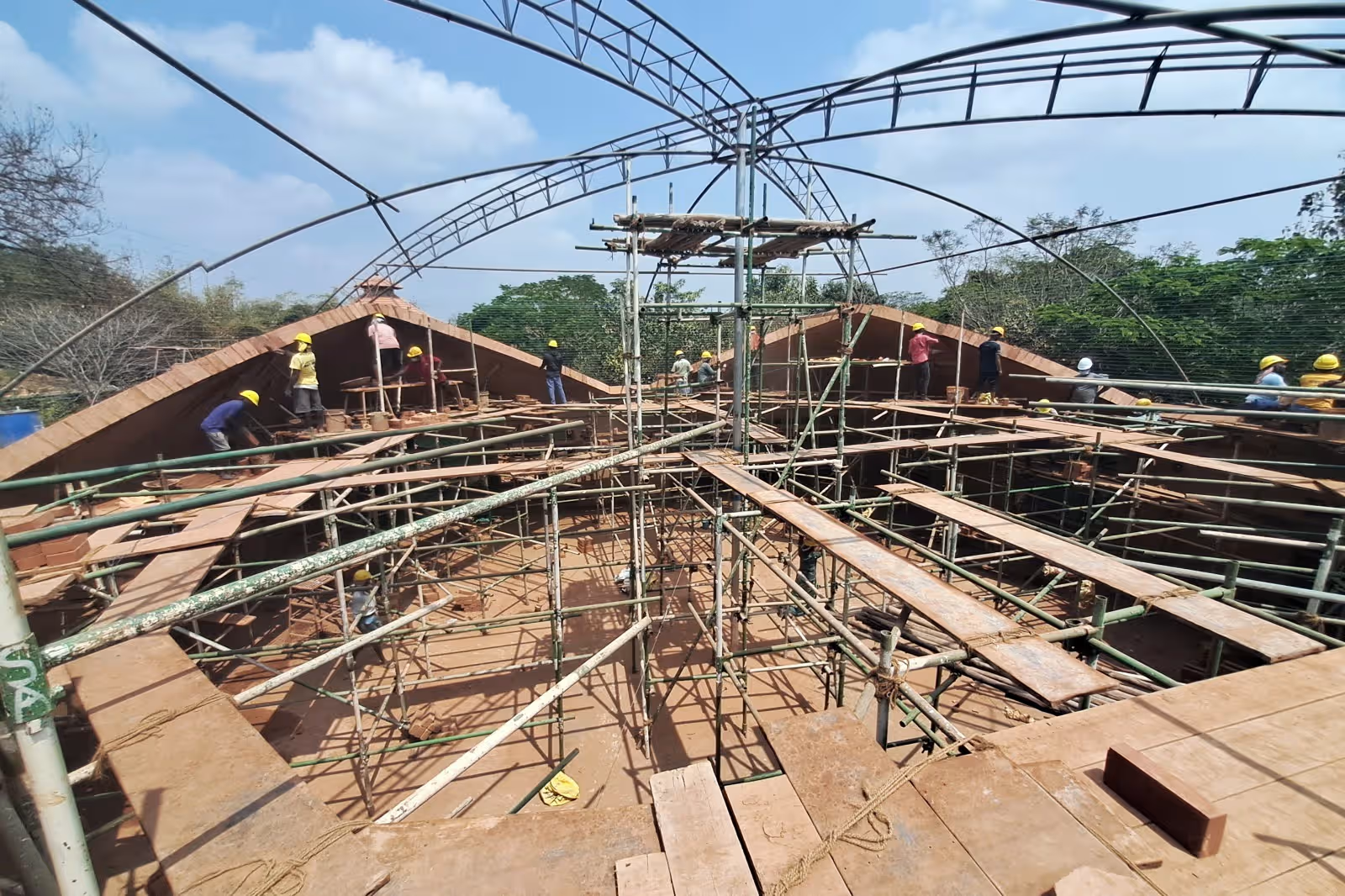
Ongoing Collaboration / 18.2 m earthen Vipassana dome in Tiruvannamalai. Unlike the Gujarat dome, this project has no water body; its neural reading therefore shifts towards silence, enclosure, thermal inertia, acoustic attenuation, ritual repetition and interoceptive attention. The dome is approached as a cloister-like contemplative environment where earthen mass, curvature, low visual distraction and collective stillness can be studied as conditions for attentional withdrawal and disciplined practice.
[Key Figures]
Typology: ongoing collaboration + contemplative earthen architecture · 18.2 m Vipassana dome · Tiruvannamalai · no water body · CSEB / earthen construction · Auroville Earth Institute + BfNA collaboration archive.
No items found.
[Neural Analysis]
SILENCE AS INPUT: The 18.2 m Vipassana dome is not read through water or spectacle, but through reduction: enclosure, earth mass, acoustic attenuation, low visual complexity and repeated meditative posture. Neural analysis concerns interoception, attentional withdrawal, breath awareness and the way a simple earthen geometry can reduce competing external signals without becoming an obsolete retreat typology.
INTEROCEPTION + ATTENTIONAL WITHDRAWAL [A3][T2][B3]: Without water, the dome becomes a cleaner experimental condition for studying silence, enclosure, thermal stability and collective stillness. The BfNA question is how CSEB mass, curvature and ritual repetition alter breath perception, auditory load, bodily awareness and group discipline during Vipassana practice.
[Social Impact]
SOCIAL: The project supports collective silence and ritual discipline through climatic, acoustic and spatial containment.
[ROI Sustainability]
ROI: Earthen contemplative architecture creates long-term cultural and environmental value with low material intensity.
SUSTAINABILITY: Passive design, earth-based materiality and contextual construction reduce embodied impact while strengthening climatic and cultural continuity.
[Applied R&D Lens]
Measure sound attenuation, thermal stability, visual simplicity, occupancy density, breath rhythm and self-reported attentional depth across meditation sessions.
Develop a no-water comparison protocol against Gujarat: isolate acoustic, thermal and interoceptive variables in a dry earthen dome to distinguish hydrological effects from enclosure effects.
Citations:
Project source: Auroville Earth Institute / BfNA collaboration archive; internal project knowledge identifies 18.2 m dome and no water-body condition. Scientific frame: interoception, meditation, acoustic attenuation, thermal stability and attentional regulation. Public project page not confirmed.
Copyright:
Project Credits: Auroville Earth Institute / meditation dome project. Team: Auroville Earth Institute; extended team to be confirmed. Laura Role: Ongoing collaboration - neural architecture reading and research development. Image Credits: © Auroville Earth Institute and respective project authors. Source: AVEI website and collaboration archive. Project Credits & Copyright Notice: Every effort has been made to identify and acknowledge architects, consultants, collaborators, photographers, visualisation studios and other contributors associated with each project. Project descriptions have been rewritten and curated by Bureau for Neural Architecture (BfNA). Architectural works, photographs, renderings, drawings, trademarks and visual material remain the property of their respective authors, studios, photographers, visualisation teams and rights holders. Contributors are credited wherever information is available. Rights remain with their respective authors and rights holders.
© 2026 Bureau for Neural Architecture. Developed by Cavolo Studio.
Privacy Policy & Legal Notice
