
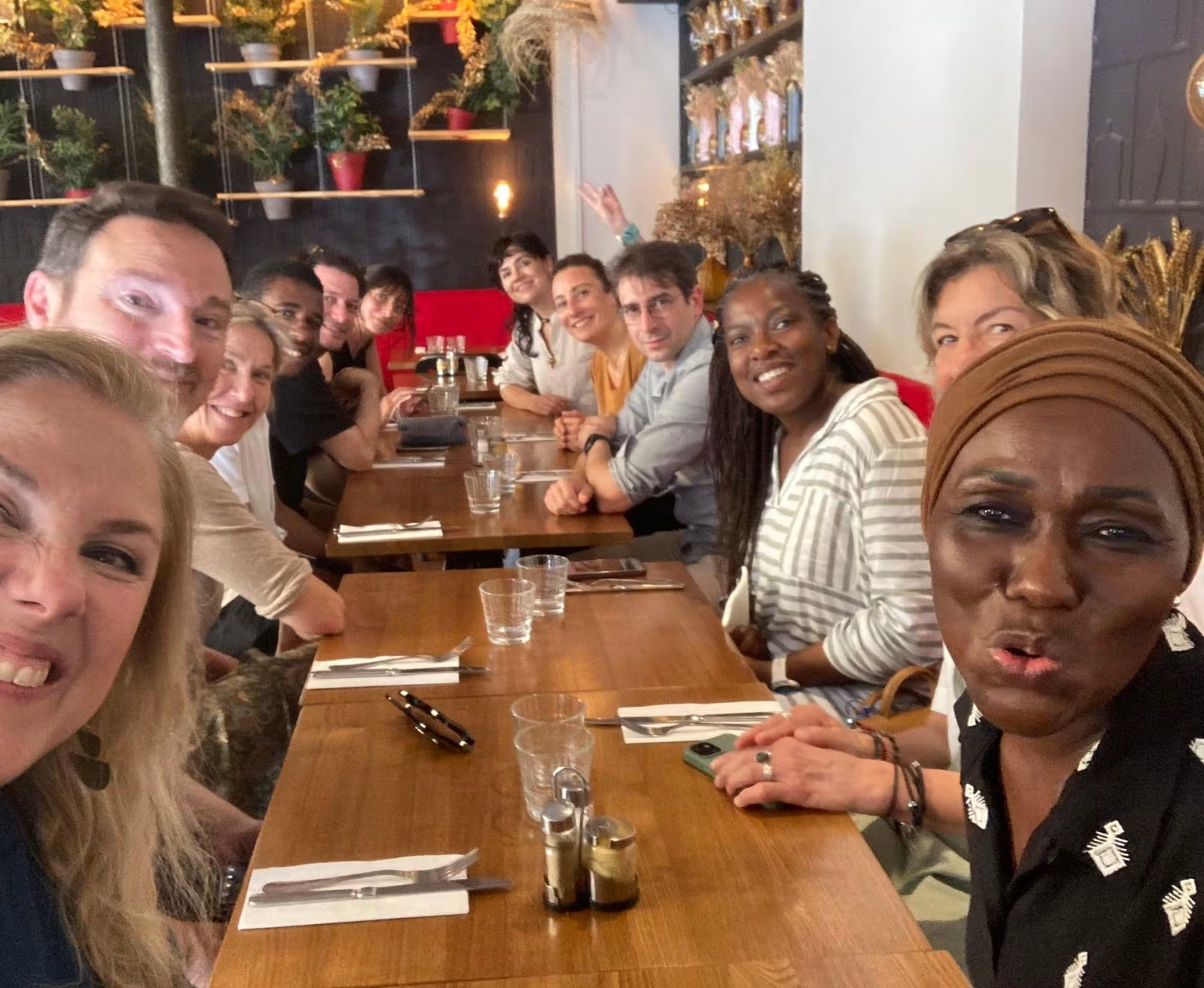


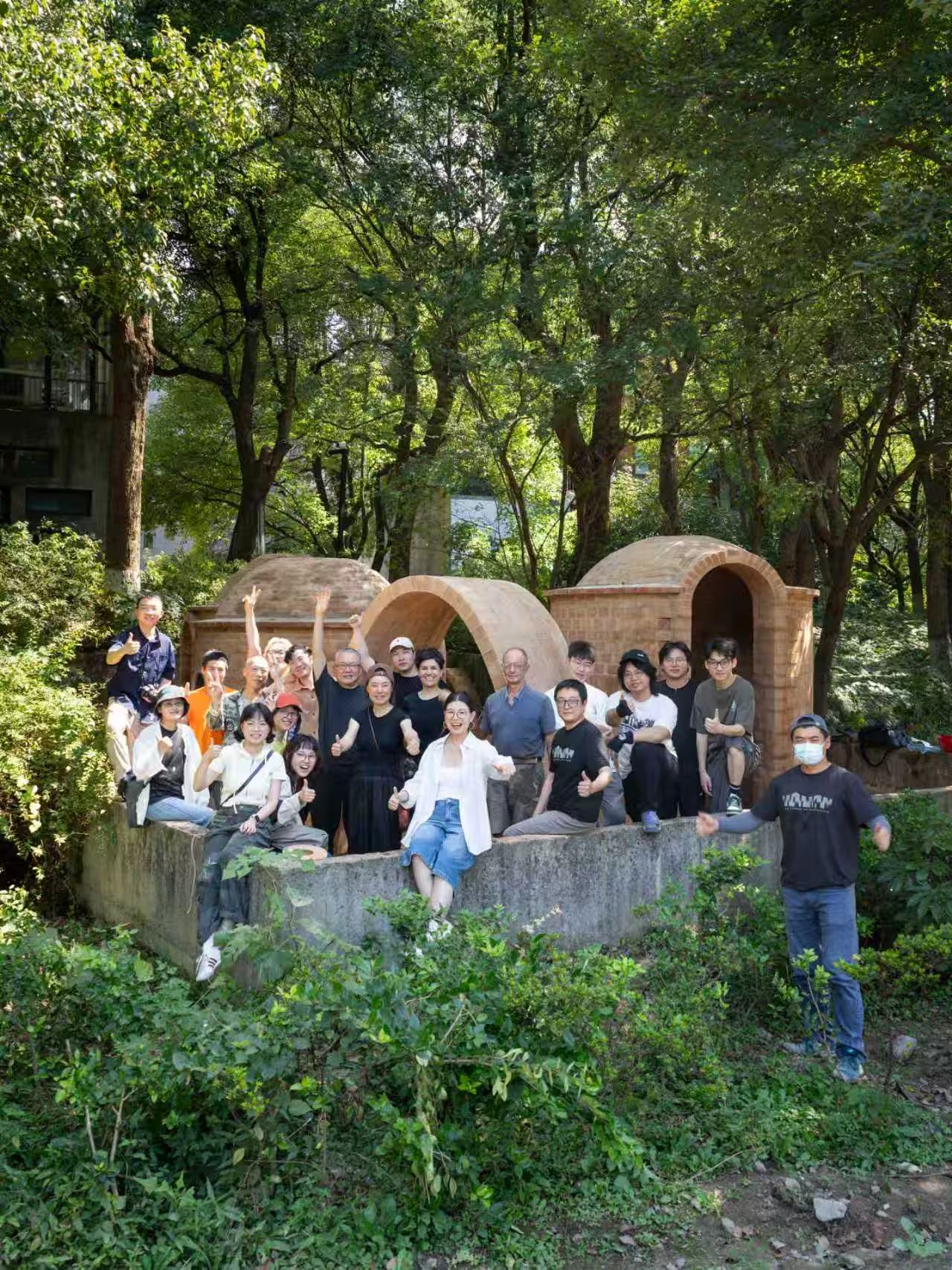
Directed by Laura Ulloa, BfNA explores and designs for the reciprocal dynamics between environments, cognition and collective adaptation.
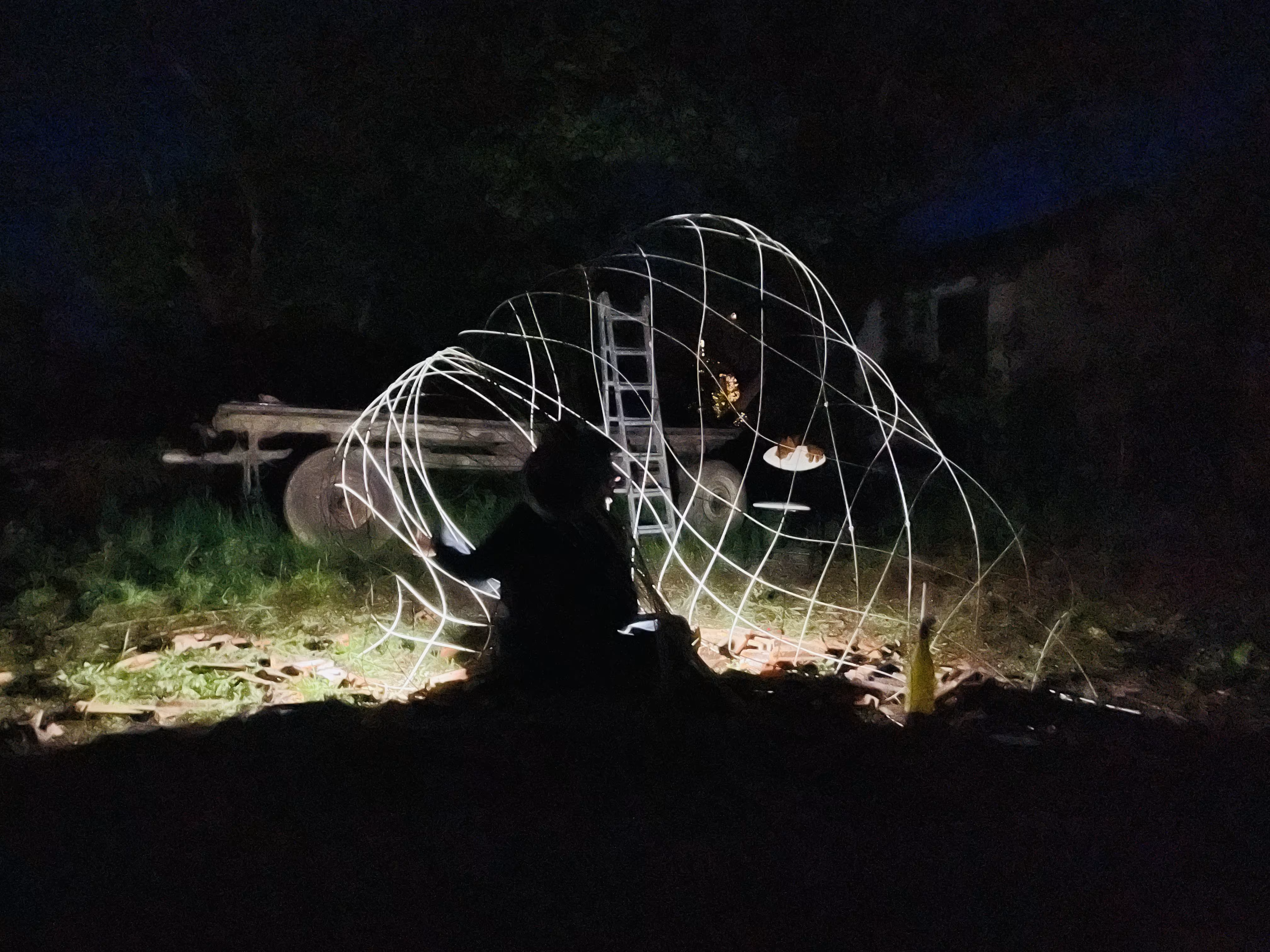

Neural Continua
Research Laboratory on human and material behaviours.
Paris / International
France / International
Neural Continua
Ongoing Collaboration
Ongoing Collaboration / Neural Continua / research platform
[Summary]
Minds, materials and environments as continuous and interrupted systems / adaptive structures for the plasticity-to-praxis question.
[Team]
Neural Continua · Laura Ulloa + Kristoffer Stefan
[Temporal Arc]
Immediate (field observation) · Iterative (research/publication) · Long-term (knowledge transfer into BfNA + HEI)
[Direction of Effect]
OBSERVE (field/research) · QUESTION (spatial philosophy) · FEED BACK (practice + measurement systems)
[Neural Tags]
S1 = Social contact · S2 = Memory/place · B1 = Restorative cognition · B3 = Material/environmental volume
[Biological System]
Embodied cognition · Memory · Attention · Social behaviour · Sensorimotor perception
[Description]
Ongoing Collaboration / Neural Continua is a research platform by Laura Ulloa and Kristoffer Stefan investigating how minds, materials, movements and environments form continuous and interrupted systems. It connects kinetic structures, material behaviour, adaptive feedback and the Derridean problem of interruption: not only flow, but rupture, spacing and the moment where action has to reorganise itself.
[Key Figures]
Typology: Research Laboratory on human and material behaviours. · Research platform · publications · material ecologies · movement + perception · BfNA / HEI ecosystem
[Neural Analysis]
ADAPTIVE FEEDBACK: Neural Continua treats kinetic structure as a feedback system: movement, error and response become architectural equivalents of prediction, correction and learning.
CONTINUITY + INTERRUPTION [F1][M1][S2]: Neural Continua is the theoretical hinge between material behaviour and neural adaptation. The key is not continuous flow alone, but the relation between flow and interruption: prediction, error, correction, pause and transformation. Friston's active inference gives the biological model; Varela, Thompson & Rosch provide enactive cognition; Derrida provides spacing and discontinuity; Gibson provides affordance. The platform should therefore be cited as a research ecology for plasticity-to-praxis: how bodies and materials co-produce action, not how architecture optimises a subject.
[Social Impact]
SOCIAL: The platform opens material research towards adaptive environments for diverse bodies and conditions.
[ROI Sustainability]
ROI: Research value lies in intellectual property, prototypes and future applications in responsive architecture.
R&D VALUE: Neural Continua feeds BfNA and HEI with theoretical, material and behavioural research, creating long-term intellectual property and evidence for future environmental systems.
[Applied R&D Lens]
Develop kinetic prototypes that register human movement and environmental change, then respond through calibrated material behaviour.
Citations:
Karl Friston (2010), "The free-energy principle: a unified brain theory?", Nature Reviews Neuroscience, DOI: 10.1038/nrn2787 · Francisco J. Varela, Evan Thompson & Eleanor Rosch, The Embodied Mind, MIT Press · James J. Gibson, The Ecological Approach to Visual Perception · Jacques Derrida, "Ousia and Grammē: Note on a Note from Being and Time" · BfNA / Neural Continua internal research archive.
Copyright:
Project Credits: Neural Continua; Team: Neural Continua · Laura Ulloa + Kristoffer Stefan .Laura Role: Laura Ulloa / BfNA - ongoing collaboration, neural architecture framing and research development.Image Credits: © Neural Continua / Laura Ulloa / BfNA. All research text and conceptual framing reserved.Source: source to be confirmed.Project Credits & Copyright Notice: Every effort has been made to identify and acknowledge architects, consultants, collaborators, photographers, visualisation studios and other contributors associated with each project. Project descriptions have been rewritten and curated by Bureau for Neural Architecture (BfNA). Architectural works, photographs, renderings, drawings, trademarks and visual material remain the property of their respective authors, studios, photographers, visualisation teams and rights holders. Contributors are credited wherever information is available. Rights remain with their respective authors and rights holders.
© 2026 Bureau for Neural Architecture. Developed by Cavolo Studio.
Privacy Policy & Legal Notice
