


Directed by Laura Ulloa, BfNA explores and designs for the reciprocal dynamics between environments, cognition and collective adaptation.

Diffusion - Vienna
Diffusion / residential
Vienna
Austria
3500
m²
Independent housing research / Laura Ulloa
Project
Diffusion / residential
[Summary]
A dwelling evolving with its inhabitant / domestic space as adaptive behavioural ecology.
[Temporal Arc]
Immediate (spatial legibility) · Chronic (person-environment fit across life stages) · Transgenerational (dwelling adapted across generations)
[Direction of Effect]
REGULATE (person-environment fit across life stages) · ORIENT (body in adaptable plan) · RESTORE (forced mobility eliminated)
[Neural Tags]
B2 = Semi-private biophilic zone · A3 = Acoustic comfort zone · L4 = Adaptive artificial light
[Biological System]
Autonomic regulation · Allostasis · HPA axis regulation · Interoception
[Description]
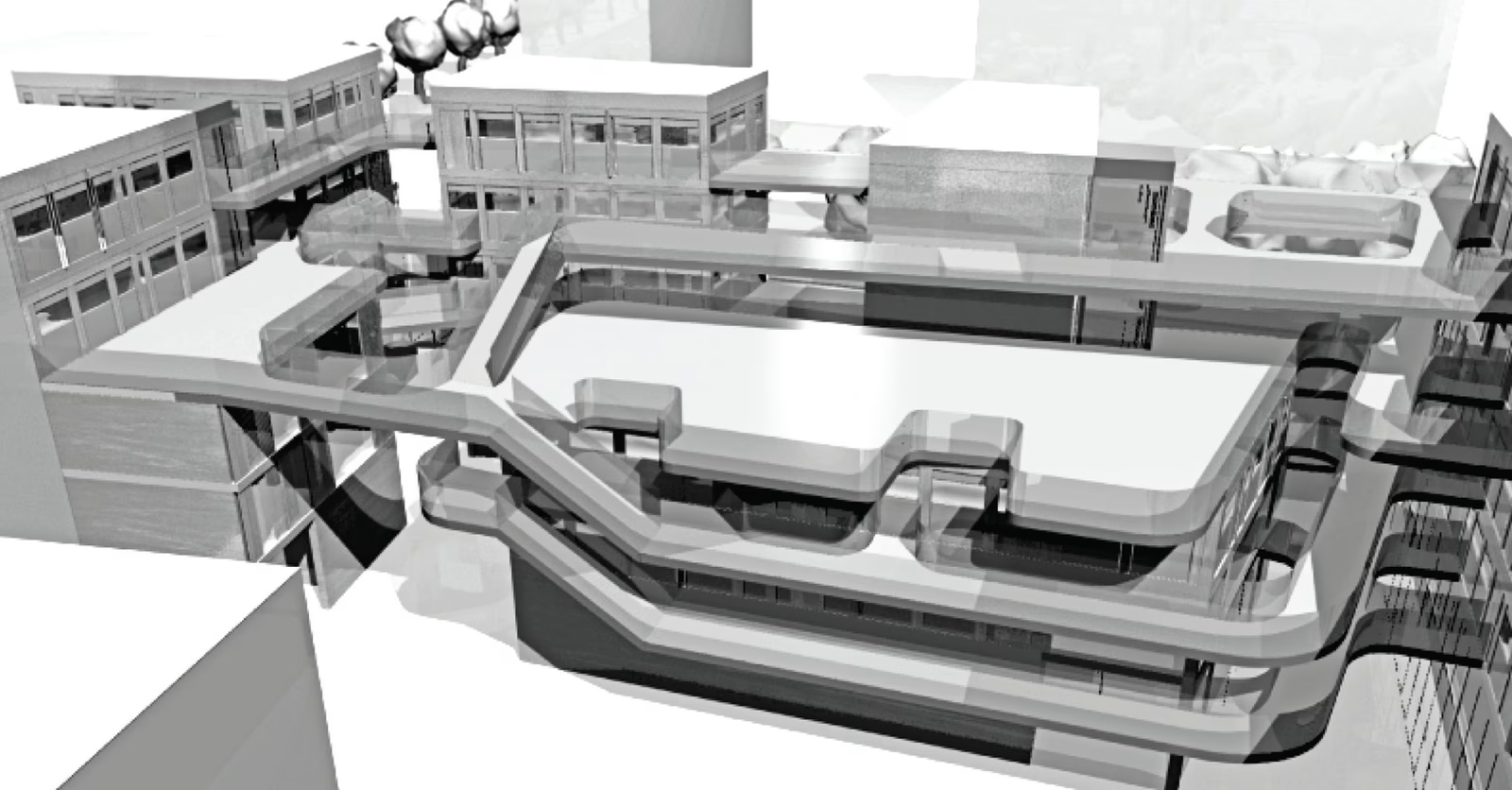
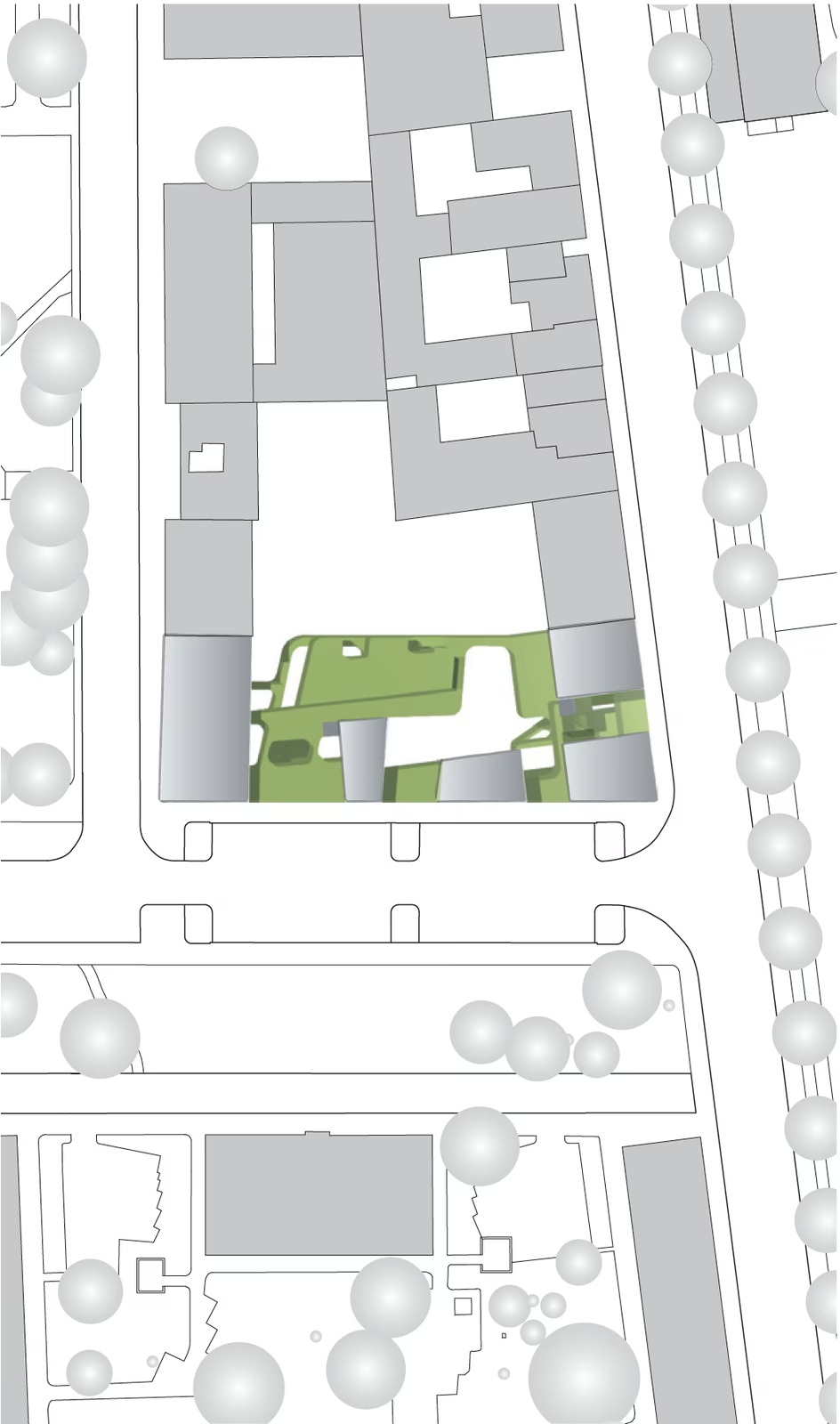
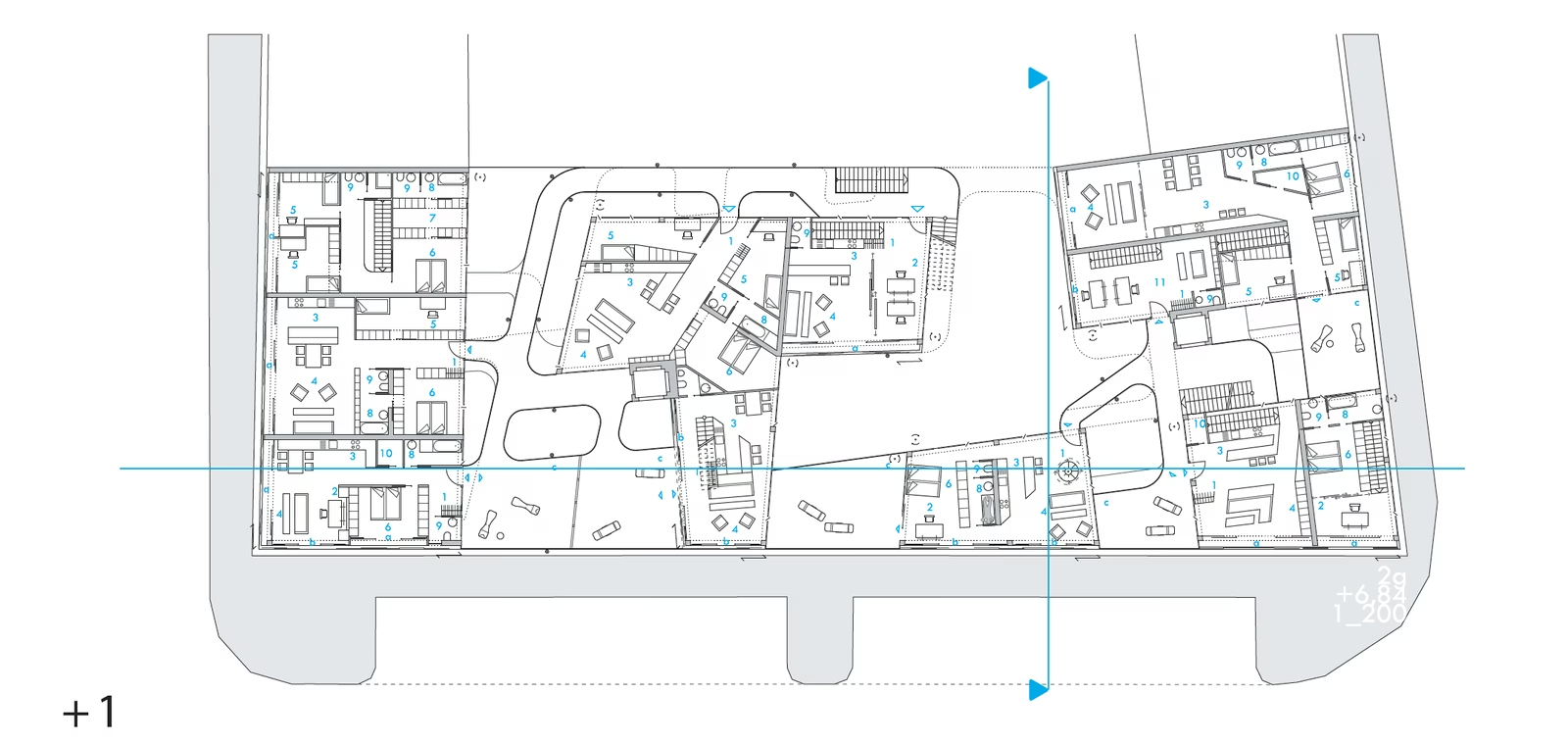
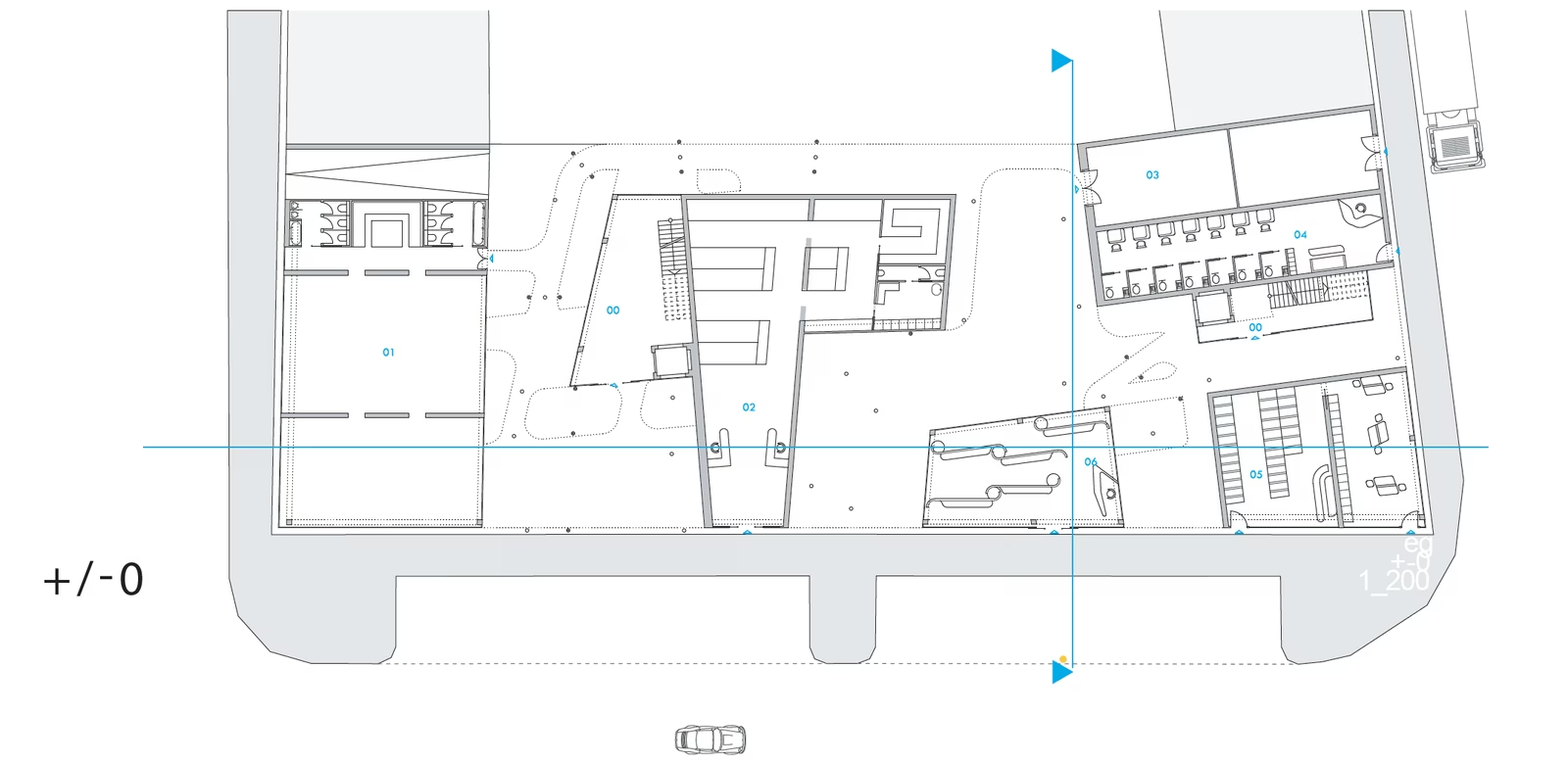
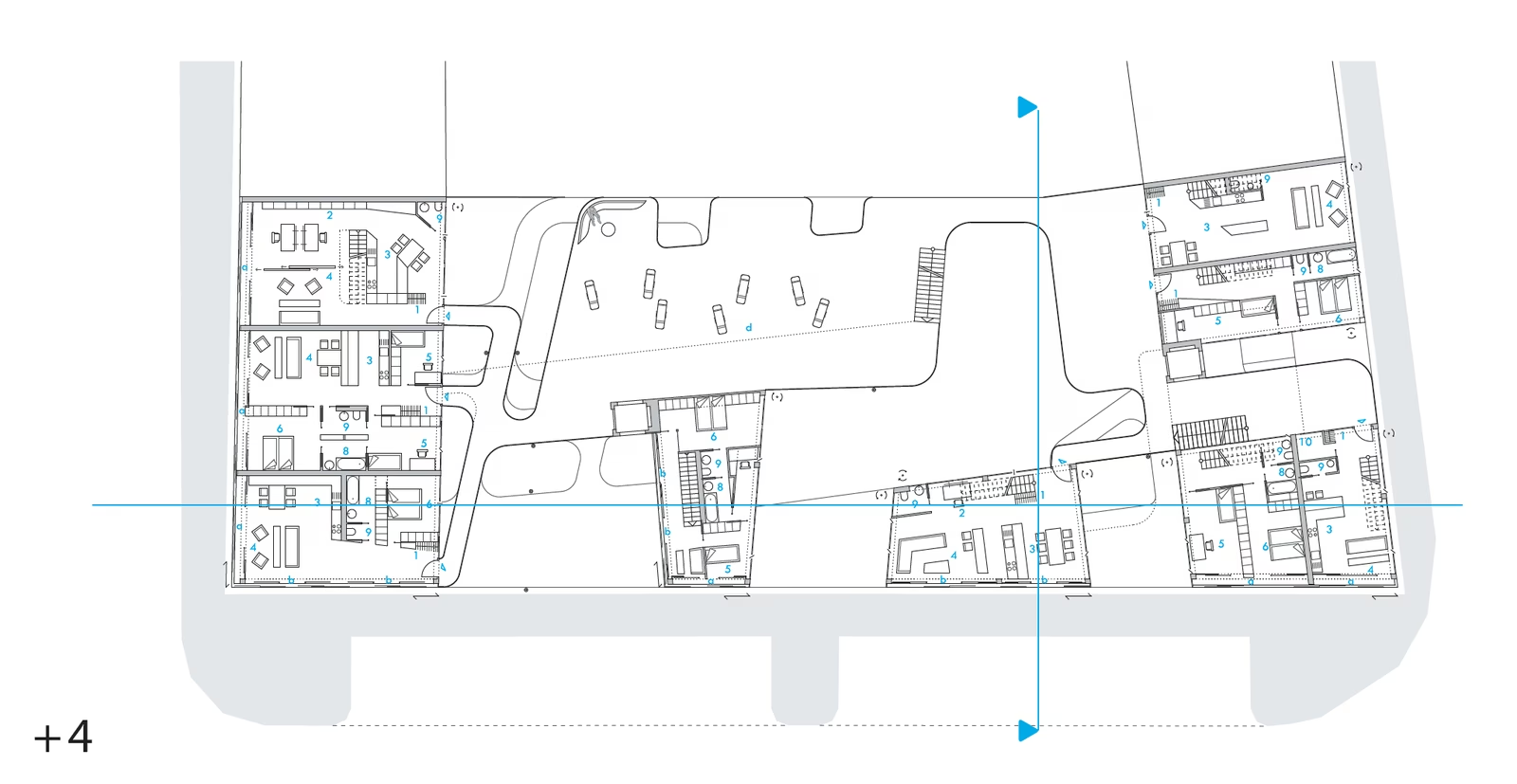
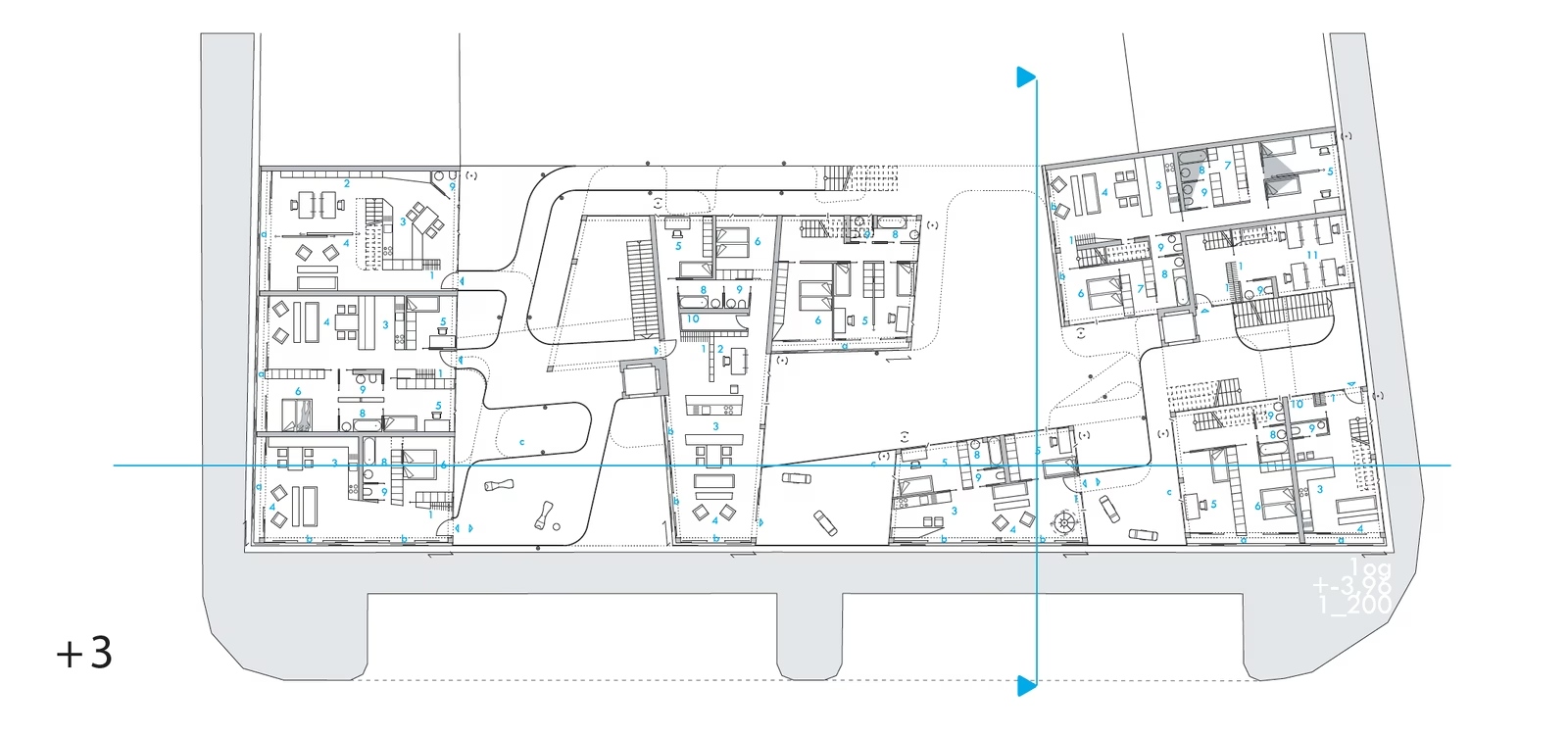
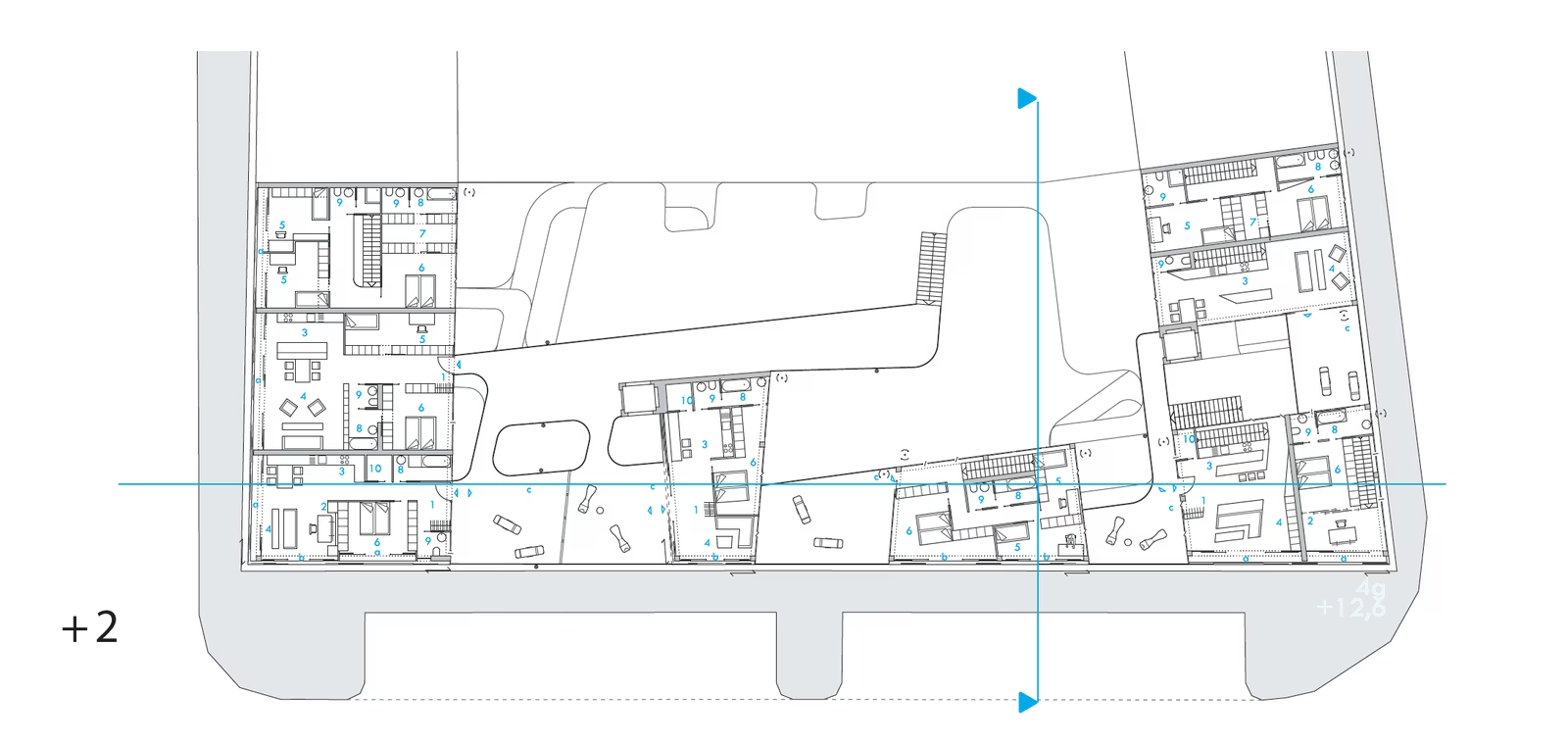
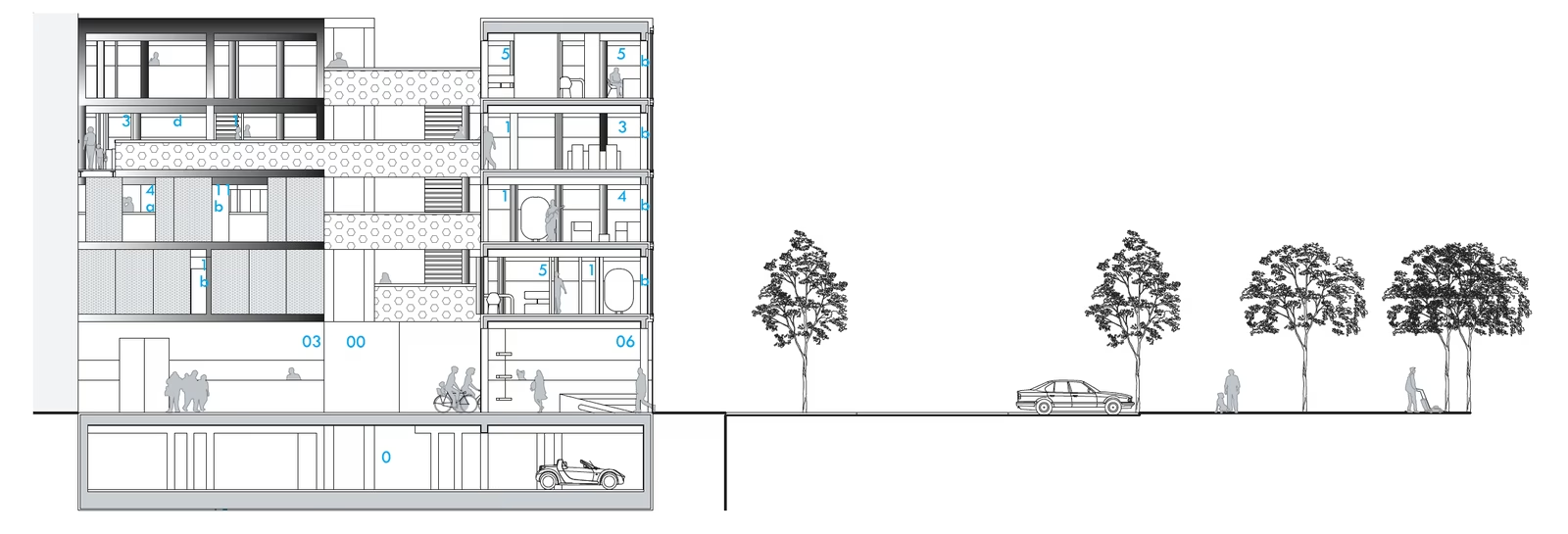
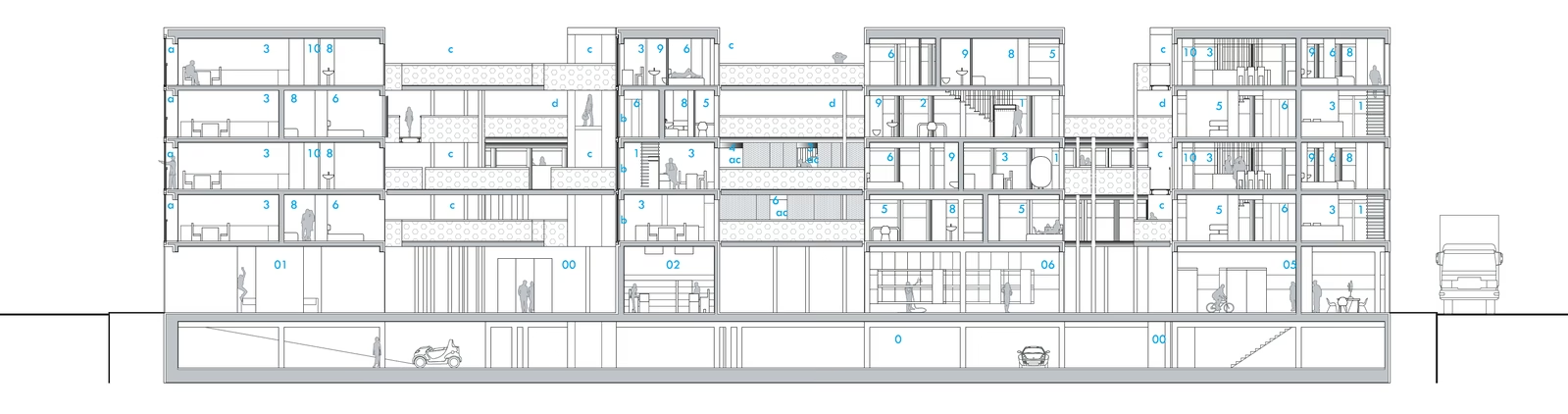
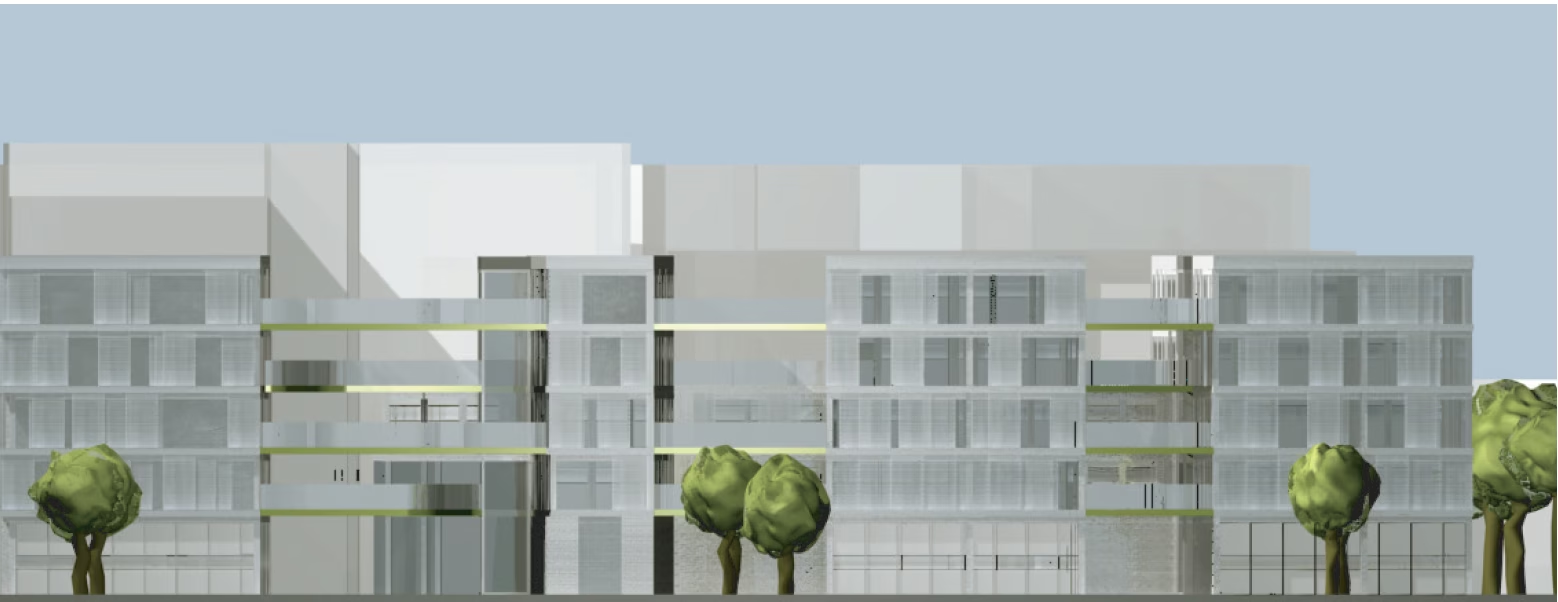
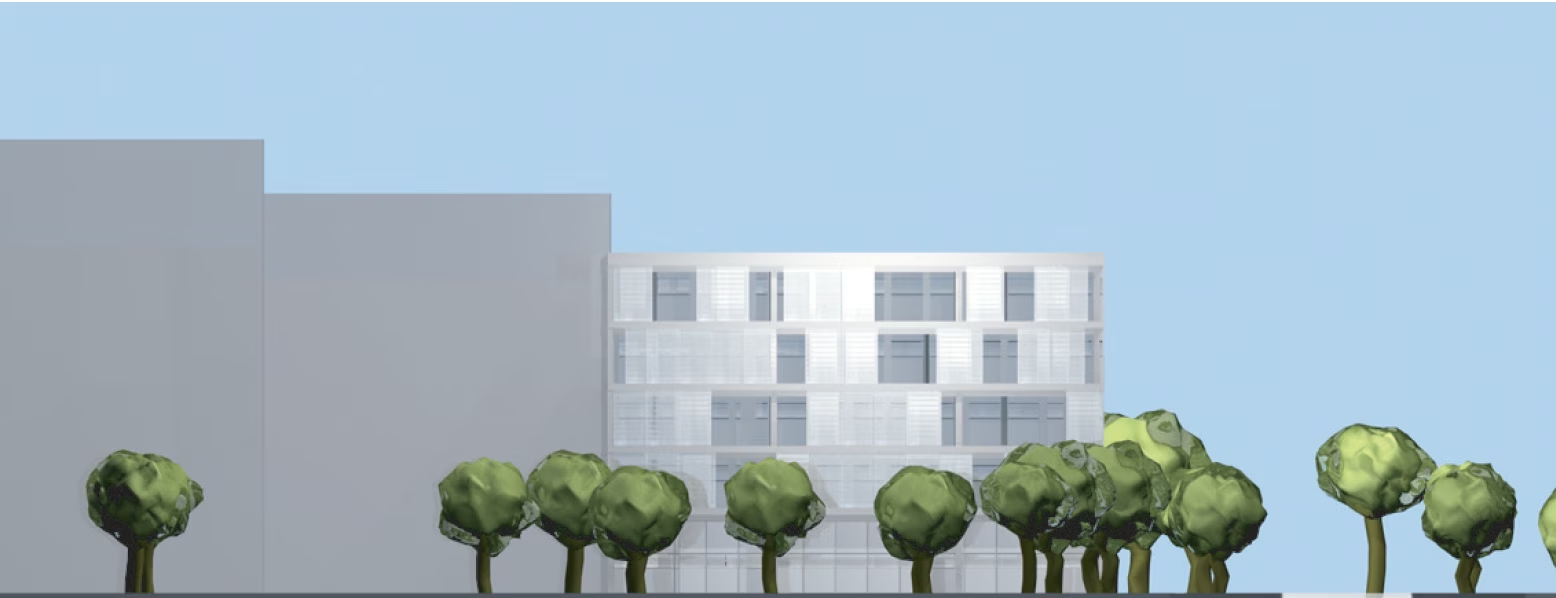
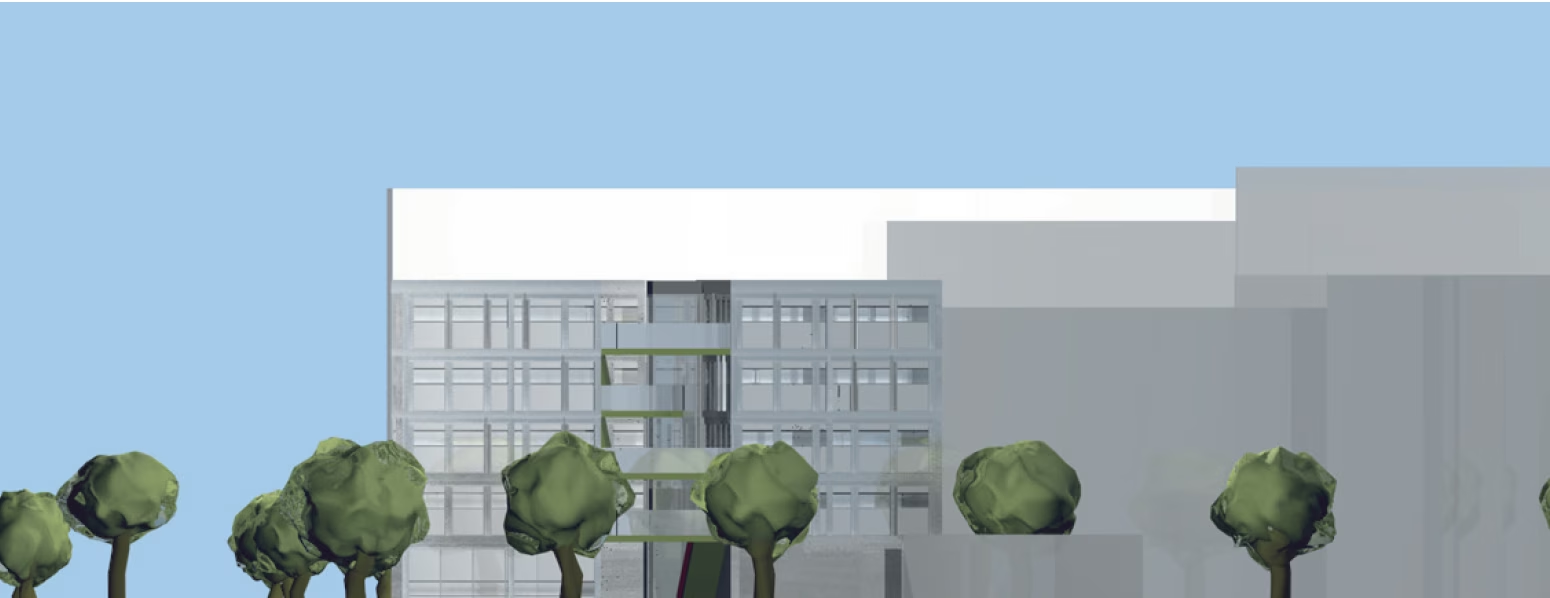
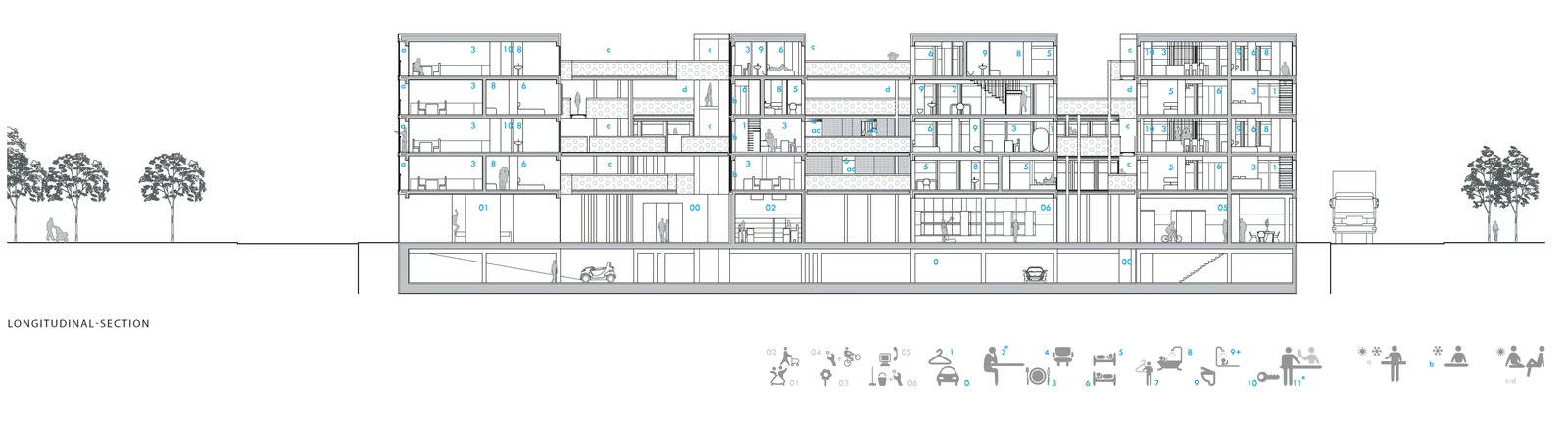
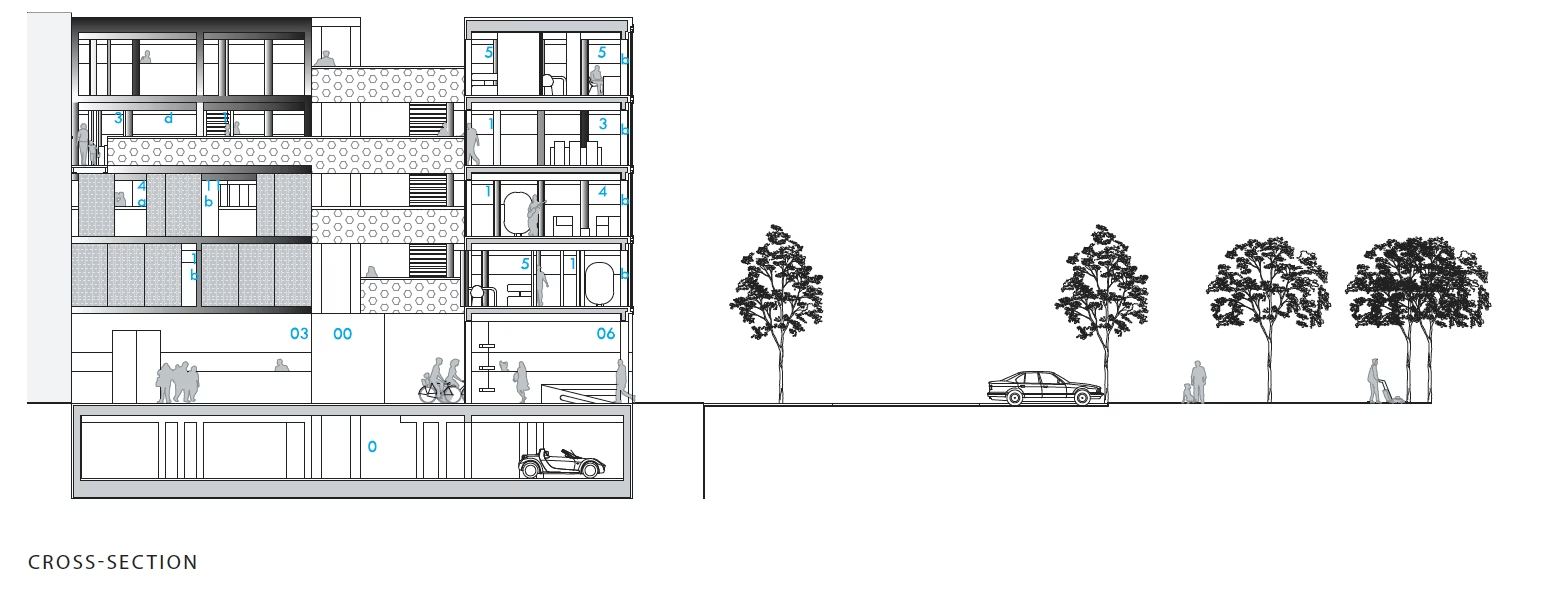
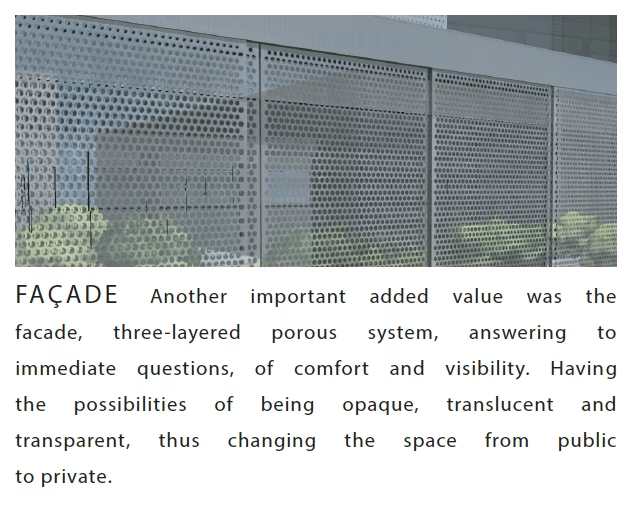
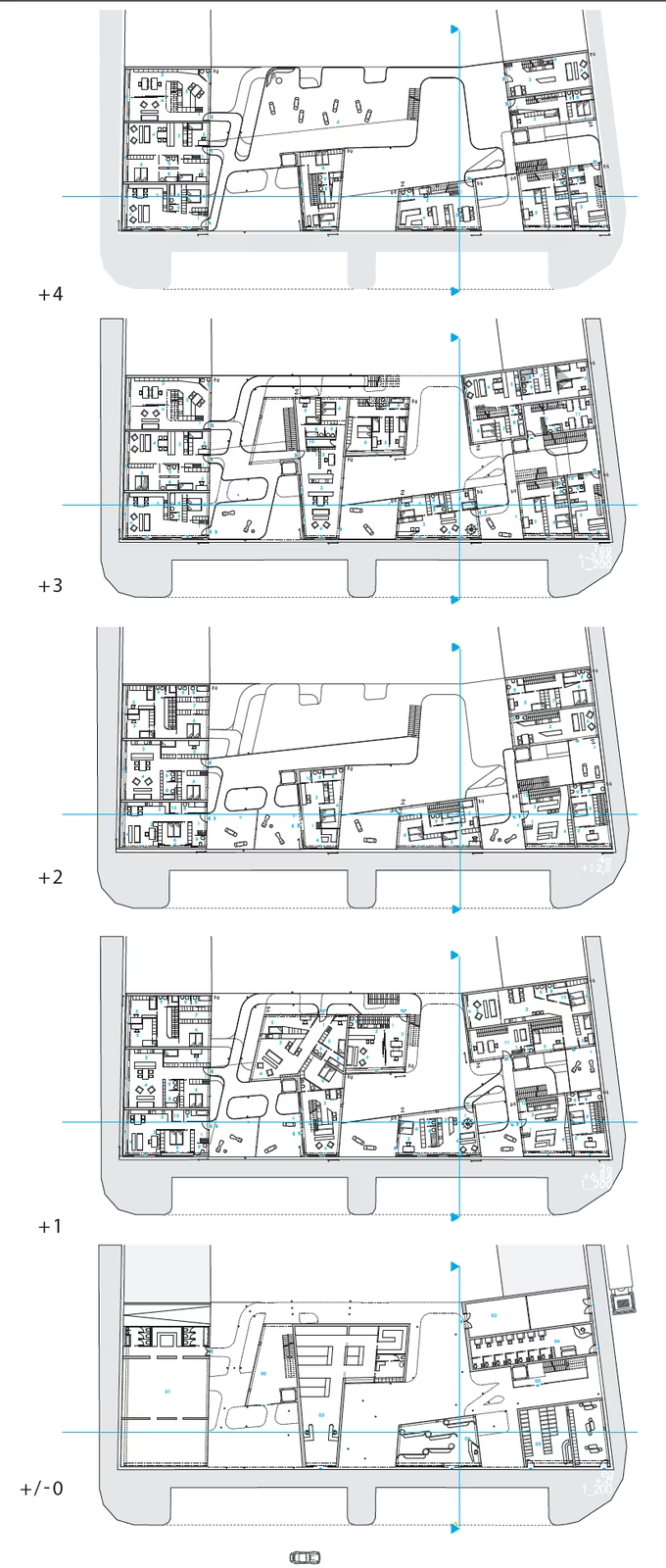
DWELLING OF SHARING Diffusion is a time-dependent random process causing a spread in space. The project was developed in order to provide different solutions as options for the inhabitants and users, both to be temporal or permanent agents. The possibility of becoming one or the other is equally given. I worked with different scenarios: singles becoming couples, these becoming families. How the plans of a given structure can be adaptable in the course of time was of primary importance. As well these actors would start working at home, and how to provide them with the possibility of achieving both in the same place was a key consideration. I was keen to investigate numerous floor plans, working on their flexibility and allowing them to be changed by the inhabitants themselves. Diffusion was developed in order to apply different methods of living qualities, translating them into working spaces. The open spaces changing from public to semi-public and private zones was a challenge to work with; that is why the formal strategy was dependent on the floor plans, working from the inside out.Diffusion is a residential project exploring how the plans of a given dwelling can be made adaptable over the course of time. The project develops around different life scenarios - from single occupant to couple, couple to family - and how the spatial structure of the dwelling can accommodate these transitions without demolition or major renovation. The triple-layer porous facade mediates between the private interior and the public exterior, creating a gradient of zones that the occupant can modulate according to need. The formal strategy works from the inside out: the floor plan generates the section, the section generates the facade. The project anticipated working from home - an integration of productive and restorative space within the same envelope. TU Vienna. Vienna. BfNA reading: this project is understood as a case study in learning, attention, social encounter and environmental dignity. It extends beyond architectural production into environmental intelligence / how design decisions can support human adaptation, social responsibility, ecological performance and future evidence-based practice.
[Key Figures]
Typology: Diffusion / residential · 2006 · ~3,500 m2 · Vienna · Triple-layer porous façade · 6 life-cycle plan scenarios: single → couple → family → empty nester

No items found.
[Neural Analysis]
DOMESTIC DIFFUSION: Privacy and encounter are treated as adjustable neural gradients; the housing system asks when contact becomes reward and when it becomes overload.
PERSON-ENVIRONMENT FIT [B2][A3][L4]: A dwelling that evolves with its occupants addresses person-environment fit - one of the most robust predictors of long-term residential adaptive functioning and mental health (Kahana et al., 1980, adapted by WHO, 2023). Moving house (forced by misfit housing) generates extreme cortisol and social disruption - Diffusion eliminates this. ACOUSTIC EVOLUTION [A3]: Plan flexibility allows acoustic zoning to adapt: quiet zones for study (≤40 dB), social zones (55-65 dB), separated without moving home [A3]. LIGHT [L4]: Porous triple-layer façade allows luminance tuning as occupants' needs change (young professional → family with young children require different light schedules [L1]). PERSON-ENVIRONMENT FIT & NEUROPLASTICITY [B2][A3][L4]: Evans et al. (2003, Psychol. Sci.): residential misfit generates chronic low-grade stress equivalent to a 10% reduction in cognitive performance. Diffusion's flexible plan (3 distinct configurations) ensures long-term fit as life circumstances evolve. The porous three-layer façade mediates between private interior and public exterior - Yin et al. (2020): intermediate semi-private biophilic zones provide the most significant physiological stress reduction. BfNA neural-sciences lens: the relevant question is not only how the project looks, but how it conditions learning, attention, social encounter and environmental dignity over time, across different bodies, neurotypes and social realities.
[Social Impact]
SOCIAL: The project explores shared domesticity without erasing retreat.
[ROI Sustainability]
ROI: Research value resides in housing typologies that reconcile density, comfort and neighbourly exchange.
ROI: Adaptable housing commands a market premium (10-15%) due to reduced renovation costs over lifetime. Triple-layer porous façade provides superior thermal and acoustic performance - lower operating costs. SUSTAINABILITY: Built to last across multiple life stages - embodied carbon amortised over 100+ years vs standard 20-year renovation cycles. ADAPTABLE HOUSING MARKET VALUE: Flexible housing commands 10-15% market premium over fixed-plan equivalents (Urban Land Institute, 2022). Reduced renovation costs over dwelling lifetime: €15,000-40,000 saved per household. Triple-layer porous façade: passive house thermal performance - reduces heating energy 60-70% vs standard construction. ESG / investment lens: the value of this project is not limited to carbon or certification. It includes education outcomes, cognitive equity and long-term institutional value, producing evidence that can inform investors, public actors, operators and future environmental standards.
[Applied R&D Lens]
Analyse thresholds, sightlines and acoustic exposure to define healthy gradients of contact.
Person-environment fit is one of the most robust predictors of residential adaptive functioning - and one of the least spatially measured. BfNA's Applied R&D would deploy longitudinal HPA axis monitoring across Diffusion's occupant population across three life-stage transitions - tracking cortisol baseline and cognitive performance as the dwelling adapts to each configuration. The adaptable floor plan provides the independent variable; the absence of forced mobility - typically the most allostatic residential event - provides the measurement condition. What does it cost a body, neurologically, to move house? Diffusion eliminates that cost. BfNA measures what that elimination is worth.Future data layer: deployed through BfNA, the project could become a longitudinal dataset linking environmental conditions, behavioural patterns, social outcomes and ecological performance / transforming built space into knowledge for future design.
Citations:
Sources: Evans et al. (2003) Psychol. Sci. residential misfit · Yin et al. (2020) Indoor Air biophilic · Urban Land Institute (2022) flexible housing premium · WHO (2023) housing as social determinant. · Housing privacy studies; environmental stress; TU Wien research context.
Copyright:
Project Credits: Independent housing research / Laura Ulloa; Team: team to be confirmed.Laura Role: Laura Ulloa - Project Leader / lead responsibility where documented in CV, office records or project archive.Image Credits: © Laura Ulloa / BfNA. Images and third-party material remain.Source: source to be confirmed.Project Credits & Copyright Notice: Every effort has been made to identify and acknowledge architects, consultants, collaborators, photographers, visualisation studios and other contributors associated with each project. Project descriptions have been rewritten and curated by Bureau for Neural Architecture (BfNA). Architectural works, photographs, renderings, drawings, trademarks and visual material remain the property of their respective authors, studios, photographers, visualisation teams and rights holders. Contributors are credited wherever information is available. Rights remain with their respective authors and rights holders.
© 2026 Bureau for Neural Architecture. Developed by Cavolo Studio.
Privacy Policy & Legal Notice
