


Directed by Laura Ulloa, BfNA explores and designs for the reciprocal dynamics between environments, cognition and collective adaptation.

Idyll - Vienna
urban _ therapeutic
Vienna
Austria
~45 ha
m²
Independent therapeutic urban research / Laura Ulloa
Project
Idyll Vienna / urban _ therapeutic
[Summary]
Hippocrates was right / health begins with air, landscape, movement and social conditions.
[Team]
Marie-Thérèse Tomiczek + Berkan Yasaturk
[Temporal Arc]
Immediate (Danube view + landscape) · Circadian (light + thermal management) · Chronic (healing across months of therapeutic stay) · Transgenerational (research university improving the protocol)
[Direction of Effect]
RESTORE (Hippocratic healing landscape) · REGULATE (circadian and thermal) · ENCOUNTER (non-segregated healing community)
[Neural Tags]
W1 = Water proximity - Blue Mind · B1 = Nature views · B3 = Biophilic volume · A3 = Acoustic comfort zone · S2 = Collective memory + spatial identity
[Biological System]
Autonomic regulation · Allostasis · Molecular signalling (serotonin, cortisol) · HPA axis · Circadian entrainment
[Description]
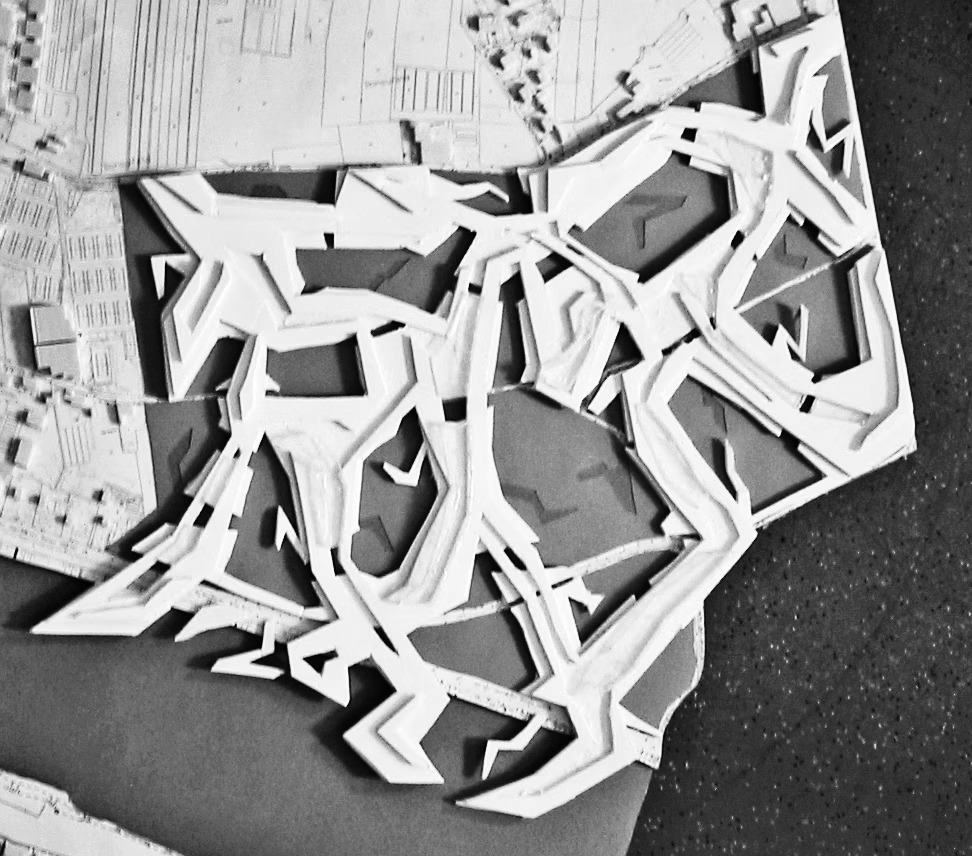
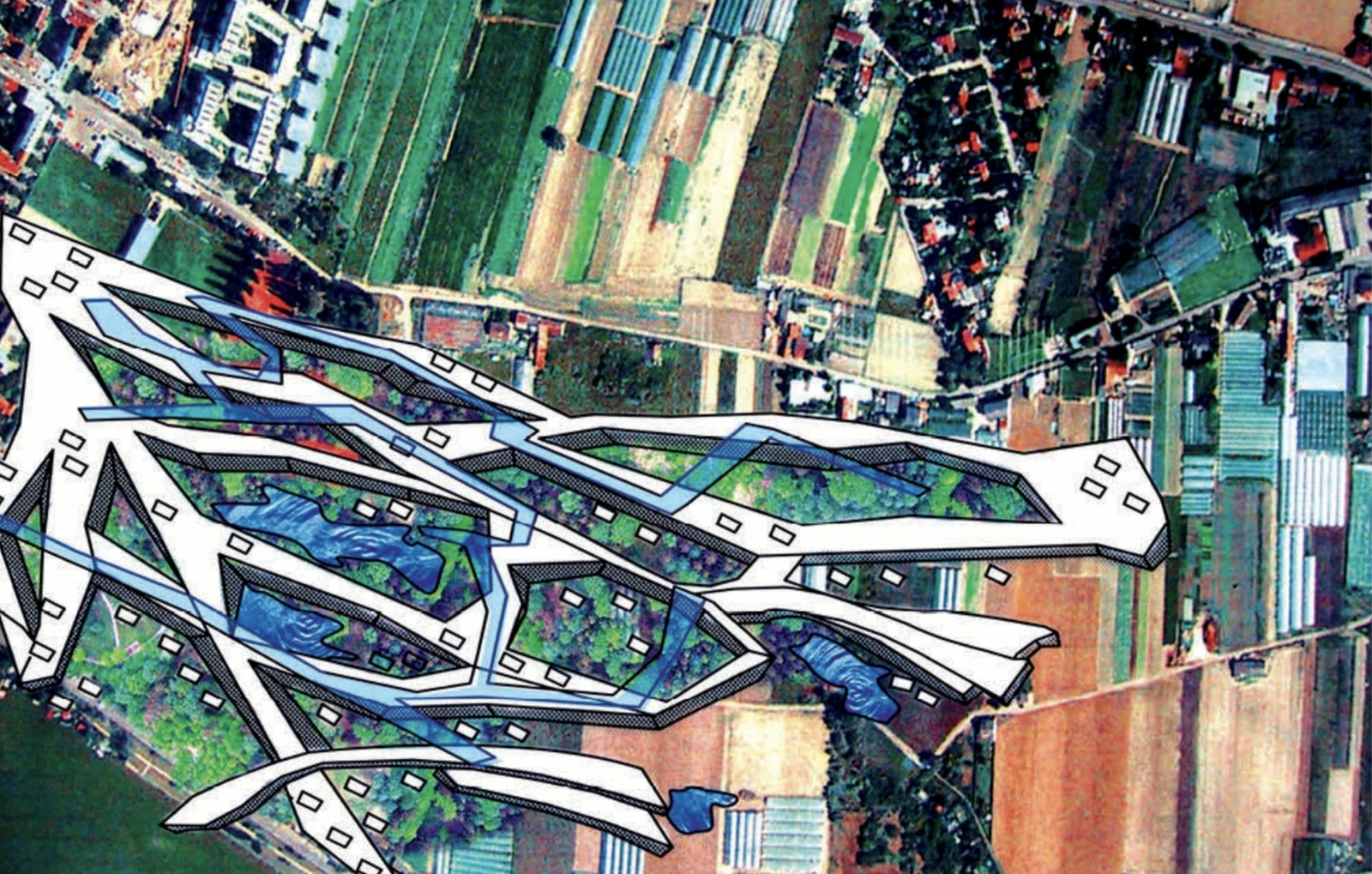
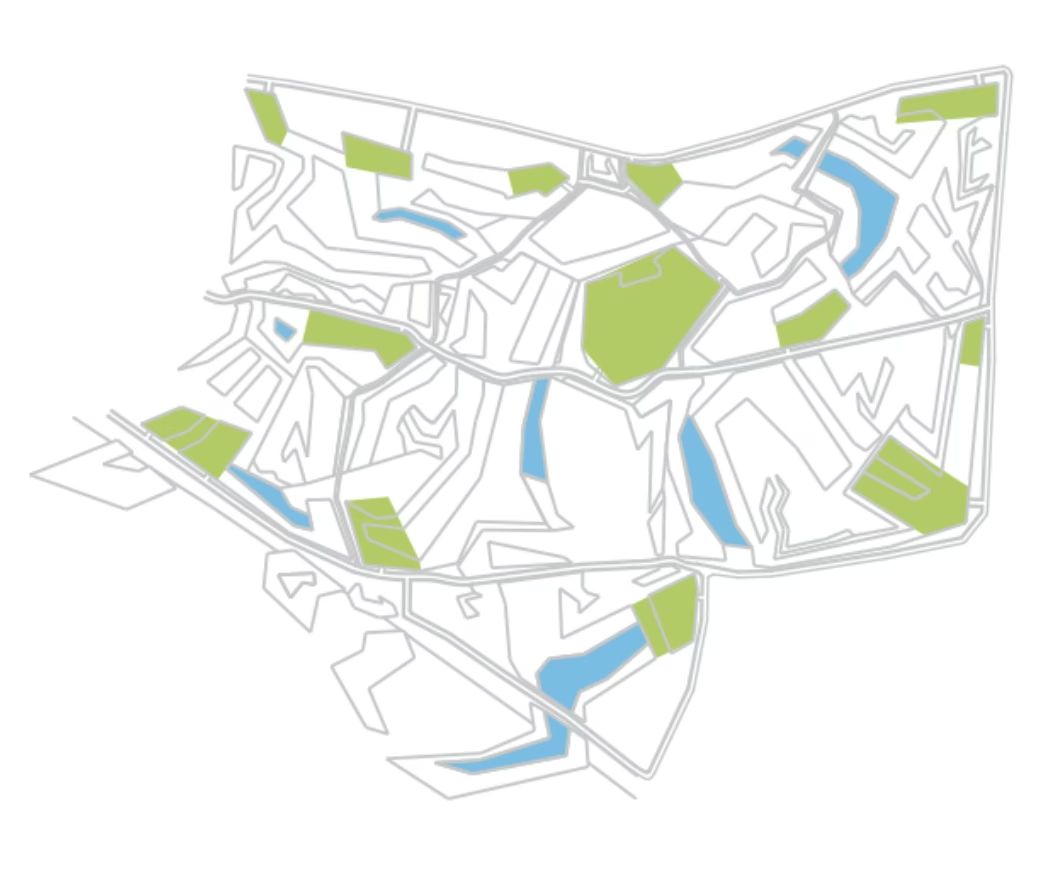
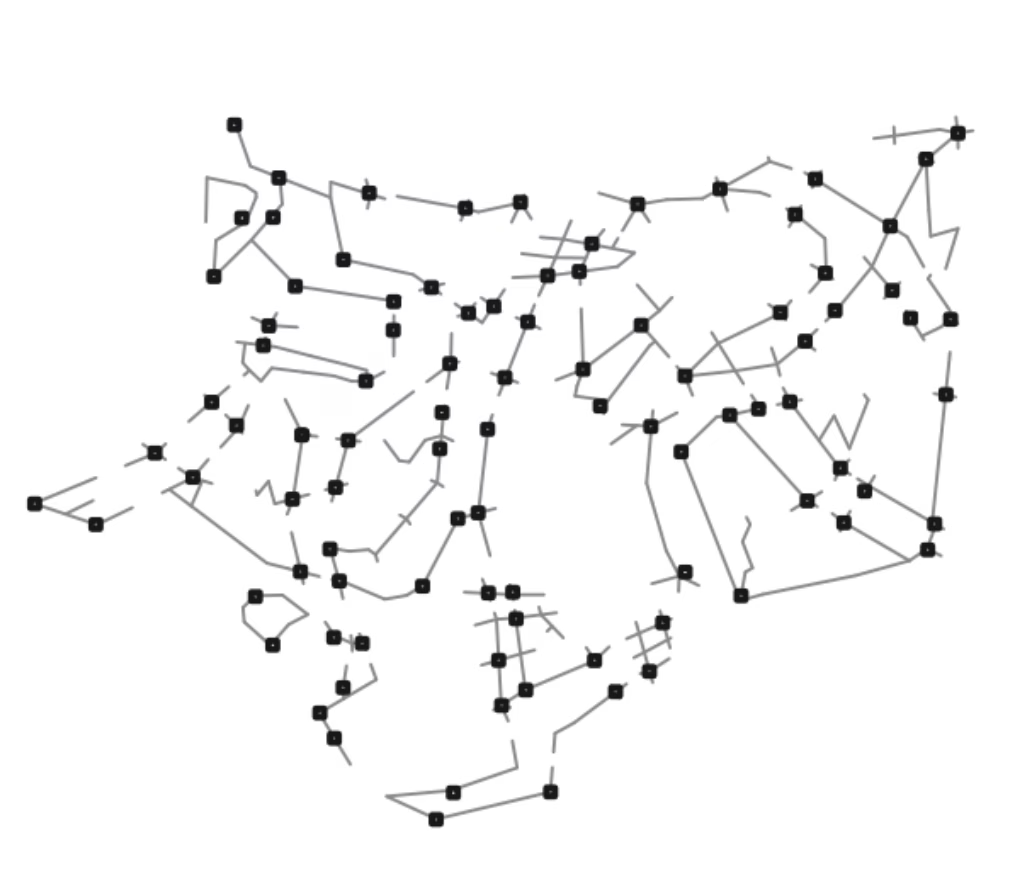
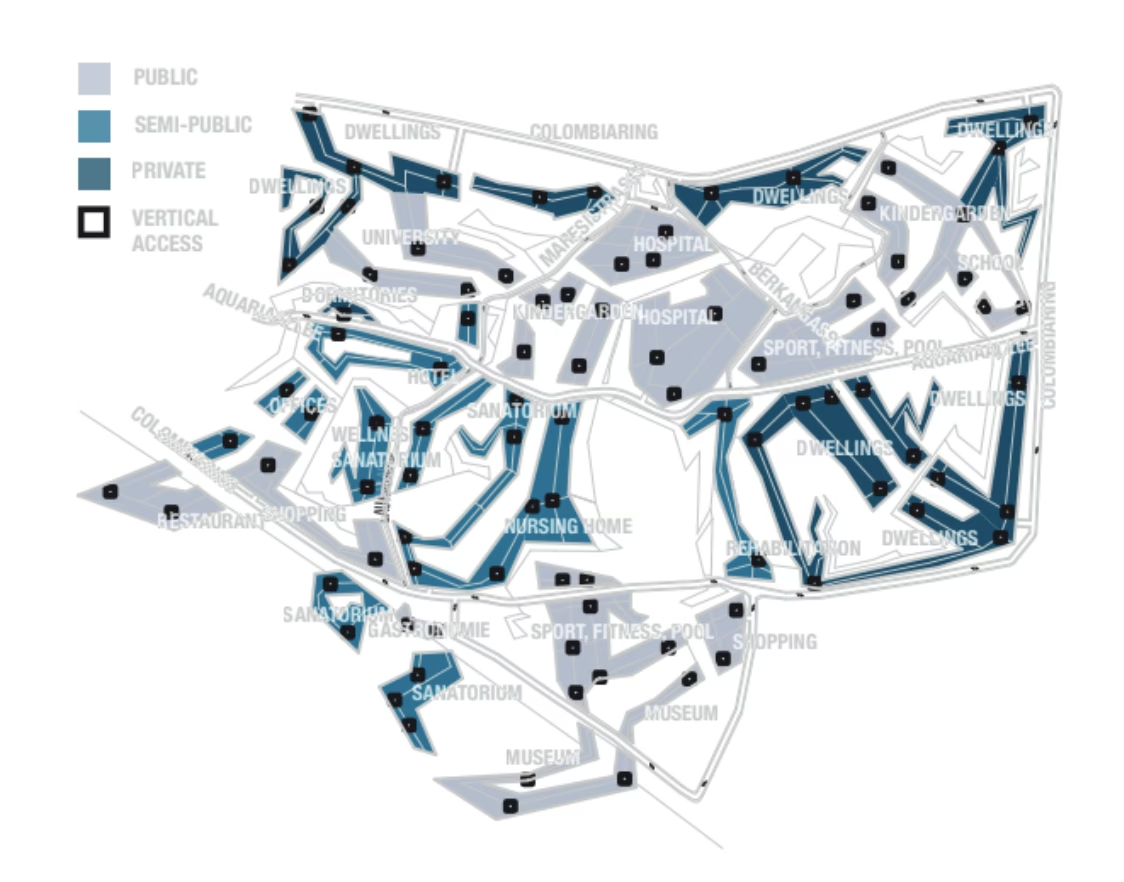
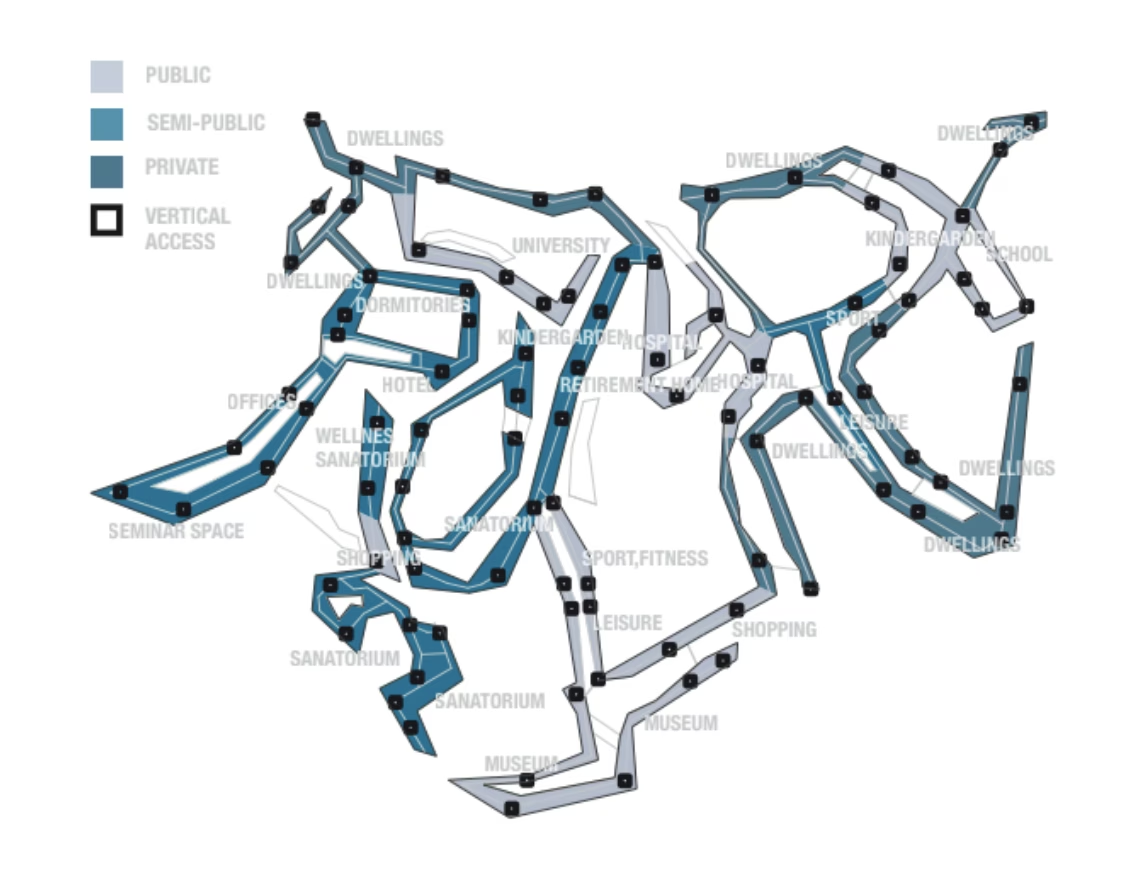
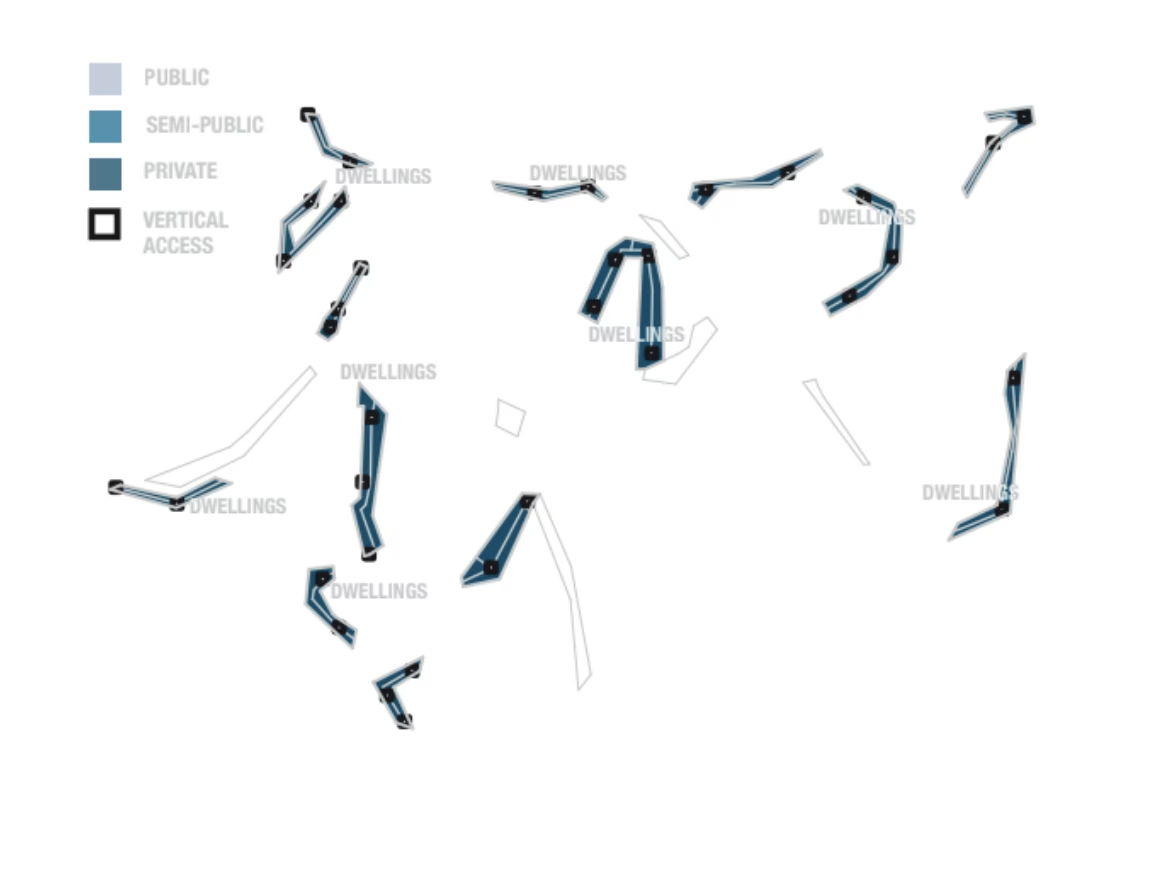
Layered therapeutic landscape set at the periphery of Vienna in a scenic and ecological condition. Idyll tests how hospital, spa, housing, gardens, movement routes and landscape-based recovery programmes can be organised as a health territory rather than an isolated medical object. The project is framed through air, water, movement, social contact and environmental regulation, replacing obsolete retreat language with a more precise question: how landscapes can support care.
[Key Figures]
Typology: urban _ therapeutic · 2006 · ~45 ha · Programme: hospital, spas, park archipelagos and research university · Site: bank of the Danube, Vienna periphery

No items found.
[Neural Analysis]
DISRUPTED IDYLL: The project avoids the picturesque idyll and redefines care as a measurable condition of shelter, sensory modulation and stress recovery.
HIPPOCRATIC HEALING LANDSCAPE [W1][B1][B3][A3][S2]: Idyll is explicitly Hippocratic in its premise - 'a great part of healing can be done by releasing the patient from stress'. This is now validated by decades of neural science. WATER [W1]: Danube proximity: Blue Mind - ↑ dopamine/serotonin; ↓ cortisol [W1]. NATURE [B1]: Ulrich (1984): nature views → shorter hospital stays, fewer painkillers [B1]. The Tandfonline (2024) systematic review of healthcare biophilic design confirms reduced hospitalisation time, patient mortality, pain levels and anxiety [B3]. SILENCE [A3]: Healing requires <35 dB in patient wards; <45 dB in therapeutic gardens - both achieved in this masterplan. RECOVERY [S2]: Park archipelago structure corresponds to Kaplan ART (1995) recovery landscape: 'being away' + 'extent' + 'fascination' + 'compatibility' [S2]. RESEARCH INTEGRATION: University on-site enables evidence-based healing environment design - a direct predecessor of the Applied R&D used by BfNA. HIPPOCRATIC LANDSCAPE & EVIDENCE-BASED HEALING [W1][B1][B3][A3][S2]: Hippocrates identified clean air, water and landscape as the three primary conditions for healing - a proto-scientific observation confirmed by 2,500 years of research. Ulrich (1991, J. Environ. Psychol.): patients in healthcare spaces with nature views have 10-20% shorter recovery times and fewer analgesics. Idyll adds Danube proximity [W1], therapeutic landscape [B1][B3], acoustic design [A3] and social research integration [S2]. BfNA neural-sciences lens: the relevant question is not only how the project looks, but how it conditions learning, attention, social encounter and environmental dignity over time, across different bodies, neurotypes and social realities.
[Social Impact]
SOCIAL: It reframes therapeutic urbanism as a public right to recovery and calm.
[ROI Sustainability]
ROI: Research value comes from prototype strategies for low-stress urban care environments.
ROI: Healthcare real estate: long-term occupancy stability. Research university creates academic jobs and international recognition. SUSTAINABILITY: Danube position enables geothermal heating; agricultural fields preserved as food supply for the hospital restaurant. HEALTHCARE REAL ESTATE ROI: Healthcare real estate: among the most stable long-term asset classes (10-15 yr lease terms, government-backed). Danube proximity: Vienna riverfront property 25-35% premium (Wiener Zeitung, 2023). Geothermal: Danube aquifer enables heat exchange - zero carbon heating. ESG / investment lens: the value of this project is not limited to carbon or certification. It includes education outcomes, cognitive equity and long-term institutional value, producing evidence that can inform investors, public actors, operators and future environmental standards.
[Applied R&D Lens]
Define sensory ranges for sound, light, air, shade, movement, water proximity and social contact within landscape-based care environments.
Idyll is the most complete neural science prescription in this portfolio - and therefore the most measurable. BfNA's Applied R&D would deploy the full Environmental Index across the Danube campus: continuous monitoring of light, acoustic, thermal, air quality, and water proximity - correlated against continuous patient physiological monitoring (cortisol, HRV, sleep actigraphy) across the full therapeutic stay. The research university provides the measurement infrastructure; the patients provide the longitudinal dataset. Idyll is a healing landscape that measures its own efficacy - an architecture that gets better at healing as it learns, over decades, what the body needs from it.Future data layer: deployed through BfNA, the project could become a longitudinal dataset linking environmental conditions, behavioural patterns, social outcomes and ecological performance / transforming built space into knowledge for future design.
Citations:
Sources: Ulrich (1991) J. Environ. Psychol. healthcare nature views · Nichols (2014) Blue Mind · Kaplan (1995) Env. & Behav. ART · WHO (2023) integrated mental health care. · Therapeutic landscape literature; environmental stress; TU Wien archive.
Copyright:
Project Credits: Independent therapeutic urban research / Laura Ulloa; Team: Marie-Thérèse Tomiczek + Berkan Yasaturk.Laura Role: Laura Ulloa - Project Leader / lead responsibility where documented in CV, office records or project archive.Image Credits: © Laura Ulloa / BfNA. Images and third-party material remain.Source: http://lauravirginiaulloaquiroga.blogspot.in/p/idyll.html.Project Credits & Copyright Notice: Every effort has been made to identify and acknowledge architects, consultants, collaborators, photographers, visualisation studios and other contributors associated with each project. Project descriptions have been rewritten and curated by Bureau for Neural Architecture (BfNA). Architectural works, photographs, renderings, drawings, trademarks and visual material remain the property of their respective authors, studios, photographers, visualisation teams and rights holders. Contributors are credited wherever information is available. Rights remain with their respective authors and rights holders.
© 2026 Bureau for Neural Architecture. Developed by Cavolo Studio.
Privacy Policy & Legal Notice
