


Directed by Laura Ulloa, BfNA explores and designs for the reciprocal dynamics between environments, cognition and collective adaptation.

Invisible Forces / Invisible Cities - Shanghai
urban _ dead-scapes
Shanghai / Vienna
China / Austria
Independent research / Laura Ulloa
Best Theoretical & Design Thesis - Archdiploma 2013. Exhibited: AzW Vienna
Invisible Forces / urban _ dead-scapes
[Summary]
Identity, death, memory and urban transformation / a thesis on the invisible systems that structure public life.
[Temporal Arc]
Immediate (limbic activation at threshold) · Chronic (grief processing over time) · Transgenerational (collective cultural memory)
[Direction of Effect]
RESTORE (grief processing) · ORIENT (body in liminal space) · ENCODE (collective memory of the dead)
[Neural Tags]
S1 = Social contact activation · S2 = Collective memory + spatial identity · B1 = Nature views
[Biological System]
Limbic system · Amygdala modulation · Memory consolidation · Hippocampal encoding · Interoception
[Description]
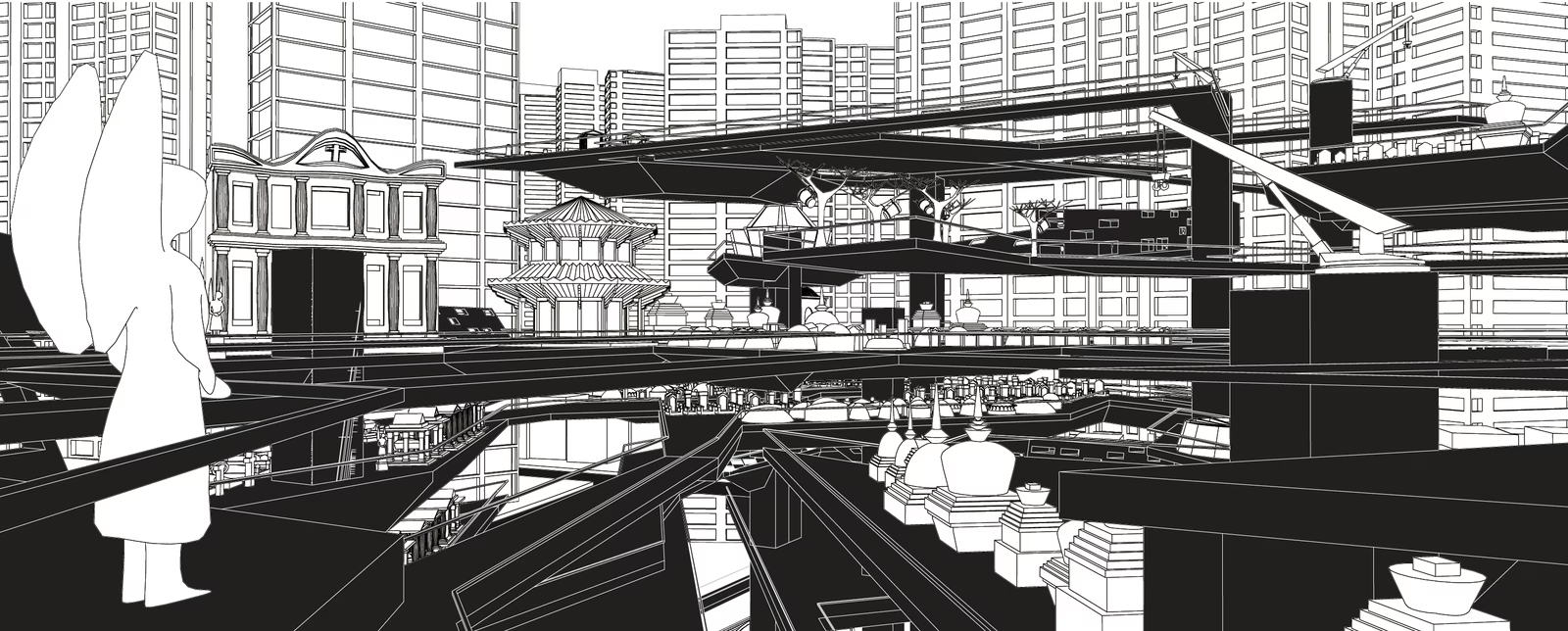
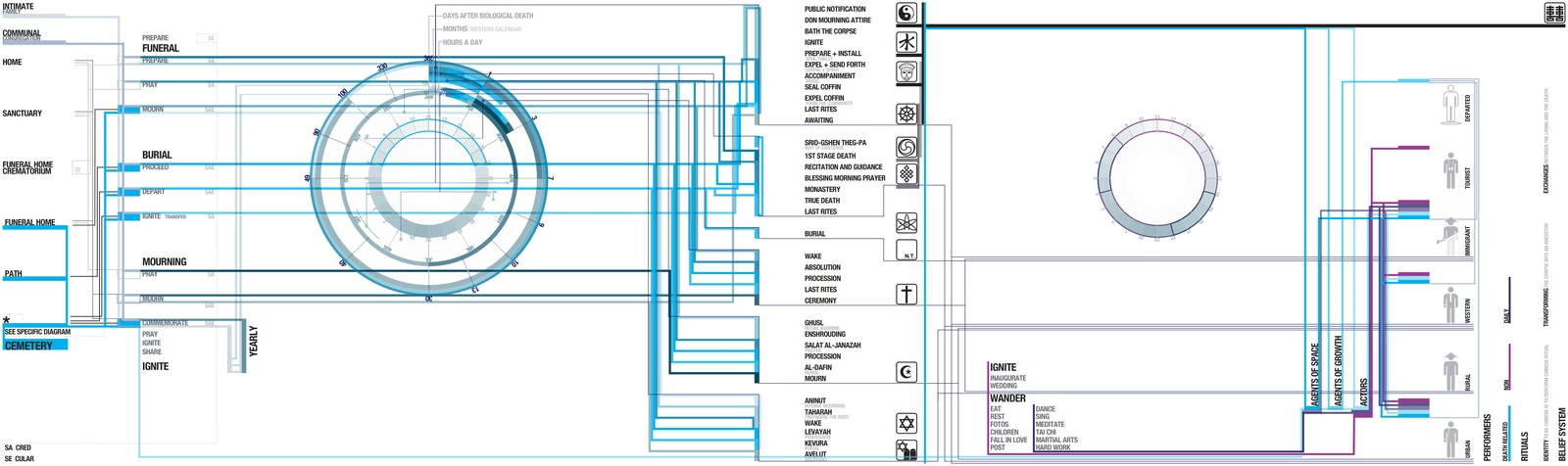
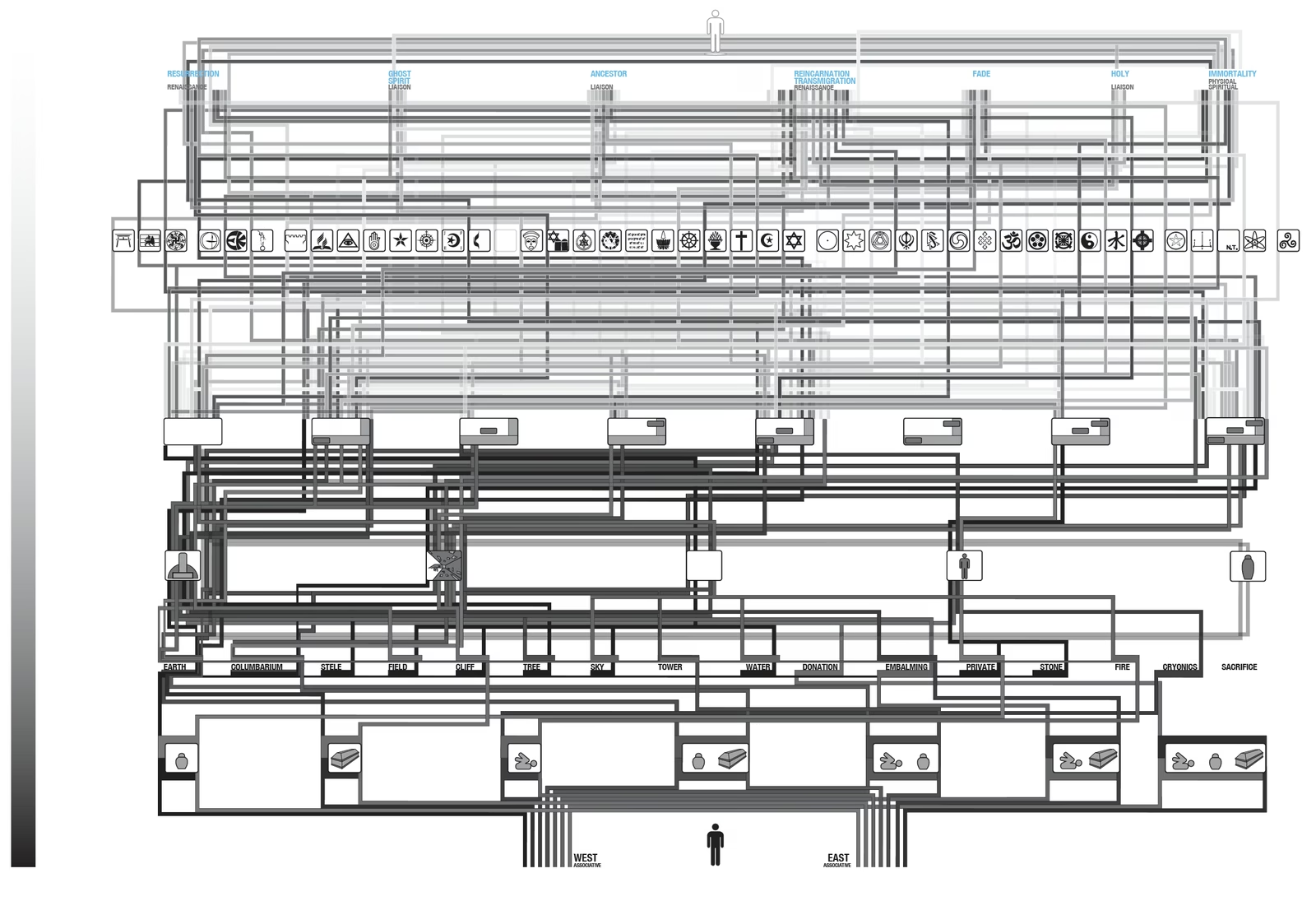
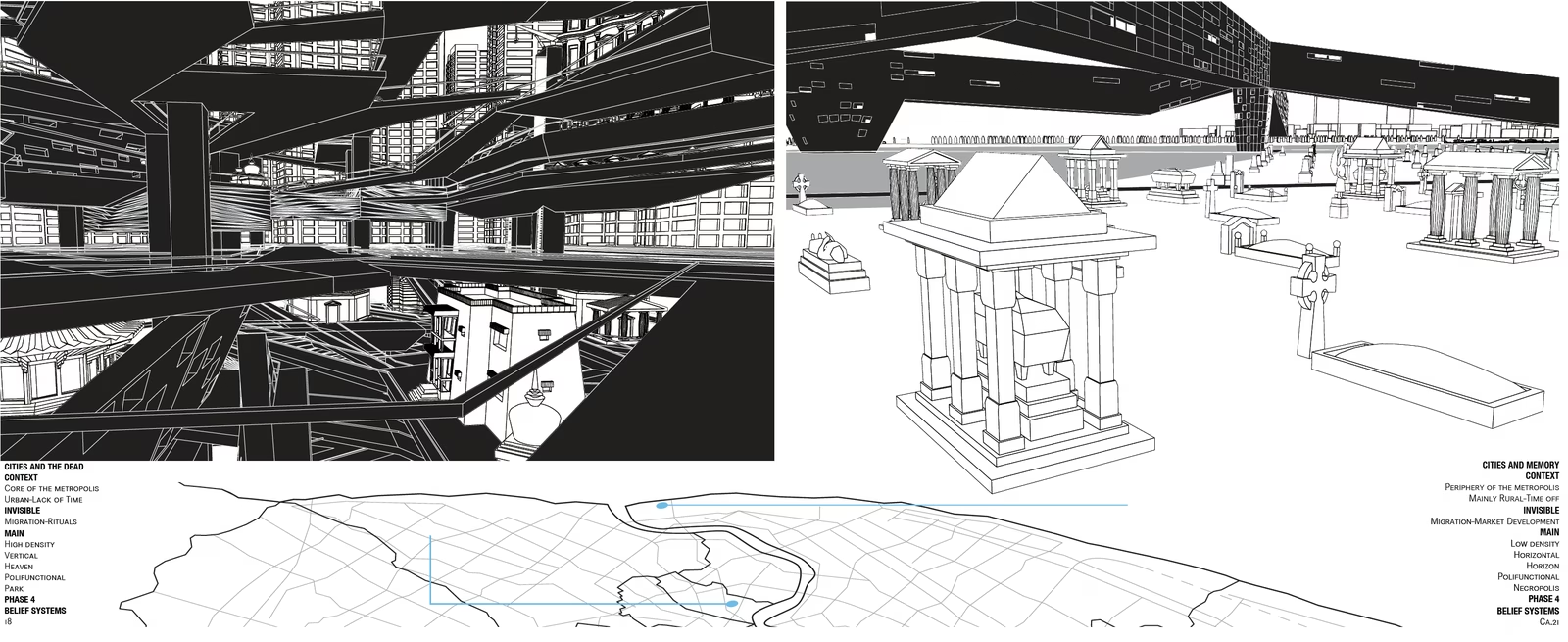
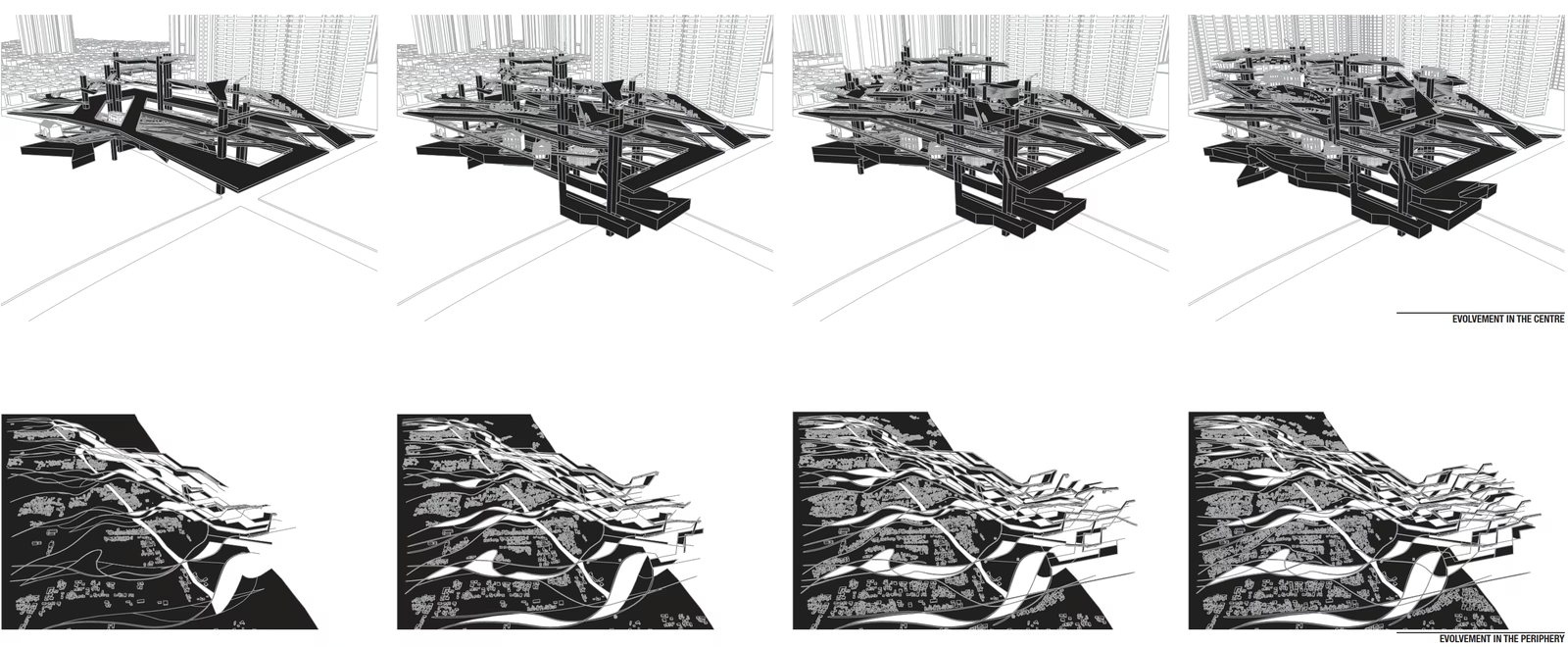
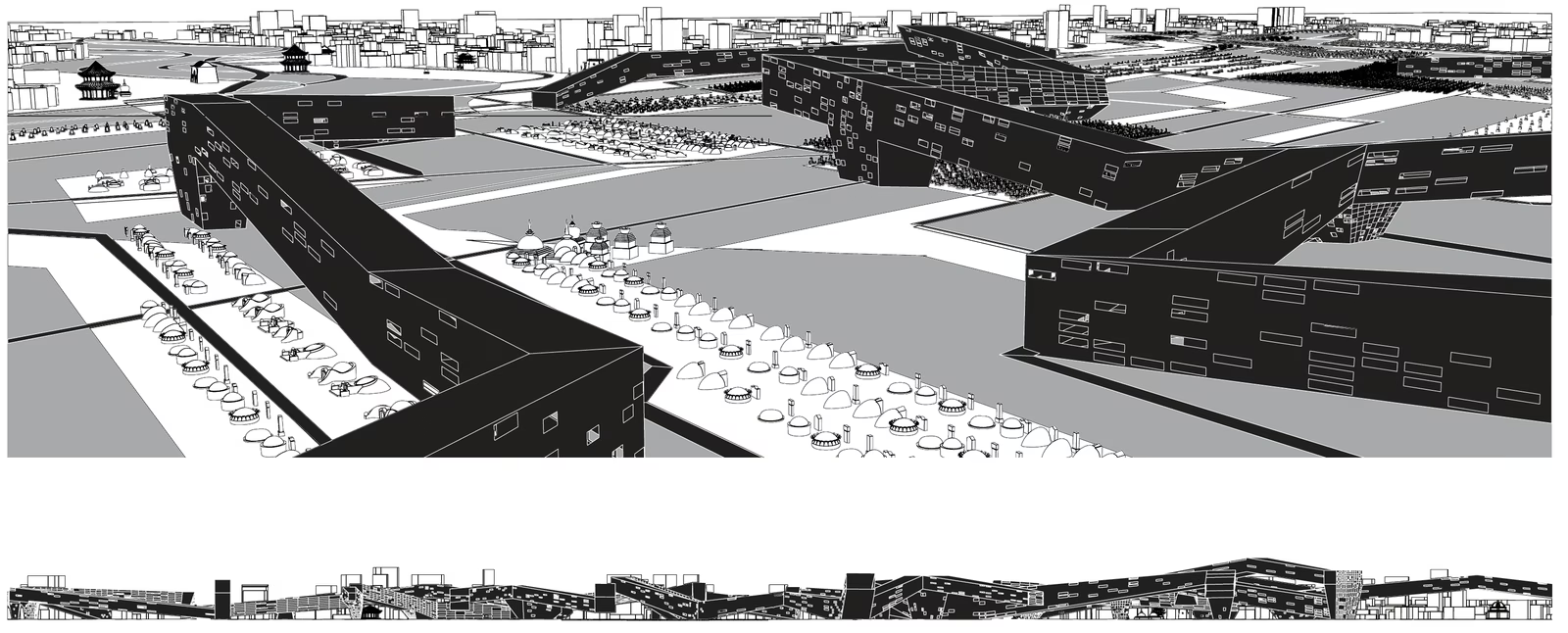
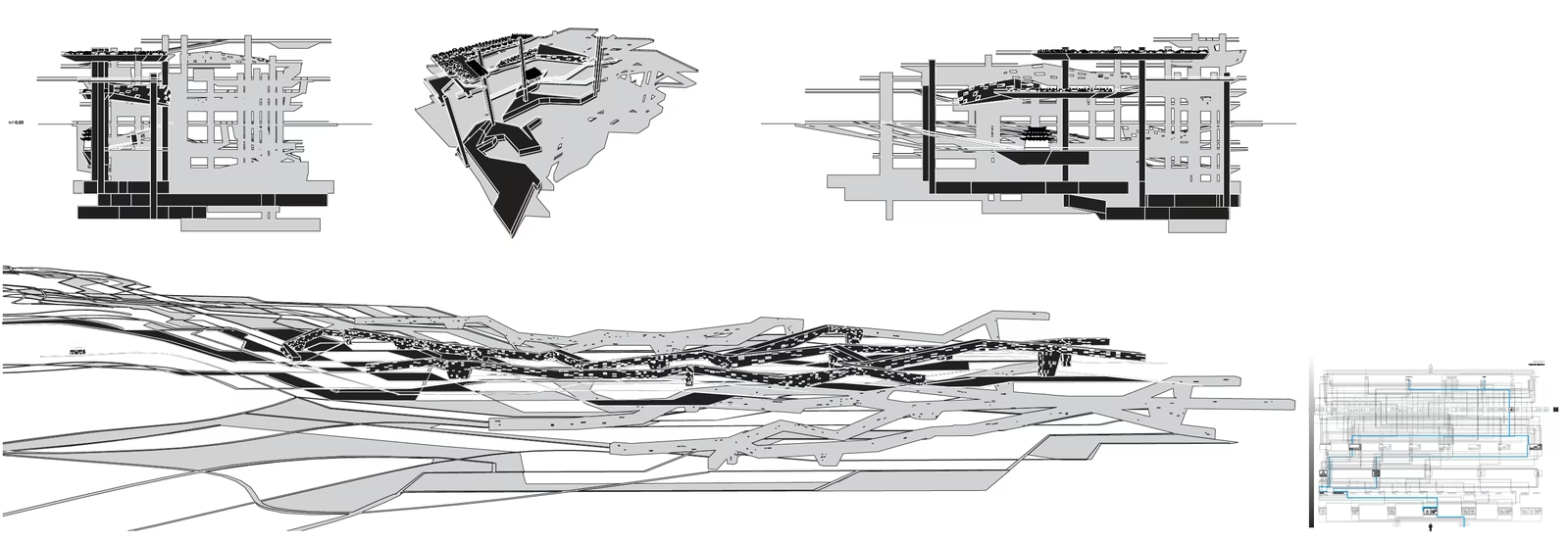
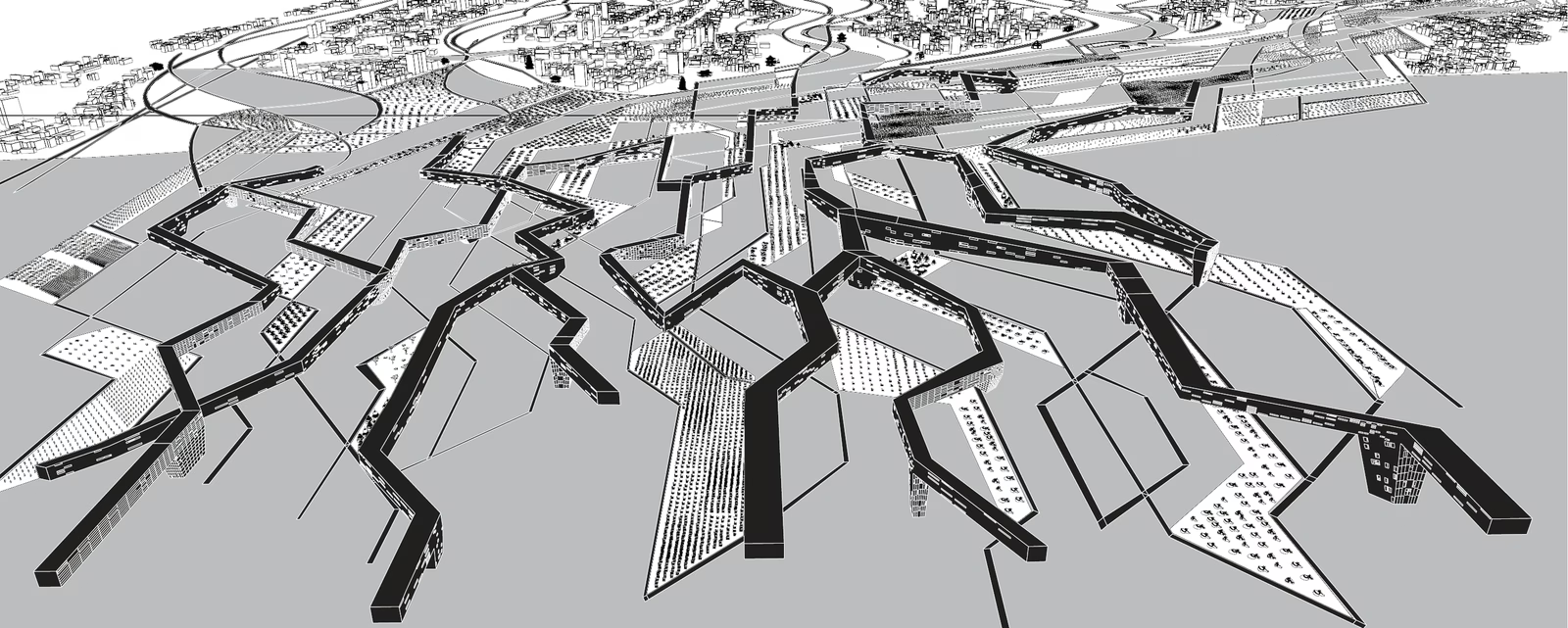
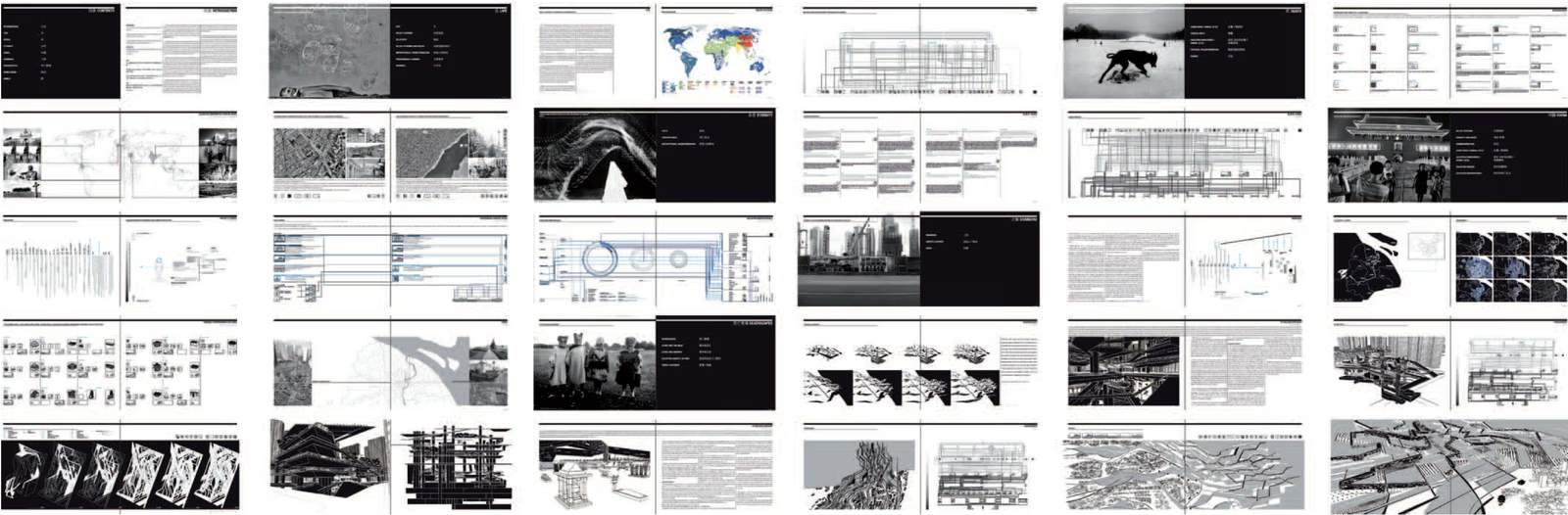
IN-VISIBLE China went through a great many changes and its face still changes from year to year. In recent years, architects and planners were mostly enrolled in projects of business towers, exhibition spaces and housing. Specially in Shanghai, one topic has been neglected: how to deal with the dead. In rural China still, as before the Cultural Revolution, death was conducted via rituals and religion - a major part of everyday life. I researched for a year in China on ancient religions and new upcoming beliefs. Architectonically and urbanistically, I envisioned a ritual hybrid where the dead of all religions can be buried and citizens can, after decades, once again have a physical space to connect their metropolitan life with their personal beliefs. As a diploma thesis I worked on two specific sites: one in the centre of Shanghai and its hinterland.Invisible Forces / Invisible Cities is an awarded and published Master's Thesis (TU Vienna, 2011) addressing the neglected question of how contemporary Chinese cities deal with the dead. In Shanghai, the ongoing destruction of lilongs and the construction of high-rise buildings erases not only urban fabric but the physical spaces in which death rituals were embedded. The project proposes a hybrid necropolis-park for two sites - one in the centre of Shanghai, one in the hinterland - integrating the spatial needs of death across all religions into the fabric of the living city. Awarded: Best Thesis, TU Vienna. Exhibited: Architekturzentrum Wien. Published: Death + Architecture. BfNA reading: this project is understood as a case study in learning, attention, social encounter and environmental dignity. It extends beyond architectural production into environmental intelligence / how design decisions can support human adaptation, social responsibility, ecological performance and future evidence-based practice.
[Key Figures]
Typology: urban _ dead-scapes · 2011 · 2 sites: central Shanghai + hinterland · Archdiploma 2013 (Best Theoretical + Design Thesis) · Exhibited: Architektur Zentrum Wien (AzW)
No items found.
[Neural Analysis]
ABSENCE AS SIGNAL: Death-space is not emptiness; it is a high-intensity cognitive territory where memory, fear and identity reorganise the city's relation to the invisible.
GRIEF ARCHITECTURE [S1][S2][B1]: The first explicit link between space and human psychology in this portfolio. Grief and death spaces engage the deepest layers of the limbic system (emotion), hippocampus (memory) and prefrontal cortex (meaning-making). Ulrich (1984): nature views in healthcare spaces accelerate physiological recovery [B1] - the same principle applies to memorial parks. Kaplan ART (1995): natural memorial environments allow grief to unfold without cognitive effort - 'soft fascination' of garden paths and water features [S2]. MacKerron & Mourato (2013): being in a meaningful place with others (memorial visits with family) generates surprisingly high adaptive functioning scores - grief shared in space is grief processed [S1]. PUBLIC RITUAL SPACE: Architecture that enables collective grief rituals activates social bonding hormones (oxytocin - Zak, 2012, Harvard Business Review). GRIEF ARCHITECTURE & LIMBIC DEPTH [S1][S2][B1]: Architecture of death and grief engages the most ancient and deepest neural circuits: the amygdala (fear and grief), hippocampus (memory consolidation) and the insula (interoceptive awareness - a key pathway in grief processing). Damasio (1994, Descartes' Error): emotion is inseparable from cognition; grief architecture that facilitates emotional processing directly enables cognitive recovery. BfNA neural-sciences lens: the relevant question is not only how the project looks, but how it conditions learning, attention, social encounter and environmental dignity over time, across different bodies, neurotypes and social realities.
[Social Impact]
SOCIAL: The thesis gives spatial dignity to rituals and excluded territories often suppressed by metropolitan planning.
[ROI Sustainability]
ROI: Research value is intellectual and methodological, establishing BfNA's origin in memory, identity and spatial cognition.
ROI: Best Thesis + AzW exhibition: career-defining academic recognition. Policy relevance: China's burial space crisis (30M deaths/yr in a land-scarce country). SUSTAINABILITY: Hybrid necropolis-park: woodland burial, biodegradable caskets, carbon sequestration in memorial groves. ACADEMIC RECOGNITION & POLICY IMPACT: Awarded TU Vienna Best Thesis + AzW exhibition + published in Death + Architecture (2012). China's burial space crisis: 1.4B population, land scarcity → government-mandated transition to park burials (MCA China, 2018). ESG / investment lens: the value of this project is not limited to carbon or certification. It includes education outcomes, cognitive equity and long-term institutional value, producing evidence that can inform investors, public actors, operators and future environmental standards.
[Applied R&D Lens]
Recode cemetery research through contemporary tools: stress mapping, ritual movement and memory traces.
Death architecture is the least-measured spatial typology in environmental neural science. BfNA's Applied R&D would apply interoceptive awareness measurement - body scan protocols, heart rate variability, and insula activation proxies - across the necropolis-park spatial sequence, tracking the body's response to the progressive integration of death and life functions within a single landscape. The ritual dimension - the specific spatial choreography of grief across different religious traditions - provides a comparative measurement framework: which spatial configurations produce the deepest physiological processing of grief? The thesis made the question. The measurement answers it.Future data layer: deployed through BfNA, the project could become a longitudinal dataset linking environmental conditions, behavioural patterns, social outcomes and ecological performance / transforming built space into knowledge for future design.
Citations:
Sources: Damasio (1994) Descartes' Error emotion/cognition · Ulrich (1984) Science nature views healthcare · Shanghai demolition statistics (CAUP Tongji, 2015) · Ministry of Civil Affairs China park burial policy (2018). · Derrida trace/absence; cemetery urbanism; thesis documentation; cognitive memory literature.
Copyright:
Project Credits: Independent research / Laura Ulloa; Team: team to be confirmed.Laura Role: Laura Ulloa - Project Leader / lead responsibility where documented in CV, office records or project archive.Image Credits: © Laura Ulloa / BfNA. Images and third-party material remain.Source: https://nouveautes-editeurs.bnf.fr/ / http://lauravirginiaulloaquiroga.blogspot.in/p/invisible-forces-i-invisible-cities.html.Project Credits & Copyright Notice: Every effort has been made to identify and acknowledge architects, consultants, collaborators, photographers, visualisation studios and other contributors associated with each project. Project descriptions have been rewritten and curated by Bureau for Neural Architecture (BfNA). Architectural works, photographs, renderings, drawings, trademarks and visual material remain the property of their respective authors, studios, photographers, visualisation teams and rights holders. Contributors are credited wherever information is available. Rights remain with their respective authors and rights holders.
© 2026 Bureau for Neural Architecture. Developed by Cavolo Studio.
Privacy Policy & Legal Notice
