



Directed by Laura Ulloa, BfNA explores and designs for the reciprocal dynamics between environments, cognition and collective adaptation.

Research on Neural Architectural Dimensions
Architecture / Material Research
Gujarat
India
Auroville Earth Institute reference / BfNA neural reading
Research / Concept
Shree Krishnaganga Meditation Hall / 33 m dome + water body / Earth Institute Auroville in Gujarat / India
[Summary]
A 33 m earthen meditation dome over water / CSEB mass, acoustic resonators, walking and contemplative attention as neural-environmental infrastructure.
[Team]
Auroville Earth Institute · Shree Krishnaganga Meditation Hall project team · Satprem Maïni / AVEI technical leadership · BfNA / Laura Ulloa - ongoing collaboration, neural architecture reading and research development.
[Temporal Arc]
Immediate (sensory regulation) · Circadian (light/thermal comfort) · Long-term (ritualised restorative use)
[Direction of Effect]
RESTORE (attention + recovery) · REGULATE (thermal/acoustic comfort) · ENCODE (ritual and place memory)
[Neural Tags]
B1 = Restorative environment · B3 = Biophilic/material volume · T2 = Thermal regulation · A3 = Acoustic comfort
[Biological System]
Autonomic regulation · Attention · Interoception · Sensory modulation
[Description]
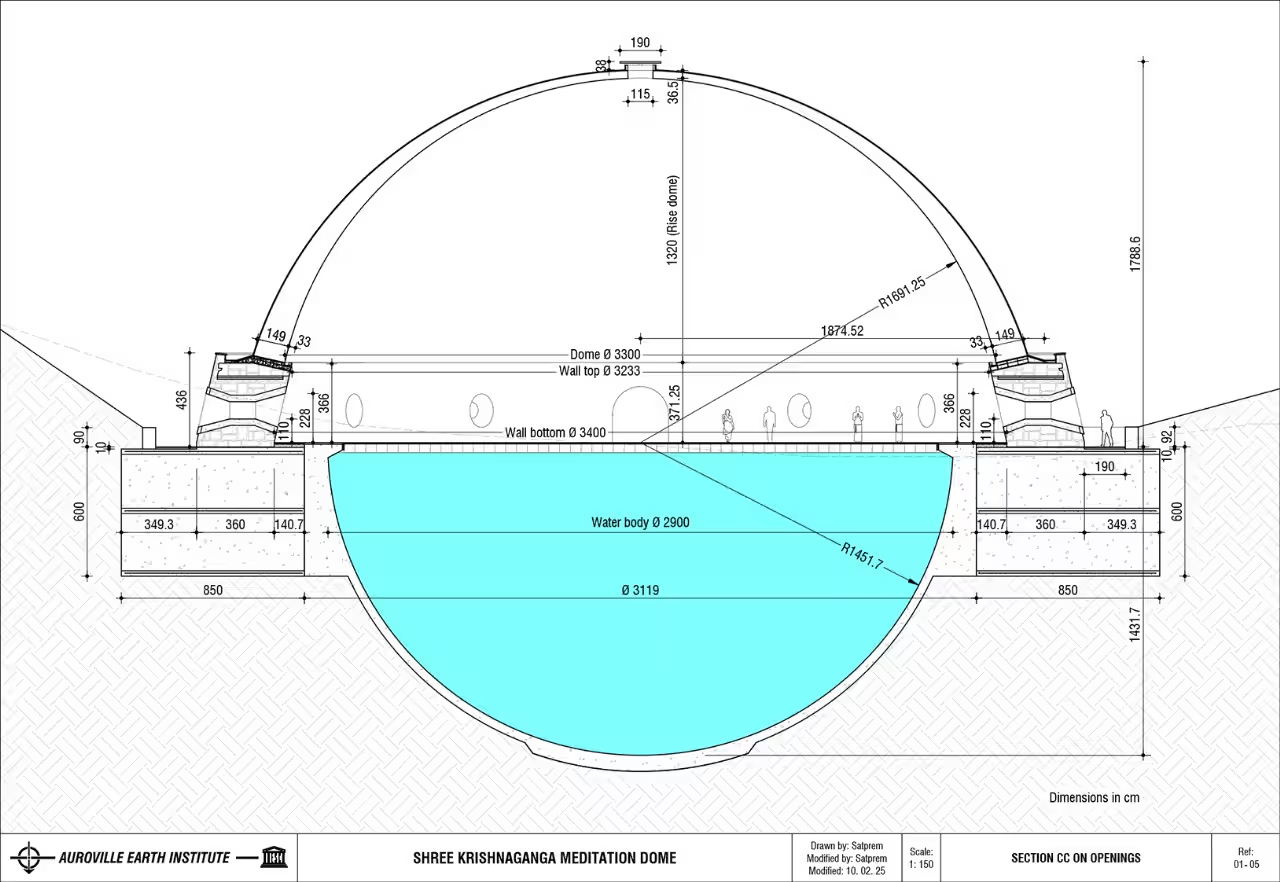
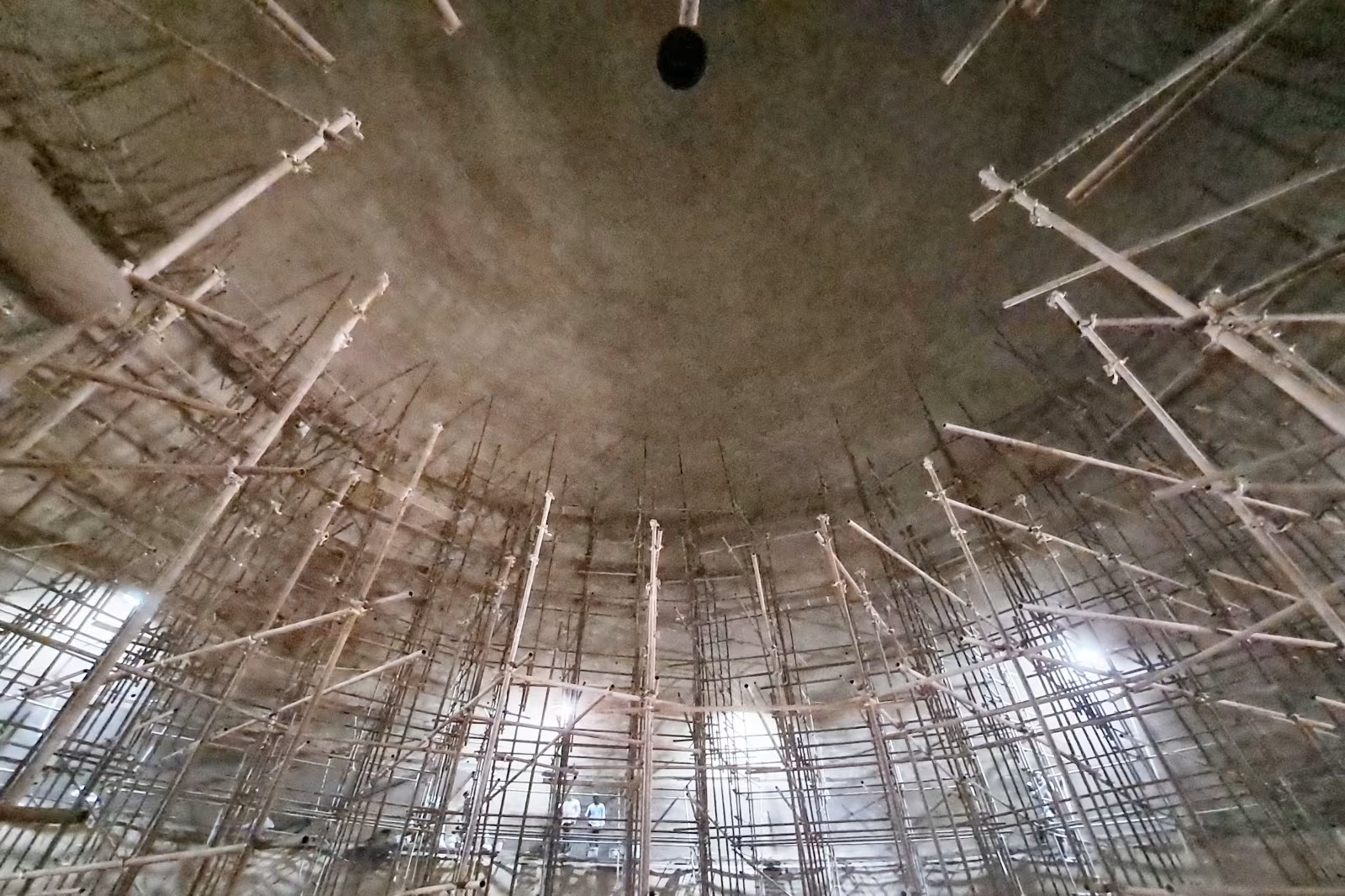
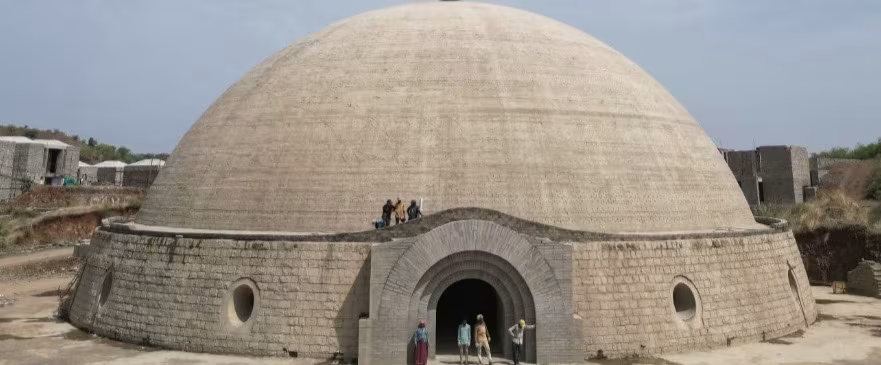
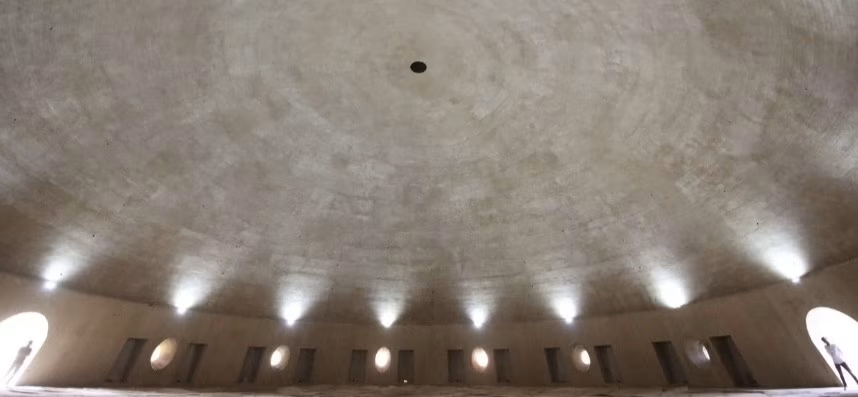
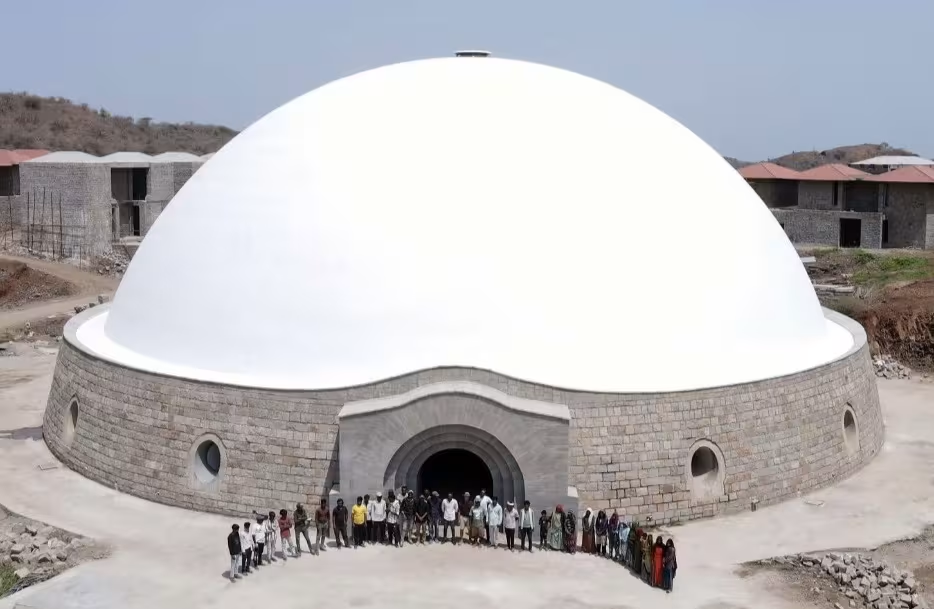
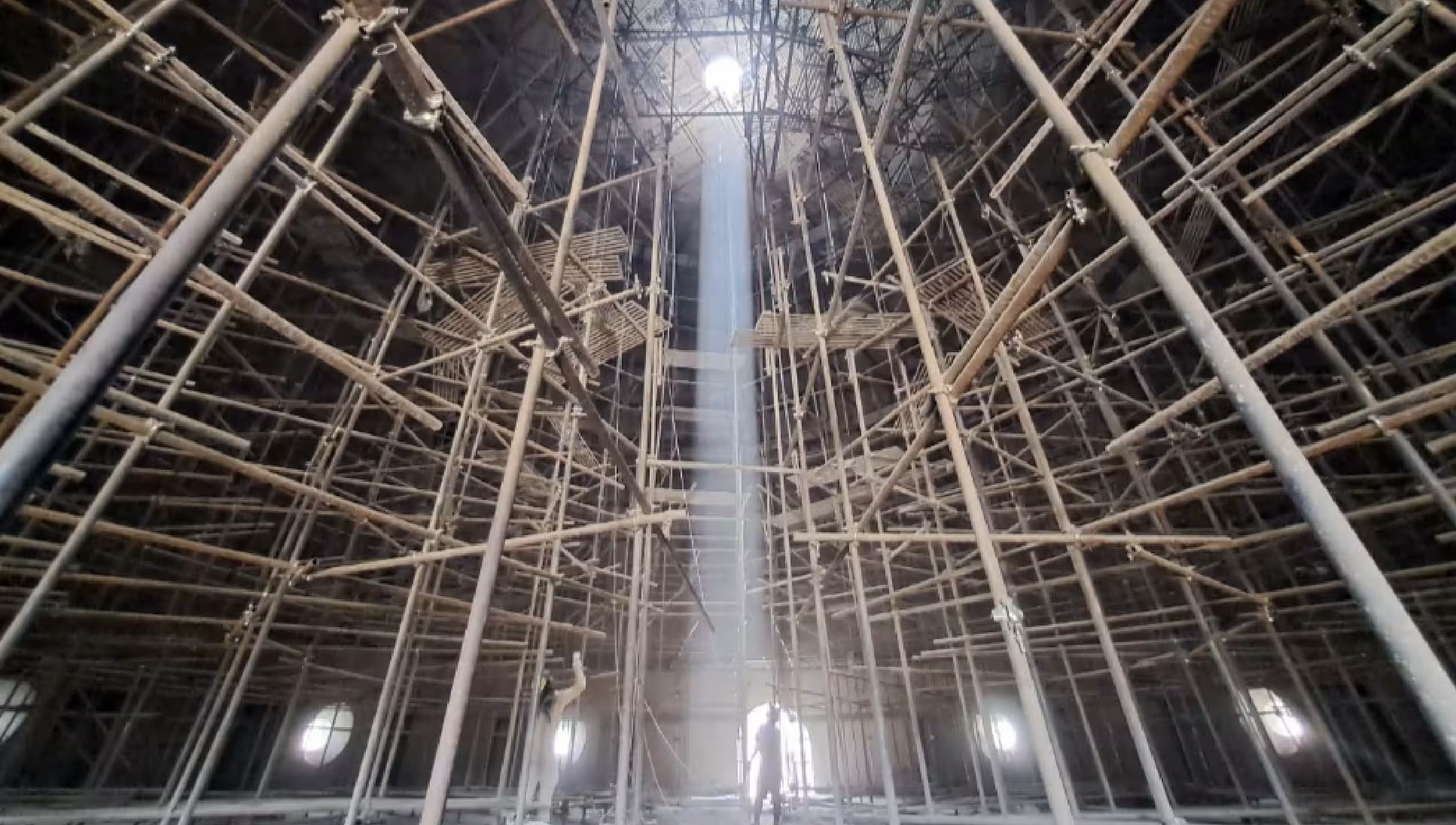
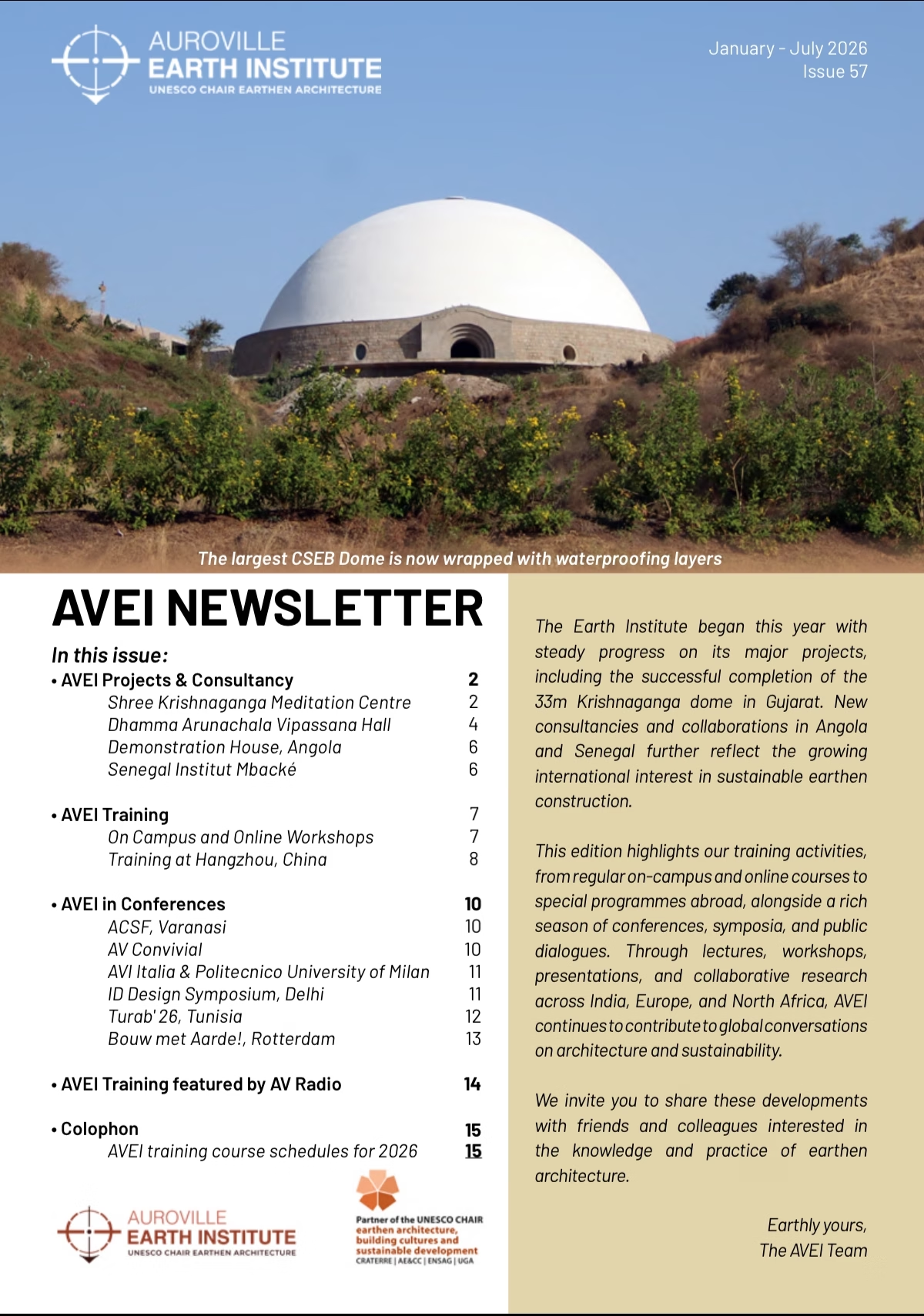
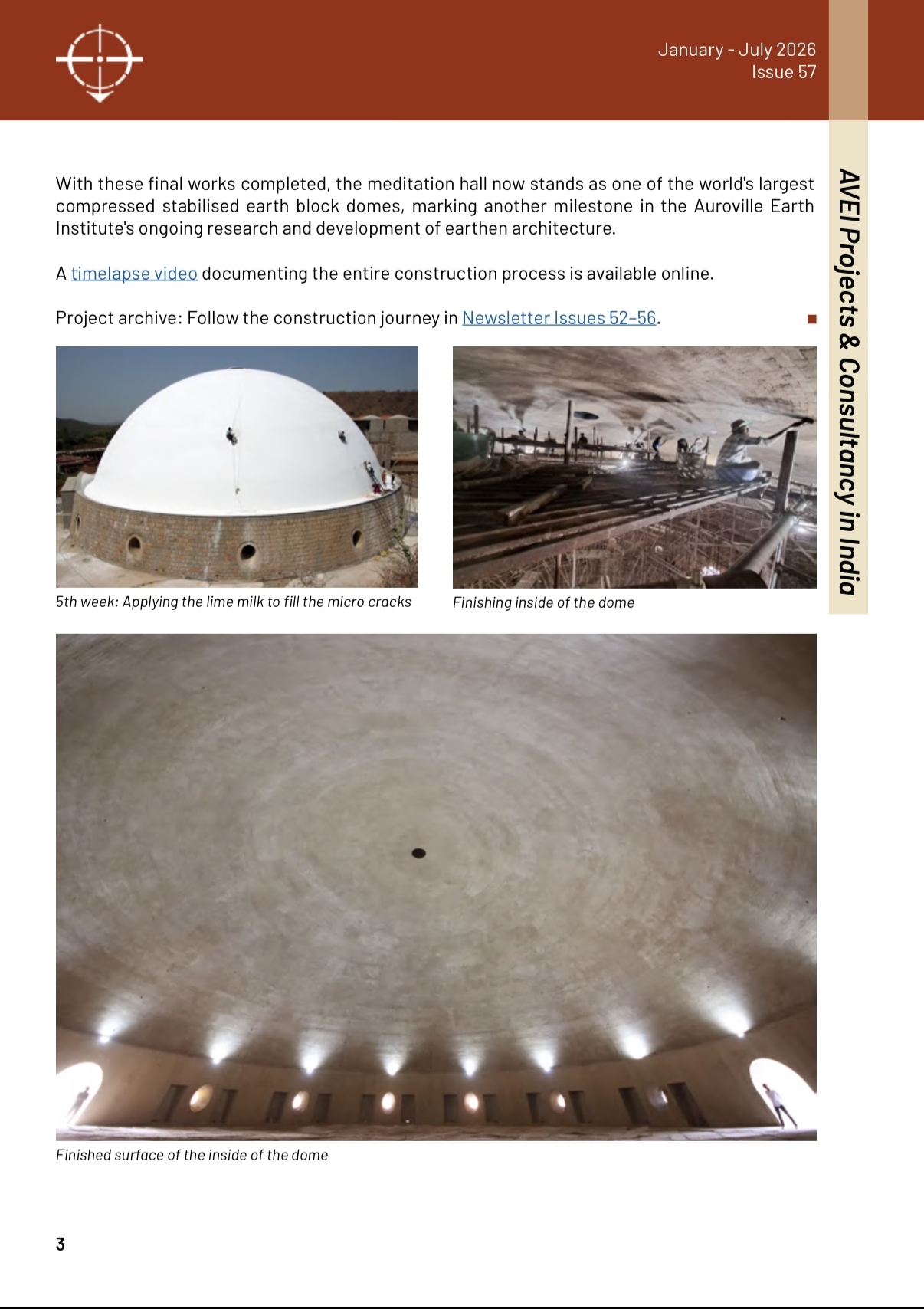
Ongoing Collaboration / Shree Krishnaganga Meditation Hall, Gujarat. The 33 m diameter earthen meditation dome is understood as a neural-environmental system rather than a monumental object. Its half-spherical water body, CSEB mass, large-span curvature, acoustic resonator strategy, walking condition around/above water and contemplative programme combine thermal inertia, reflection, sound, breath, balance and attentional regulation. The project allows BfNA to study how water, earth, resonance, movement and meditation participate in adaptive cognition.
[Key Figures]
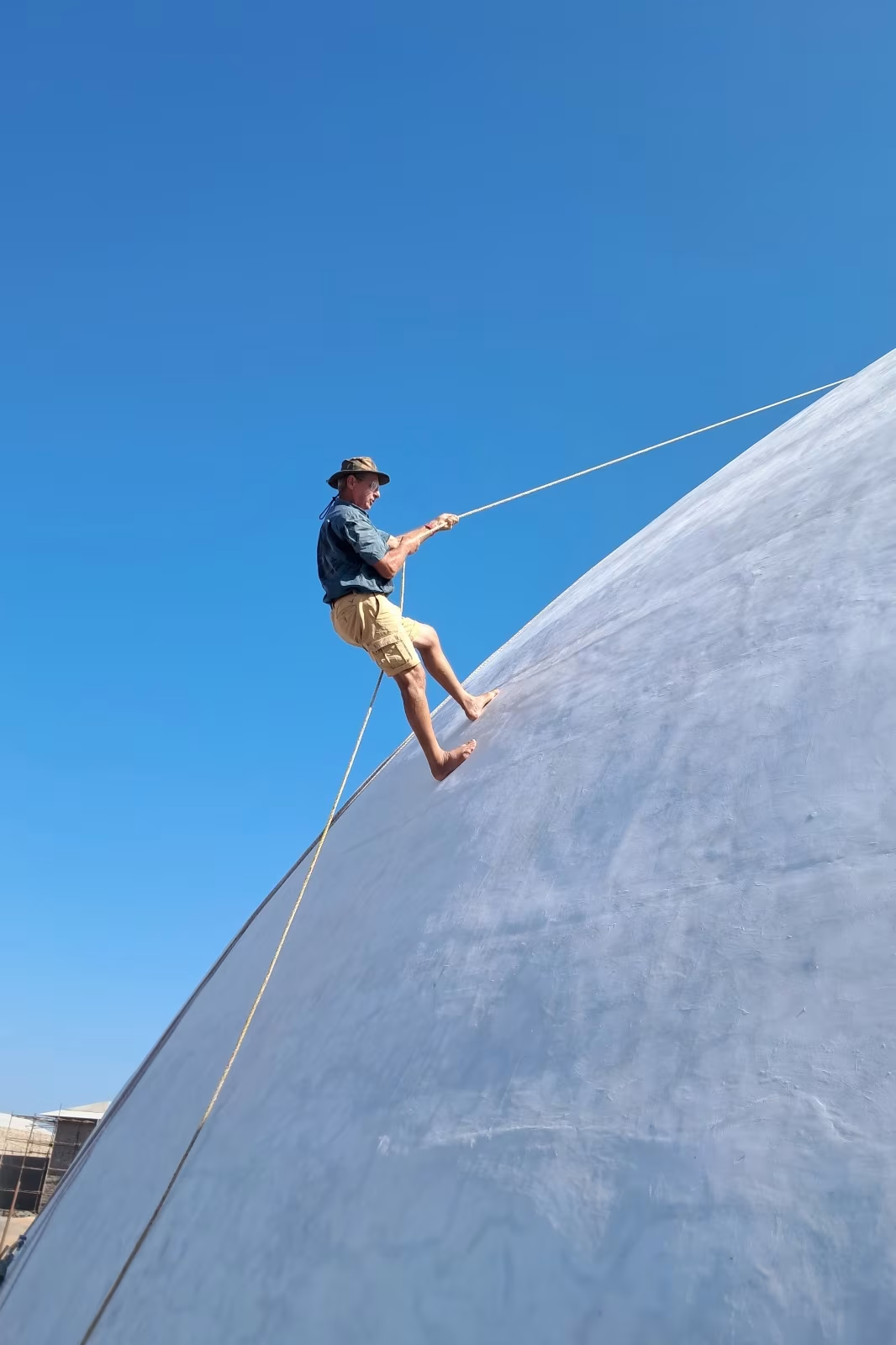
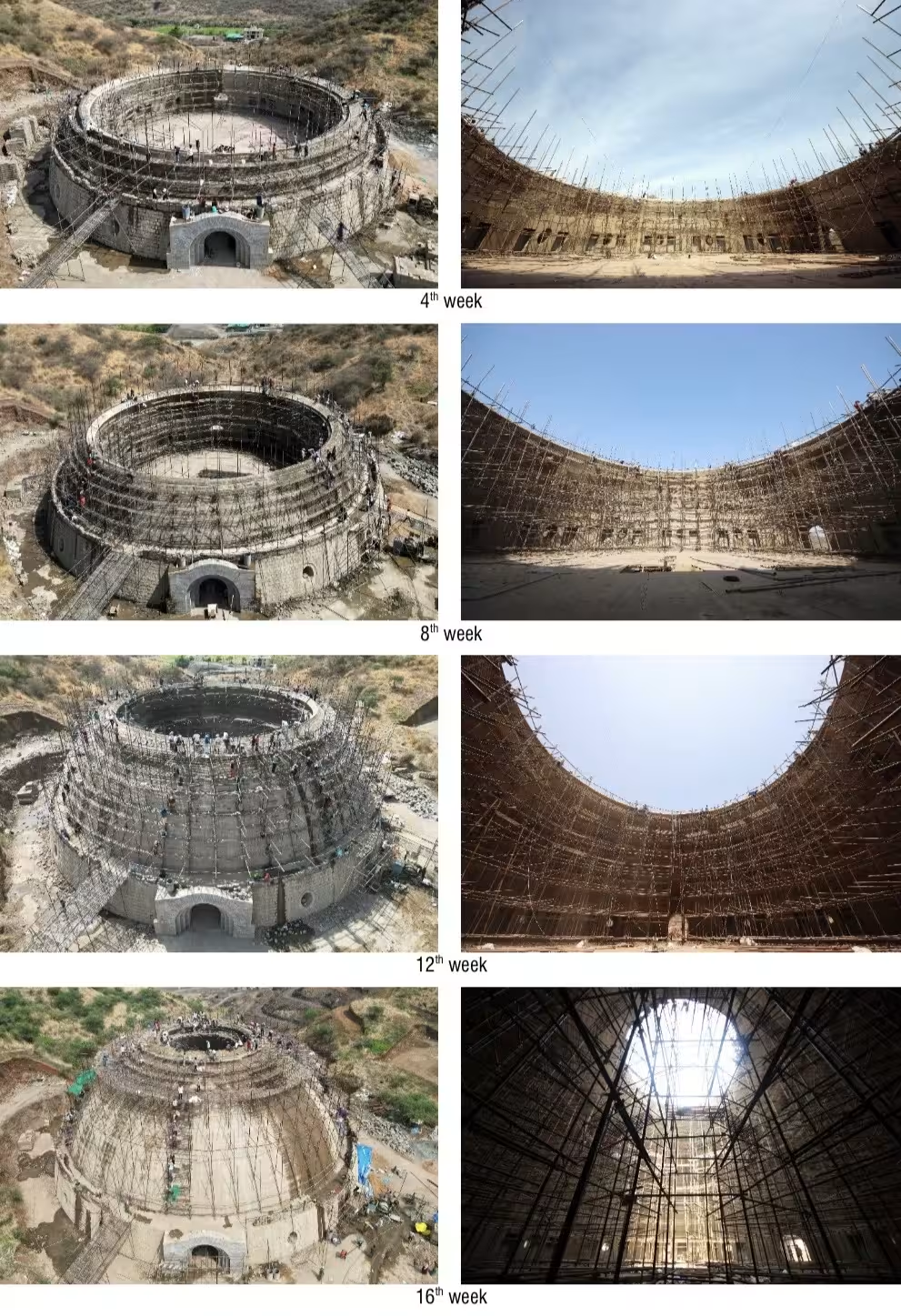
Typology: ongoing collaboration + contemplative earthen architecture · Shree Krishnaganga Meditation Hall · Gujarat · 33 m diameter · 13.2 m rise · ~2,200 tonnes · 297,560 blocks · 18 block sizes · 311 courses · built in 17.5 weeks / 115 days · water body below · acoustic resonators 80 Hz-1214 Hz · Auroville Earth Institute.

No items found.
[Neural Analysis]
WATER, RESONANCE AND ATTENTION: The 33 m Gujarat dome combines CSEB mass, water, curvature and acoustic tuning into one contemplative field. The water body is not decorative: it changes reflection, thermal behaviour, movement, depth perception and bodily orientation. Walking and meditation above/around water introduce vestibular, auditory and interoceptive modulation, while the dome's earthen mass and resonators frame attention through low-frequency control, breath rhythm and collective stillness.
EARTH + WATER + ACOUSTIC REGULATION [A3][B1][T2][S2]: The neural reading connects water-mediated reflection, slow walking, vestibular balance, acoustic resonance, breath rhythm and interoception. The dome's 2,200-tonne CSEB mass provides thermal and tactile continuity; the water body introduces reflective discontinuity; the acoustic resonators address frequencies from 80 Hz to 1214 Hz. This makes the building an instrument for studying contemplative attention through material, hydrological and sonic conditions.
[Social Impact]
SOCIAL: The dome supports collective meditation through low-carbon material intelligence, acoustic care, shared ritual and a spatial relationship between body, water and earth.
[ROI Sustainability]
ROI: Long-span earthen construction demonstrates cultural, climatic, acoustic and educational value beyond conventional concrete monumentality.
ROI: The dome's value is technical and cultural: 297,560 blocks, 115 days of construction, acoustic tuning and water-based spatial experience create a demonstrator for future earthen contemplative environments.
[Applied R&D Lens]
Measure reverberation, frequency absorption, thermal lag, walking rhythm, water-reflection perception, breath rhythm and self-reported attentional depth during contemplative use.
Develop a water-earth-sound research protocol: compare dry and water-reflective zones, walking routes, acoustic positions and meditation durations against attention, interoception and autonomic markers.
Citations:
Primary sources: uploaded PDFs '33 m Dome completion - Fr.pdf' and 'AVD 27 Dôme Shree Krishnaganga Meditation Hall.pdf'. Verified data: 33 m diameter, 13.2 m rise, ~2,200 tonnes, 297,560 blocks, 18 block sizes, 311 courses, 17.5 weeks / 115 days, water body, acoustic resonators absorbing 80 Hz-1214 Hz, Auroville Earth Institute.
Copyright:
Project Credits: Auroville Earth Institute / Shree Krishnaganga Meditation Hall project. Team: Auroville Earth Institute; Shree Krishnaganga project team; BfNA research reading. Laura Role: Ongoing collaboration - neural architecture reading and research development. Image Credits: © Auroville Earth Institute and respective project authors; uploaded AVD material states reproduction/distribution requires written authorisation from AVEI. Source: Uploaded Auroville Earth Institute PDFs and AVEI website. Project Credits & Copyright Notice: Every effort has been made to identify and acknowledge architects, consultants, collaborators, photographers, visualisation studios and other contributors associated with each project. Project descriptions have been rewritten and curated by Bureau for Neural Architecture (BfNA). Architectural works, photographs, renderings, drawings, trademarks and visual material remain the property of their respective authors, studios, photographers, visualisation teams and rights holders. Contributors are credited wherever information is available. Rights remain with their respective authors and rights holders.
© 2026 Bureau for Neural Architecture. Developed by Cavolo Studio.
Privacy Policy & Legal Notice
