


Directed by Laura Ulloa, BfNA explores and designs for the reciprocal dynamics between environments, cognition and collective adaptation.
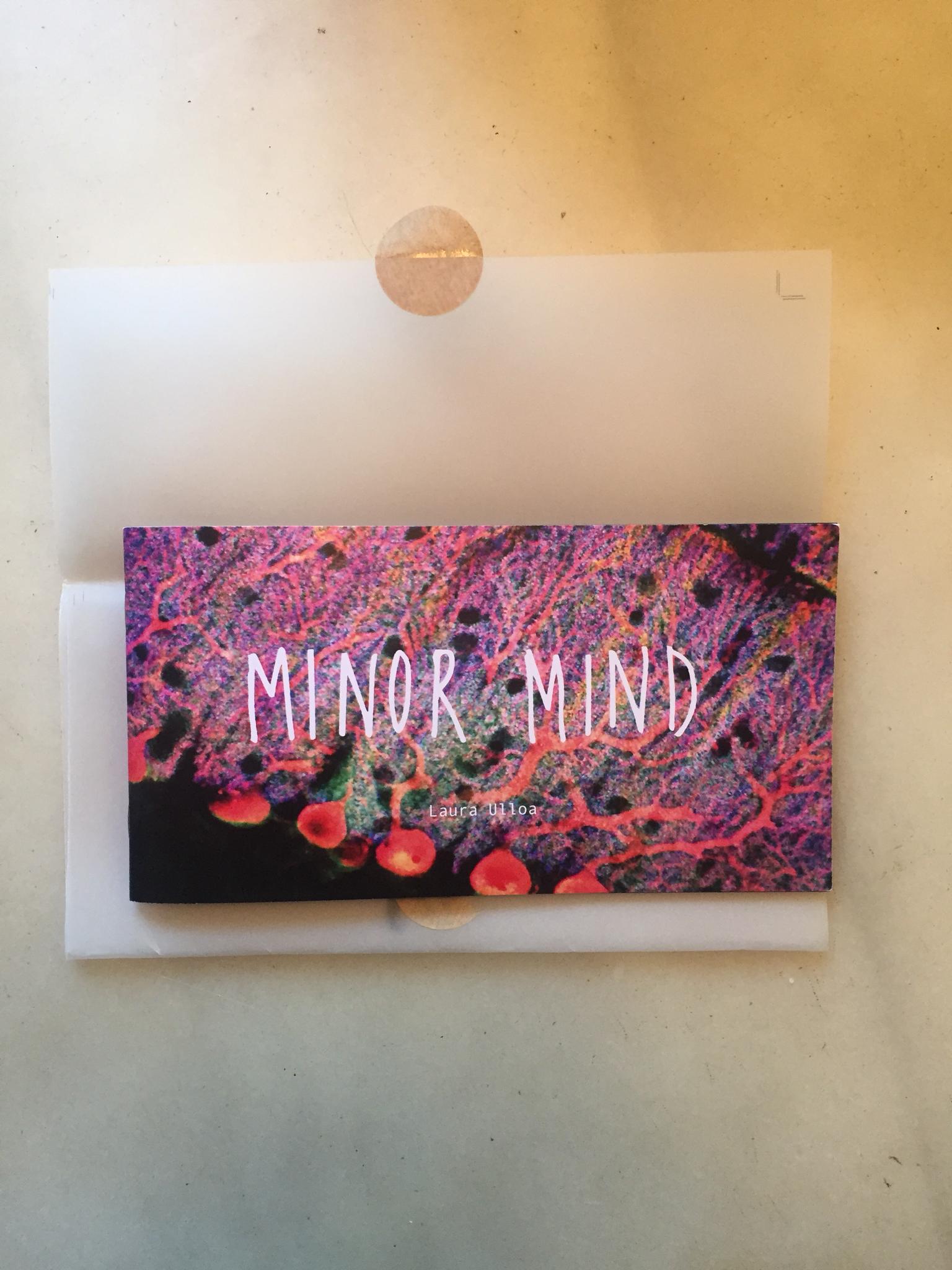

Minor Mind - Architecture & Neural science
publication
Paris
France
Framed Editions Paris / EMC Rotterdam Lab. Chris de Zeeuw
Published - BNF / Yvon Lambert Paris
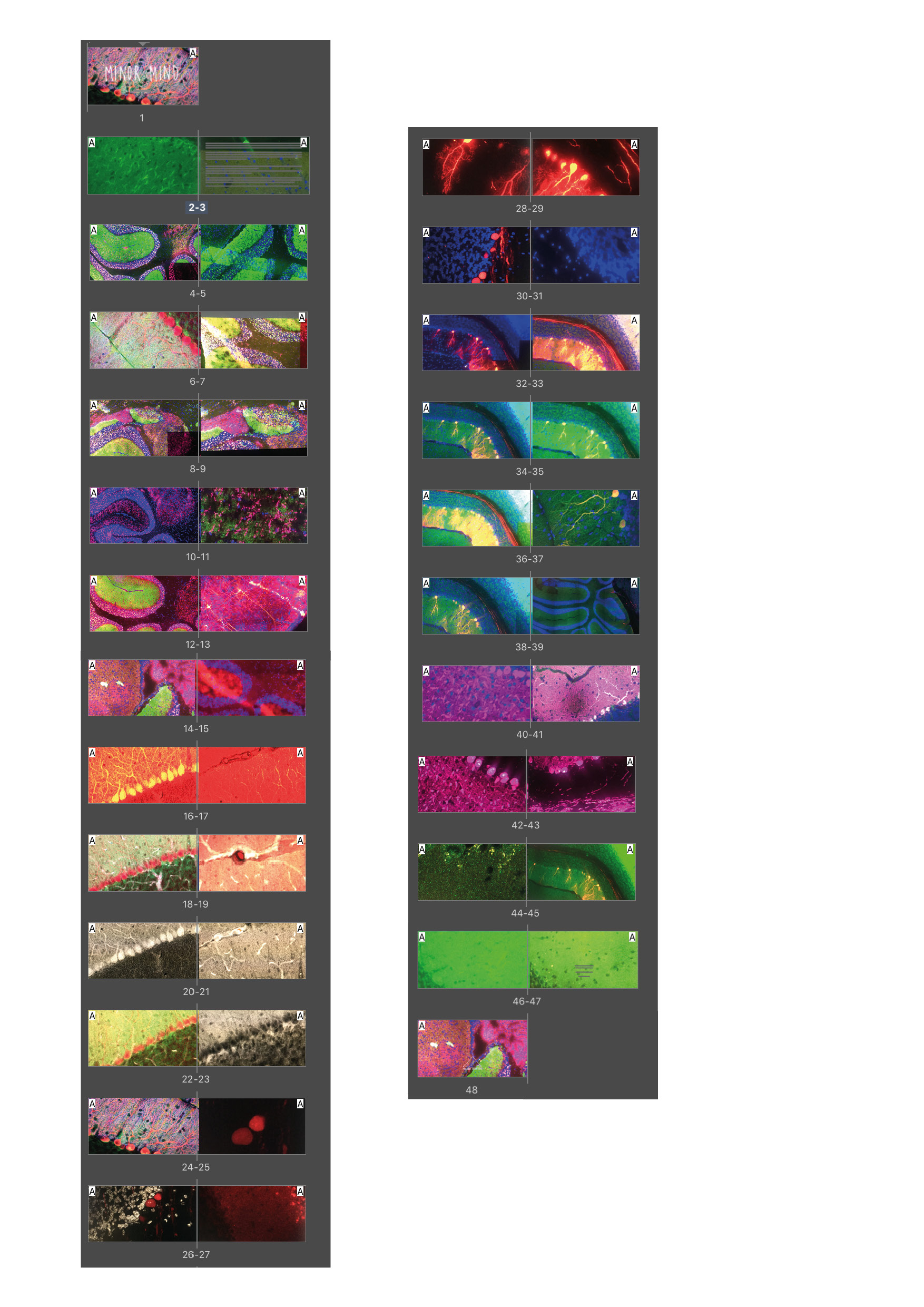
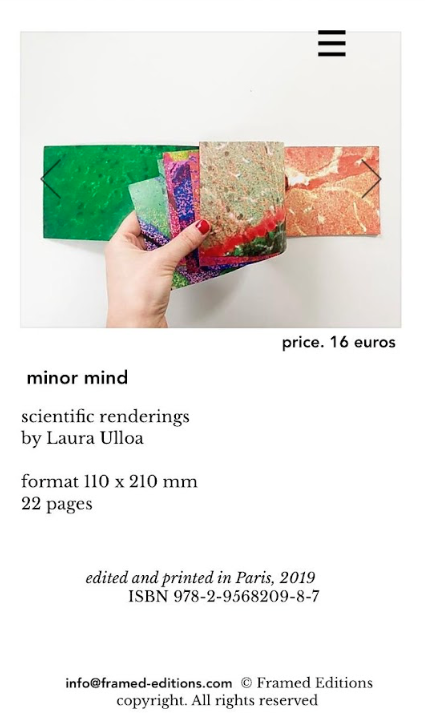
Minor Mind / book _ images of applied neural research
[Summary]
Microscopy, neural matter and spatial imagination / the publication that made the neural science of space visible as a cultural question.
[Temporal Arc]
Immediate (visual + cognitive activation) · Transgenerational (permanent archive - BNF collection)
[Direction of Effect]
ENCODE (neural science as cultural artefact) · ACTIVATE (conceptual clarity) · SIGNAL (research made visible)
[Neural Tags]
B2 = Semi-private biophilic zone · S2 = Collective memory + spatial identity
[Biological System]
Memory consolidation · Hippocampal encoding · Neuroplasticity · Interoception
[Description]
Ongoing research on the links between architecture, urban planning and neuroscience. The first images of studies rendering the link between these disciplines visible.Minor Mind is an artist's book by Laura Ulloa - the first publication in French to render the link between architecture, urban planning, and neural science visible through original research imagery. Published by Framed Editions Paris and held in permanent collection at the Bibliothèque Nationale de France and Yvon Lambert Paris, the book is simultaneously a research document and a cultural artefact: a visual language for a discipline that no academic paper had yet made legible. The imagery - photographs of neural architectures, spatial diagrams, cognitive maps - forms the intellectual foundation of BfNA's research-to-practice pipeline. Publisher: Framed Editions Paris. ISBN: 978-2-9568209-8-7. BfNA reading: this project is understood as a case study in movement, orientation, accessibility, safety, social mixing and collective behaviour. It extends beyond architectural production into environmental intelligence / how design decisions can support human adaptation, social responsibility, ecological performance and future evidence-based practice.
[Key Figures]
Typology: publication · 2019-2020 · ISBN: 978-2-9568209-8-7 · Publisher: Framed Editions Paris · BNF: referenced · Yvon Lambert: yes · Format: artist book + research
No items found.
[Neural Analysis]
CEREBELLAR ARCHITECTURE: Minor Mind connects microscopy to spatial thinking: the cerebellum becomes a model for prediction, timing and correction rather than a metaphor for beauty.
FOUNDATIONAL NEURAL ARCHITECTURE: Minor Mind is the direct theoretical and visual synthesis of the neural-architectural approach that runs through the entire portfolio - from Mesh (2005) through Idyll (2006) to the Erasmus MC research (2019-2022). It is the first publication in French to explicitly link architecture, urban planning and fundamental neural science with original imagery. It prefigures and founds the Applied R&D used by BfNA (Human Environment Index). All peer-reviewed research cited in the Neural Analysis column of this database has intellectual roots in the approach documented in Minor Mind. Published in BNF (Bibliothèque nationale de France) and Yvon Lambert (Paris's premier art bookshop). APPLIED NEURAL RESEARCH AS PUBLICATION [B2][S2]: Minor Mind is the first publication in French to make the conceptual link between neural science and spatial design - translating the frameworks developed at Erasmus MC Rotterdam into an architectural and artistic language. BNF (Bibliothèque Nationale de France) and Yvon Lambert Paris ensure this is simultaneously a scientific contribution and a cultural artefact. It is the intellectual foundation on which the Applied R&D used by BfNA rests. BfNA neural-sciences lens: the relevant question is not only how the project looks, but how it conditions movement, orientation, accessibility, safety, social mixing and collective behaviour over time, across different bodies, neurotypes and social realities.
[Social Impact]
SOCIAL: Scientific imagery is made accessible as cultural material, opening neuroscience to architectural audiences.
[ROI Sustainability]
ROI: Publication value lies in scientific credibility, dissemination and BfNA's research origin.
ROI: Intellectual property / brand foundation for the Applied R&D used by BfNA startup. BNF reference = permanent academic citation base. SUSTAINABILITY: Produced as a limited artists' edition - low print run, high durability, no planned obsolescence. INTELLECTUAL PROPERTY & BRAND: Minor Mind is the primary cultural evidence of BfNA's neural science expertise. It is simultaneously a portfolio piece, a research publication and a commercial signal. Framed Editions Paris: specialist publisher for artist books at the intersection of art and science. ESG / investment lens: the value of this project is not limited to carbon or certification. It includes public value, climate adaptation, inclusion and civic resilience, producing evidence that can inform investors, public actors, operators and future environmental standards.
[Applied R&D Lens]
Use cerebellar prediction as a model for adaptive architecture: sensing, error correction and behavioural feedback.
Minor Mind is the primary cultural evidence of BfNA's neural science framework - and its measurement potential is archival rather than physiological. BfNA's Applied R&D would track the publication's citation trajectory across architectural and neural science literature, mapping the diffusion of the neural-spatial framework it established from cultural archive into academic citation, professional practice reference, and policy influence. The book's impact is measured not in cortisol but in the rate at which its conceptual framework appears in the work of others - the most durable form of spatial neural science: the idea that propagates, that changes how other people build, that outlasts the building.Future data layer: deployed through BfNA, the project could become a longitudinal dataset linking environmental conditions, behavioural patterns, social outcomes and ecological performance / transforming built space into knowledge for future design.
Citations:
Sources: De Zeeuw Lab, Erasmus MC Rotterdam (2019-2022) cerebellar research · BNF catalogue accession (2024) · Yvon Lambert Paris gallery archive · Framed Editions Paris publication catalogue · Dietrich (2003) Trends Cogn. Sci. · Erasmus MC de Zeeuw laboratory documentation; cerebellar sensorimotor learning literature; Minor Mind publication sources.
Copyright:
Project Credits: Framed Editions Paris / EMC Rotterdam Lab. Chris de Zeeuw; Team: team to be confirmed.Laura Role: Laura Ulloa - Project Leader / lead responsibility where documented in CV, office records or project archive.Image Credits: © Laura Ulloa / BfNA. Images and third-party material remain.Source: https://www.framededitions.com/minor-mind.Project Credits & Copyright Notice: Every effort has been made to identify and acknowledge architects, consultants, collaborators, photographers, visualisation studios and other contributors associated with each project. Project descriptions have been rewritten and curated by Bureau for Neural Architecture (BfNA). Architectural works, photographs, renderings, drawings, trademarks and visual material remain the property of their respective authors, studios, photographers, visualisation teams and rights holders. Contributors are credited wherever information is available. Rights remain with their respective authors and rights holders.
© 2026 Bureau for Neural Architecture. Developed by Cavolo Studio.
Privacy Policy & Legal Notice
