


Directed by Laura Ulloa, BfNA explores and designs for the reciprocal dynamics between environments, cognition and collective adaptation.

Motion - Shanghai
urban _ mixed-use
Shanghai
China
TU Delft + Tongji University + Berlage Institute
Exhibited Tongji CAUP · Published: Shanghai Lessons
Motion / urban _ mixed-use
[Summary]
A bridge for lilongs / infrastructure as connector between memory, density and everyday life.
[Team]
Wang Wenjun (D) + Li Dukui (K) + Mao Mingqian (MAO)
[Temporal Arc]
Immediate (social encounter in bridge space) · Chronic (community identity through daily use)
[Direction of Effect]
ENCOUNTER (community bridge) · RESTORE (lilong social fabric) · SIGNAL (preservation as architecture)
[Neural Tags]
S1 = Social contact activation · B2 = Semi-private biophilic zone · A3 = Acoustic comfort zone
[Biological System]
Proprioception · Autonomic regulation · Molecular signalling (oxytocin) · Allostasis
[Description]
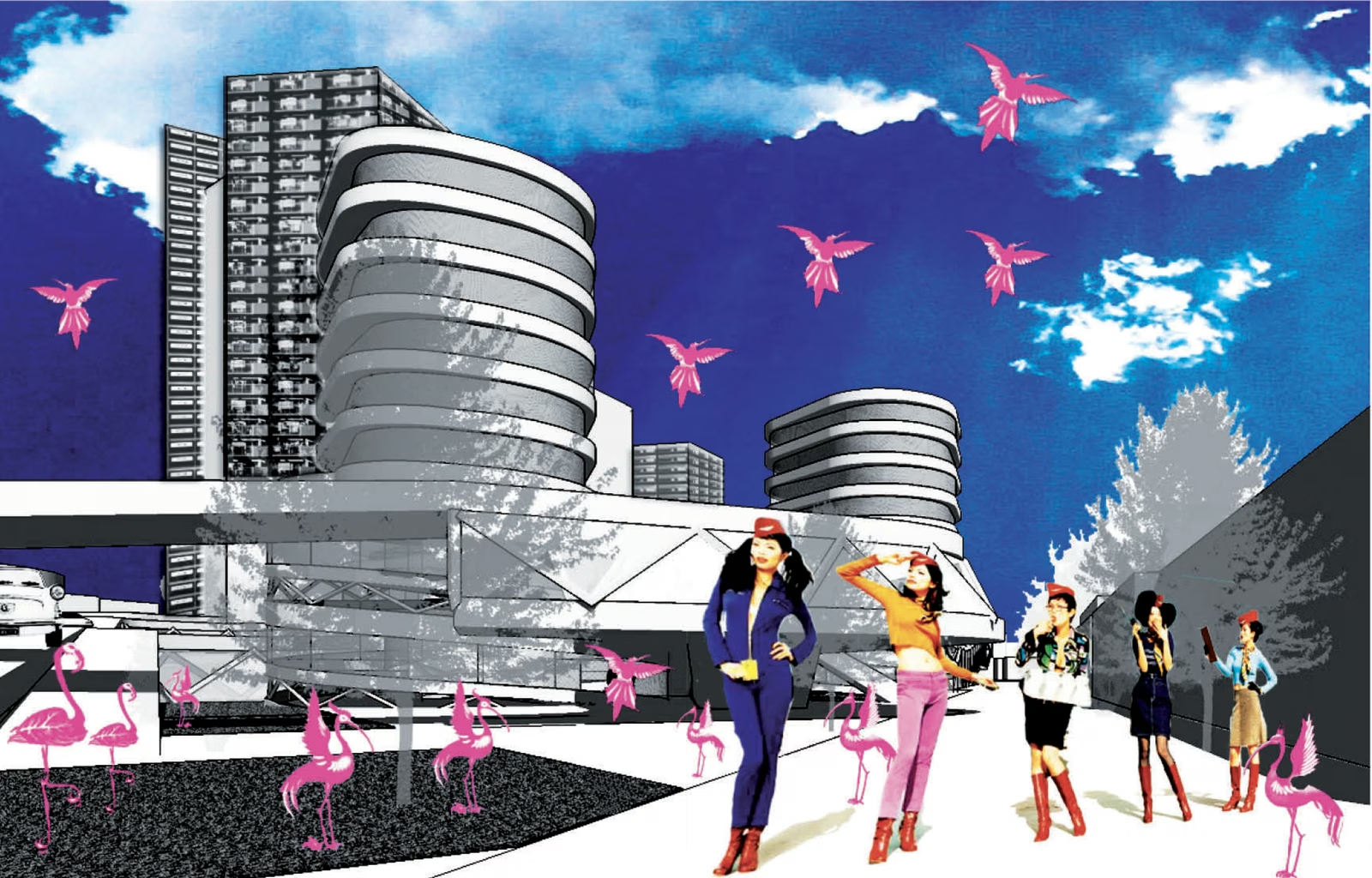
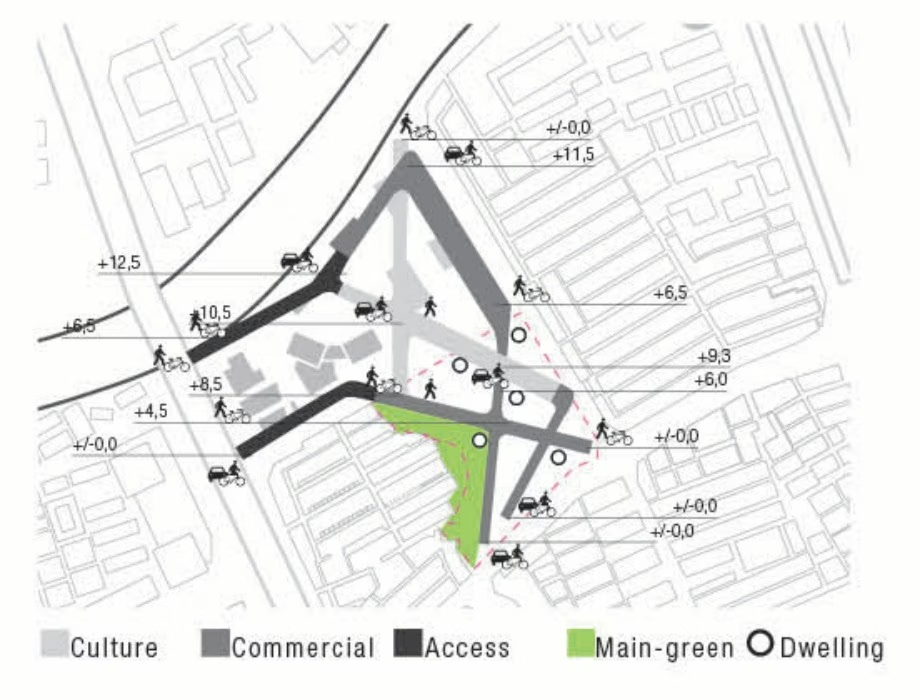
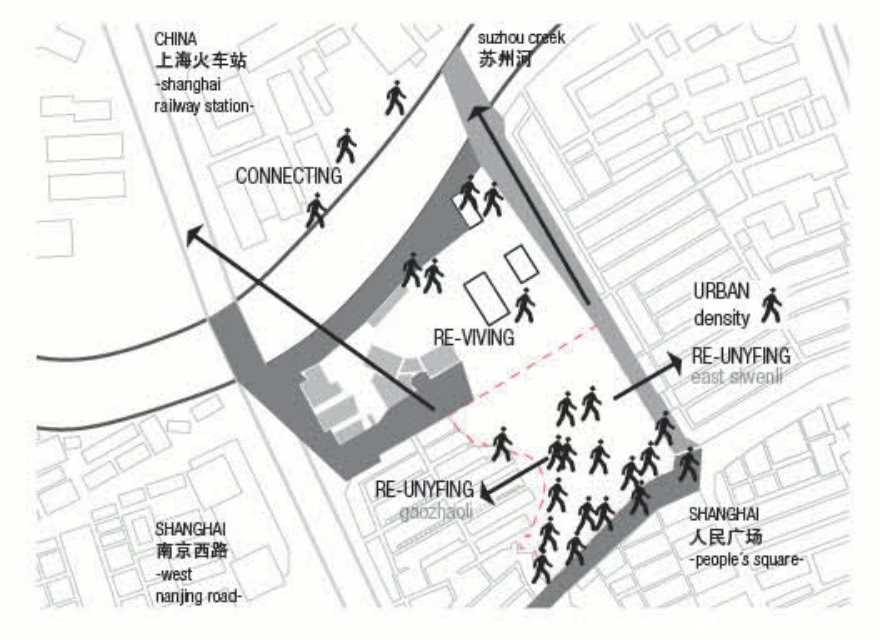
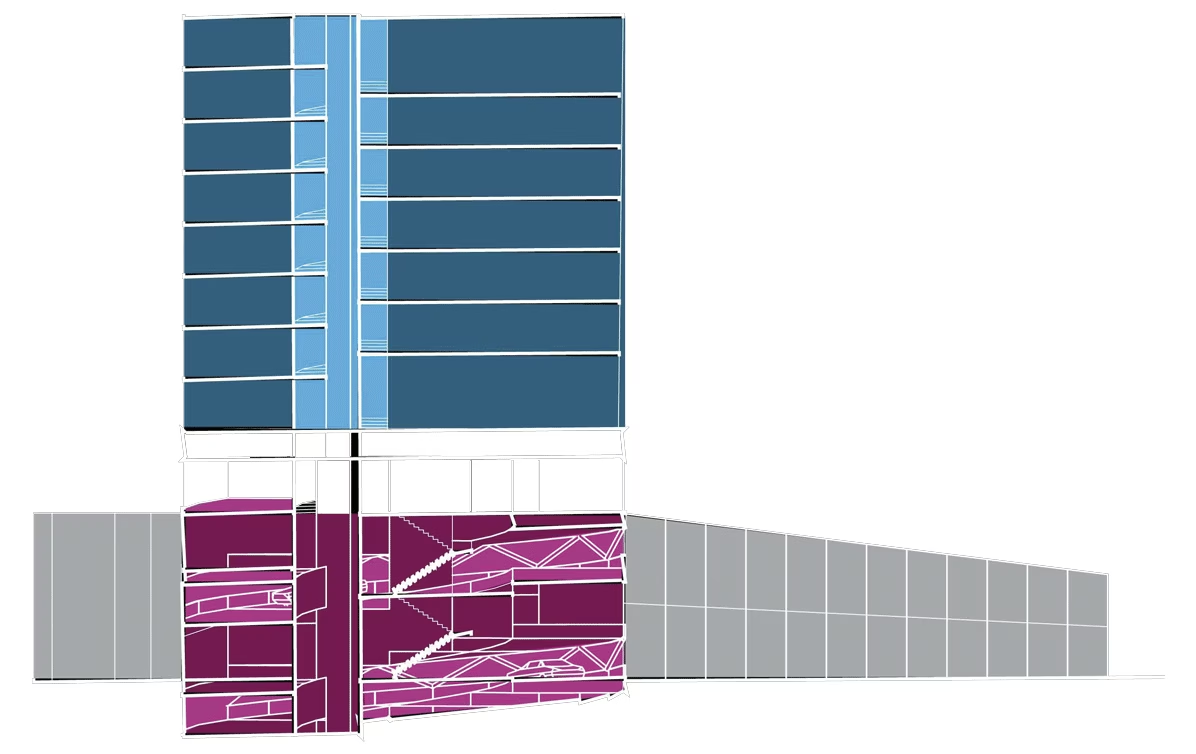
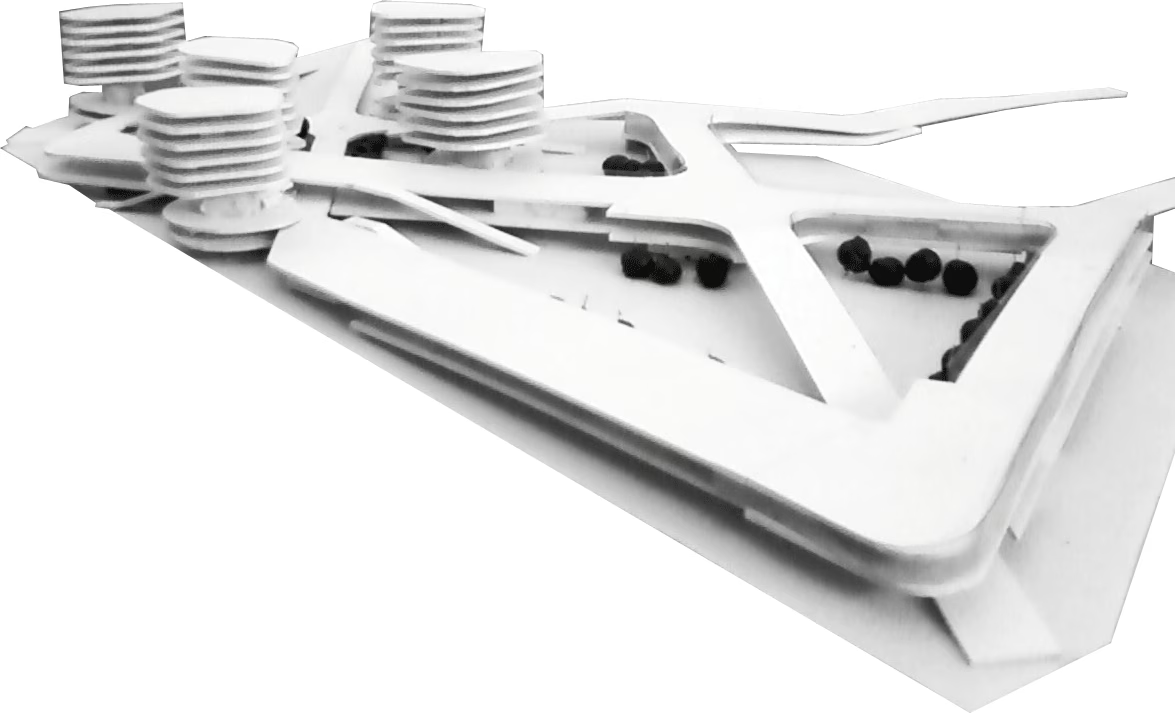
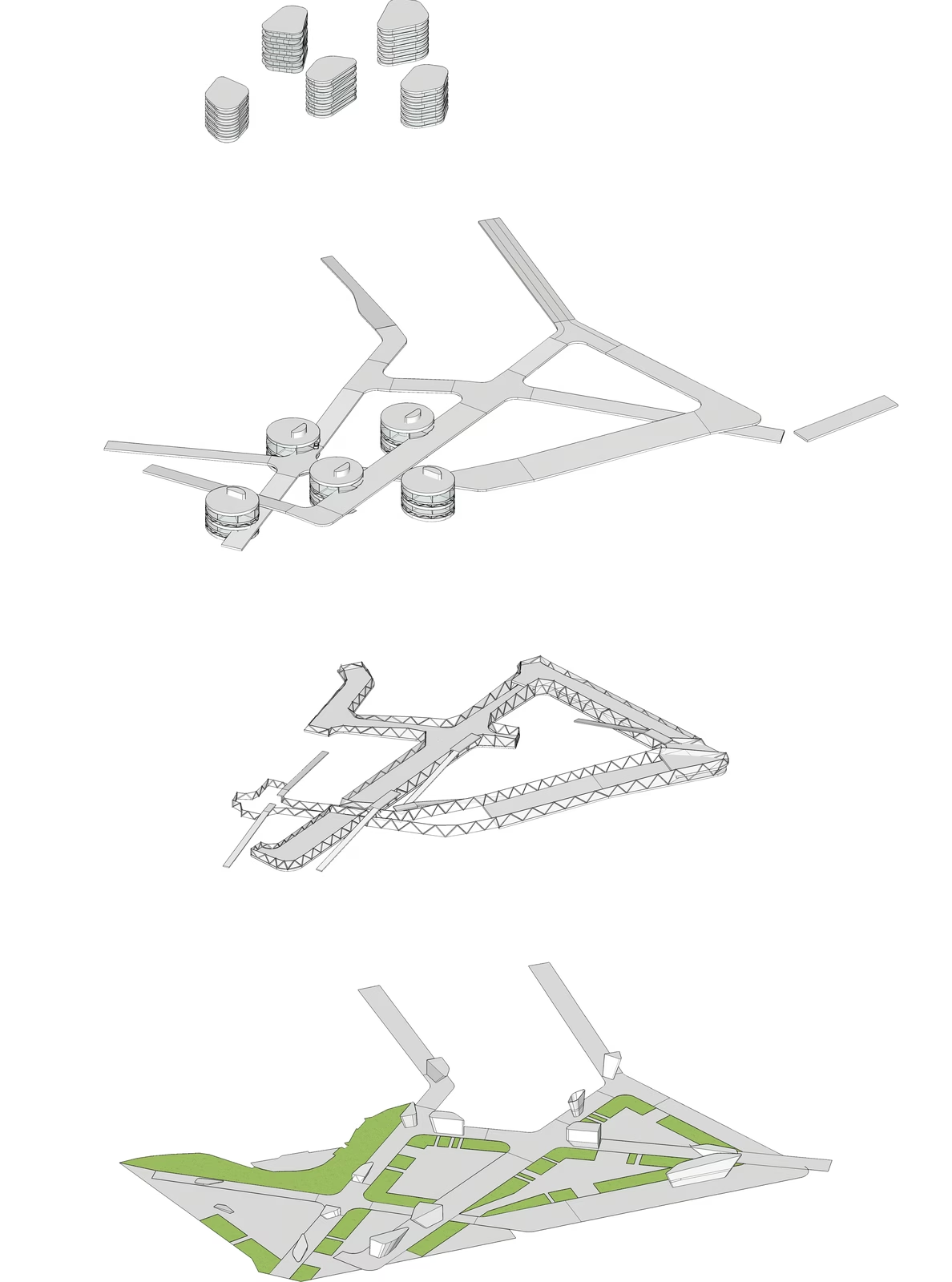
REVITALISING A NEIGHBOURHOOD IN SHANGHAI In Shanghai, the ongoing destruction of lilongs - low-rise housing neighbourhoods from the late 19th and early 20th centuries - and the construction of high-rise buildings erase not only an important face of Shanghai but also its few remaining quiet islands in the middle of the metropolis. The only way to preserve these few lilongs is to underline their cultural importance and to intensify their cultural production to leave a bigger trace in the Shanghai mindset. This project is about strengthening the lilong culture by the punctual integration of what is lacking in the neighbourhood. A wide public space, from which it is easy to access the new low-level housing and lilongs from the neighbourhood, acts as a bridge, offering space underneath which is meant just for pedestrians, to draw the whole neighbourhood together to experience 'community', since driving is only allowed on top of the structure.Motion is a research project developed at the intersection of TU Delft, Tongji University, and the Berlage Institute - exploring the spatial intelligence of Shanghai's lilong neighbourhoods. The project proposes a bridge structure for the Dklauwamao district that simultaneously connects, preserves, and activates the lilong lane networks of the area: low-rise housing corridors from the late 19th and early 20th centuries that represent Shanghai's few remaining quiet islands within the metropolis. The bridge creates a wide public space from which access to the existing lilongs is made legible. Only pedestrians permitted beneath; driving permitted on top. Published: Shanghai Lessons (ISBN: 9789079488971). Exhibited: Tongji CAUP. BfNA reading: this project is understood as a case study in learning, attention, social encounter and environmental dignity. It extends beyond architectural production into environmental intelligence / how design decisions can support human adaptation, social responsibility, ecological performance and future evidence-based practice.
[Key Figures]
Typology: urban _ mixed-use · 2009-2010 · ISBN: 9789079488971 · Shanghai Lessons · Nym Fix Press, Delft · Exhibition: Tongji CAUP · Site: Lilong, Shanghai

No items found.
[Neural Analysis]
MOBILITY NEURALITY: Motion reads infrastructure as a sensorimotor force that changes the pace of perception, the scale of memory and the body's tolerance for metropolitan speed.
LILONG AS SOCIAL NEURAL SCIENCE [S1][B2][A3]: Shanghai lilongs are semi-public lane networks - designed to maximise the social contact that neural science identifies as the strongest protective factor against depression and loneliness (WHO, 2023). MacKerron & Mourato (2013): being with others in familiar outdoor spaces generates peak positive-affect scores [S1]. ACOUSTIC REFUGE [A3]: Lilongs provide acoustic refuge from Shanghai's 75-85 dB street noise - the bridge structure reinforces this by creating a pedestrian-only undercroft at ~45-50 dB, within the optimal cognitive zone [A3]. COMMUNITY IDENTITY [S2]: Lilong architecture creates a 'place identity' that Kaplan's ART theory (1995) identifies as essential for psychological adaptive functioning - belonging to a named, bounded, human-scaled space [S2]. LILONG SOCIAL NEURAL SCIENCE [S1][B2][A3]: Shanghai's lilong lane networks are empirical evidence that the built environment can encode social adaptive functioning: semi-public spaces at 3-5 m width create maximum social contact frequency without the stressor of full exposure. MacKerron & Mourato (2013): being with familiar others in comfortable shared spaces consistently ranks among the top 3 positive-affect activities. Holt-Lunstad et al. (2015): social connection = 50% reduced mortality risk. BfNA neural-sciences lens: the relevant question is not only how the project looks, but how it conditions learning, attention, social encounter and environmental dignity over time, across different bodies, neurotypes and social realities.
[Social Impact]
SOCIAL: The project interrogates mobility as a generator of inclusion, exclusion and everyday adaptation.
[ROI Sustainability]
ROI: Research value lies in methods for reading megacity movement and hybrid programme.
ROI: Cultural documentation + urban activation strategy. SUSTAINABILITY: Reuse of lilong structures avoids demolition; community activation reduces the social costs of urban displacement. CULTURAL PRESERVATION ECONOMICS: Lilong preservation vs demolition: social cost of displacement estimated at RMB 150,000-250,000/household (CAUP Tongji, 2012). Adaptive reuse for creative industry: successful model in Tianzifang (50M visitors/yr). ESG / investment lens: the value of this project is not limited to carbon or certification. It includes education outcomes, cognitive equity and long-term institutional value, producing evidence that can inform investors, public actors, operators and future environmental standards.
[Applied R&D Lens]
Translate movement diagrams into neural load maps: speed, compression, orientation and sensory exposure.
The lilong lane is, in neural science terms, the optimal social contact environment: 3-5 metres wide, semi-public, acoustically intimate. BfNA's Applied R&D would deploy social contact measurement - wearable proximity sensors and cortisol tracking - across the lilong community before and after the bridge intervention, measuring the change in social contact frequency produced by the new public space. The community bridge is an independent variable in the social neuroscience of urban preservation: does activating the lilong network increase the oxytocin baseline of its community enough to make preservation economically rational? The bridge as a measurement instrument for what happens when a community is given back its own public space.Future data layer: deployed through BfNA, the project could become a longitudinal dataset linking environmental conditions, behavioural patterns, social outcomes and ecological performance / transforming built space into knowledge for future design.
Citations:
Sources: MacKerron & Mourato (2013) Psychol. Sci. · Holt-Lunstad et al. (2015) Perspect. Psychol. Sci. · CAUP Tongji Shanghai displacement study (2012) · Berlage Institute Shanghai Lessons publication (2010). · Urban neuroscience; Ancora et al. 2022; Shanghai Lessons documentation.
Copyright:
Project Credits: TU Delft + Tongji University + Berlage Institute; Team: Wang Wenjun (D) + Li Dukui (K) + Mao Mingqian (MAO).Laura Role: Laura Ulloa - Project Leader / lead responsibility where documented in CV, office records or project archive.Image Credits: © Laura Ulloa / BfNA. Images and third-party material remain.Source: http://www.terraventure.org/ / http://lauravirginiaulloaquiroga.blogspot.in/p/motion.html.Project Credits & Copyright Notice: Every effort has been made to identify and acknowledge architects, consultants, collaborators, photographers, visualisation studios and other contributors associated with each project. Project descriptions have been rewritten and curated by Bureau for Neural Architecture (BfNA). Architectural works, photographs, renderings, drawings, trademarks and visual material remain the property of their respective authors, studios, photographers, visualisation teams and rights holders. Contributors are credited wherever information is available. Rights remain with their respective authors and rights holders.
© 2026 Bureau for Neural Architecture. Developed by Cavolo Studio.
Privacy Policy & Legal Notice
