


Directed by Laura Ulloa, BfNA explores and designs for the reciprocal dynamics between environments, cognition and collective adaptation.
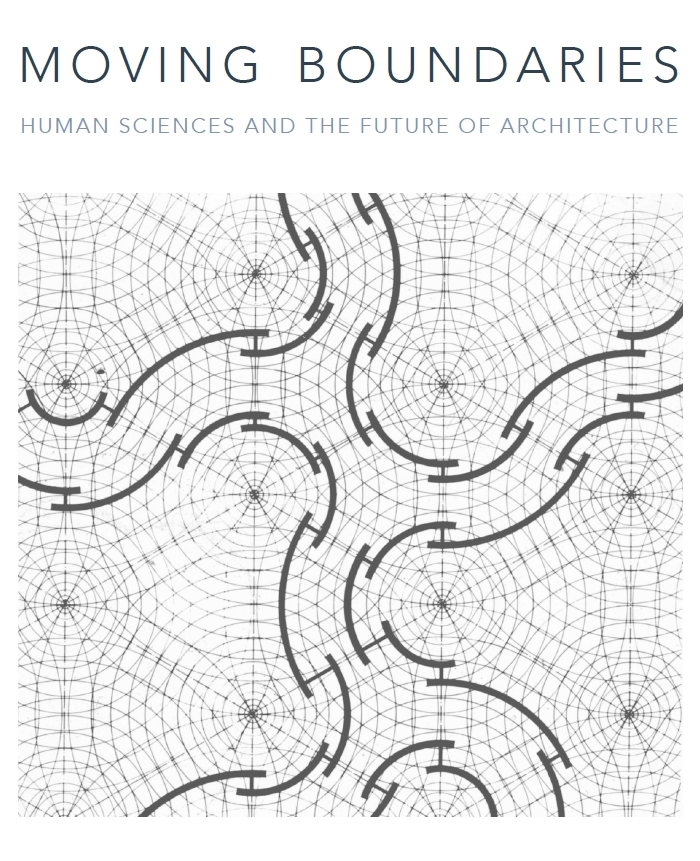

Moving Boundaries - ANFA
Conference / Further Education
San Diego
USA
Academy of Neuroscience for Architecture (ANFA)
Completed
Moving Boundaries - ANFA / neuroarchitecture field formation
[Summary]
Neuroarchitecture as translational field / moving from architectural intuition towards evidence, protocol and measurement.
[Neural Tags]
Participant
[Description]
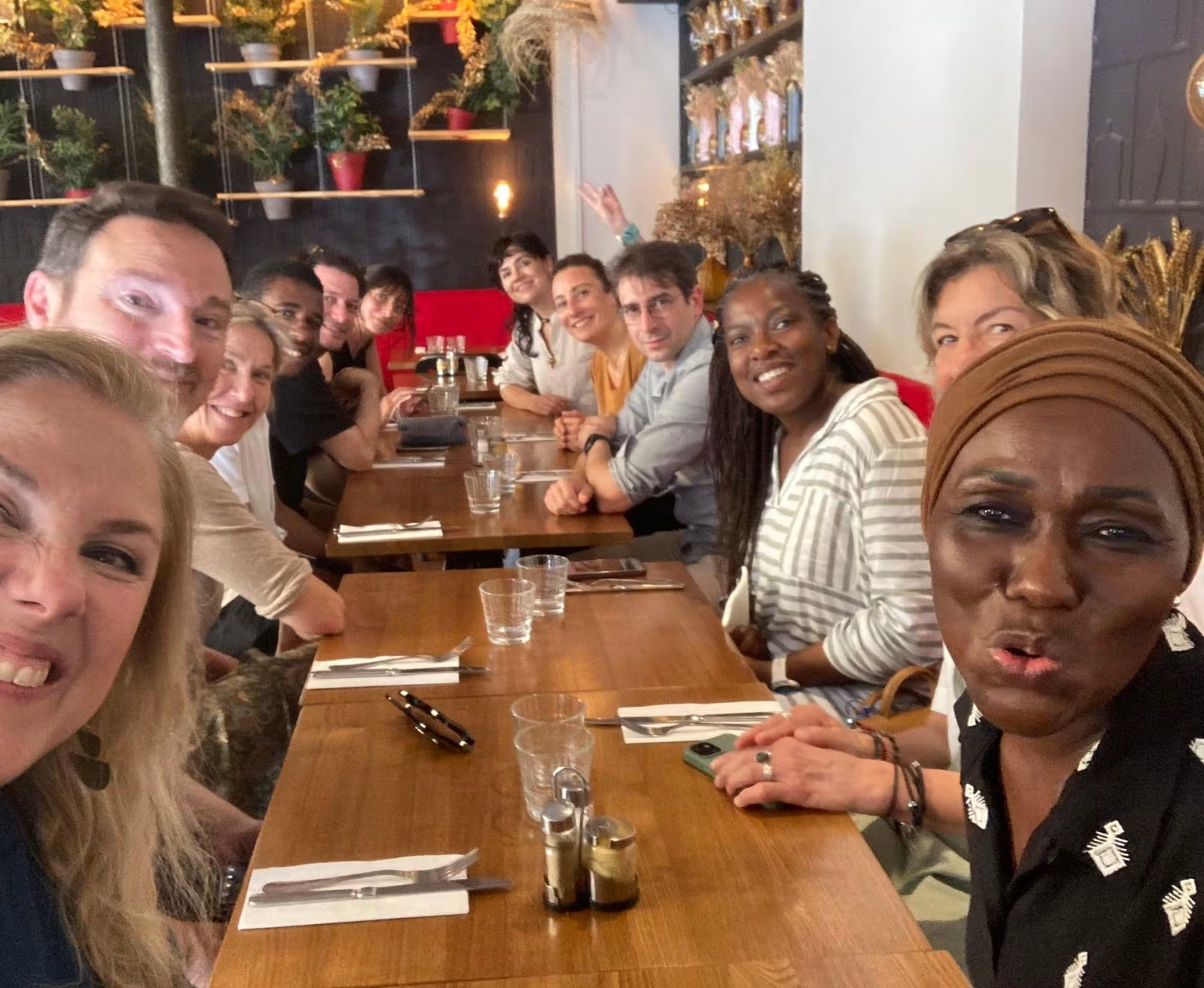
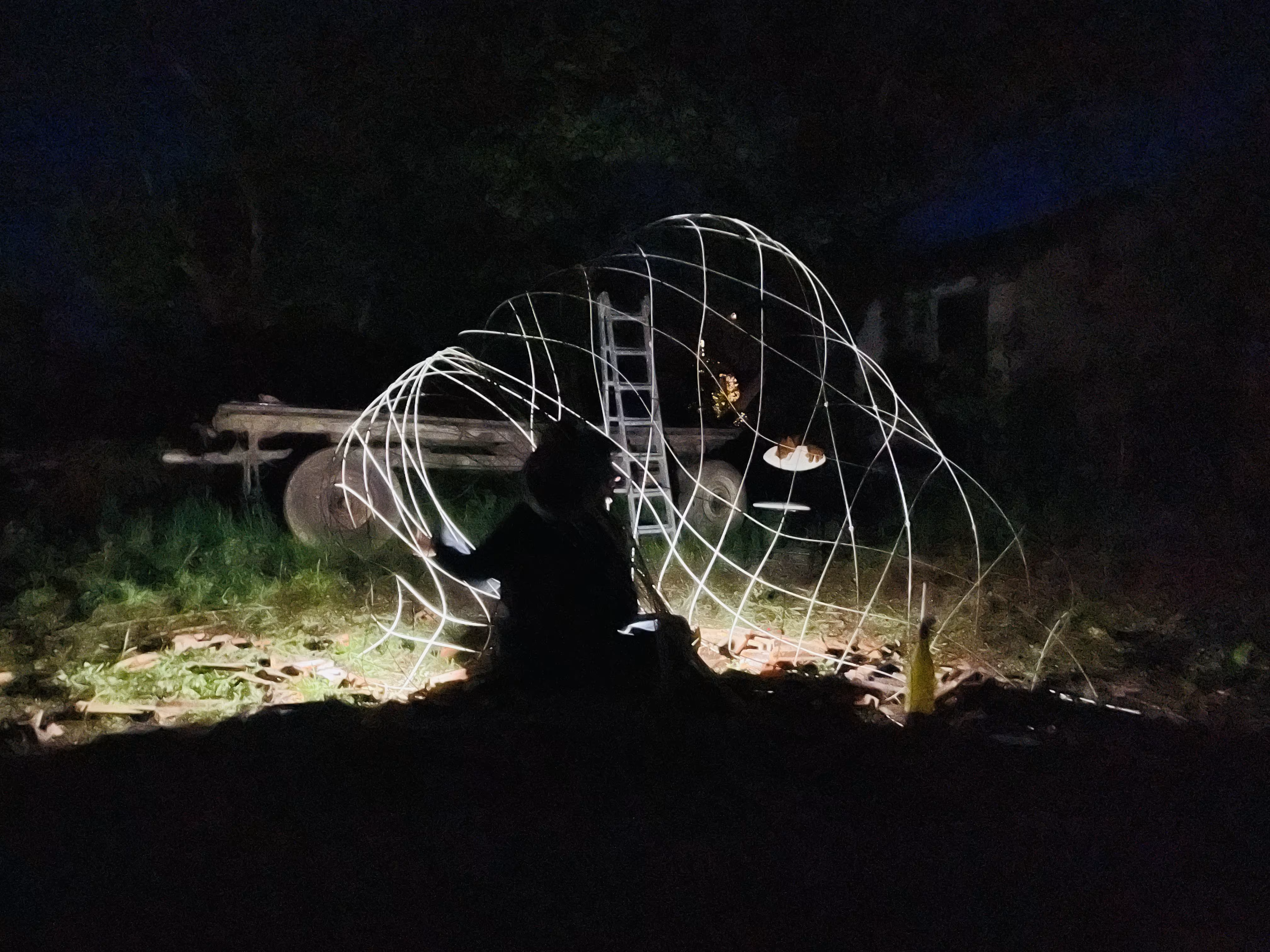
Participant at the international Moving Boundaries 2023 conference of the Academy of Neuroscience for Architecture (ANFA), San Diego.International conference - ANFA - linking neuroscience and architecture at the highest research level.
[Key Figures]
Typology: Conference / Further Education · ANFA Moving Boundaries 2023 · San Diego, USA · https://www.mb2023.org/ · Academy of Neuroscience for Architecture
[Neural Analysis]
FIELD FORMATION: Moving Boundaries / ANFA is read as professional formation in translational neuroarchitecture: the bridge between laboratory evidence, architectural practice and measurable human-environment relations.
TRANSLATIONAL NEUROARCHITECTURE [R1][R2]: The value of ANFA is not a credential alone; it places BfNA inside the field that John P. Eberhard helped define: architecture as a discipline capable of learning from neuroscience without collapsing into neuro-marketing. Ghamari et al. (2021) maps three decades of neuroarchitecture literature; Djebbara et al. (2019/2021) provides empirical evidence that architectural affordances register in sensorimotor brain dynamics. This row should therefore be read as methodological alignment: from conferences and networks towards testable protocols, measurement ethics and design research.
[Social Impact]
SOCIAL: ANFA is the bridge between neuroscience academia and architectural practice. Moving Boundaries generates collaborative research projects between labs and firms - directly beneficial for HEI's scientific partnerships.
[ROI Sustainability]
ROI: ANFA network = HEI's primary academic credibility and partnership channel. Scientific publications and speaking invitations from ANFA participation = HEI's international positioning. SUSTAINABILITY: neural architecture research is the intellectual foundation for all post-carbon sustainable design that centres human health.
[Applied R&D Lens]
Use ANFA as a disciplinary bridge: connect architectural practice with neuroscience methods, ethics, environmental measurement and post-occupancy research protocols.
Link(s) to the project:
https://www.movingboundaries.org/italyhttps://www.instagram.com/movingboundaries/https://anfarch.org/opportunities/hay-researchhttps://www.instagram.com/p/C1rQTq2sysa/Citations:
ANFA / Moving Boundaries 2023, https://www.mb2023.org/ · John P. Eberhard, Brain Landscape: The Coexistence of Neuroscience and Architecture (2009) · H. Ghamari et al. (2021), "Neuroarchitecture Assessment: An Overview and Bibliometric Analysis", https://pmc.ncbi.nlm.nih.gov/articles/PMC8628715/ · Zakaria Djebbara et al. (2019), PNAS, DOI: 10.1073/pnas.1900648116 · Djebbara, Fich & Gramann (2021), Scientific Reports, DOI: 10.1038/s41598-021-82504-w.
Copyright:
Project Credits: Academy of Neuroscience for Architecture (ANFA); Team: team to be confirmed.Laura Role: Laura Ulloa - Project Leader / lead responsibility where documented in CV, office records or project archive.Image Credits: © Academy of Neuroscience for Architecture (ANFA) and/or respective photographers / visualisation studios.Source: https://www.mb2023.org/.Project Credits & Copyright Notice: Every effort has been made to identify and acknowledge architects, consultants, collaborators, photographers, visualisation studios and other contributors associated with each project. Project descriptions have been rewritten and curated by Bureau for Neural Architecture (BfNA). Architectural works, photographs, renderings, drawings, trademarks and visual material remain the property of their respective authors, studios, photographers, visualisation teams and rights holders. Contributors are credited wherever information is available. Rights remain with their respective authors and rights holders.
© 2026 Bureau for Neural Architecture. Developed by Cavolo Studio.
Privacy Policy & Legal Notice
