



Directed by Laura Ulloa, BfNA explores and designs for the reciprocal dynamics between environments, cognition and collective adaptation.

Teaching Neural Earthen Architecture
Research / Teaching / Material Research
Hangzhou
China
BfNA + Auroville Earth Institute + China Academy of Art
Research / Built
Measuring Transformation in China Academy of Art · Hangzhou · 2026
[Summary]
What happens to us when learning architecture becomes an embodied act of making?
[Team]
CAA · AVEI · BfNA - ongoing collaboration, neural architecture reading and research development
[Temporal Arc]
Immediate (attention + embodied learning) · Longitudinal (perceptual + cognitive transformation) · Post-construction (spatial memory + inhabitation)
[Direction of Effect]
MOVE (embodied learning) · REGULATE (attention + physiological response) · ENCODE (spatial memory + cognitive mapping) · ADAPT (individual + collective transformation)
[Neural Tags]
A2 = Attention + cognitive engagement · A3 = Embodied/sensorimotor experience · B2 = Physiological response · B4 = Environmental perception · S1 = Social interaction · S3 = Collective learning · T1 = Longitudinal transformation · T3 = Spatial cognition + memory
[Biological System]
Embodied cognition · Attention · Spatial cognition · Memory encoding · Proprioception · Sensorimotor learning · Prediction + error correction · Physiological response · Social cognition · Environmental perception
[Description]
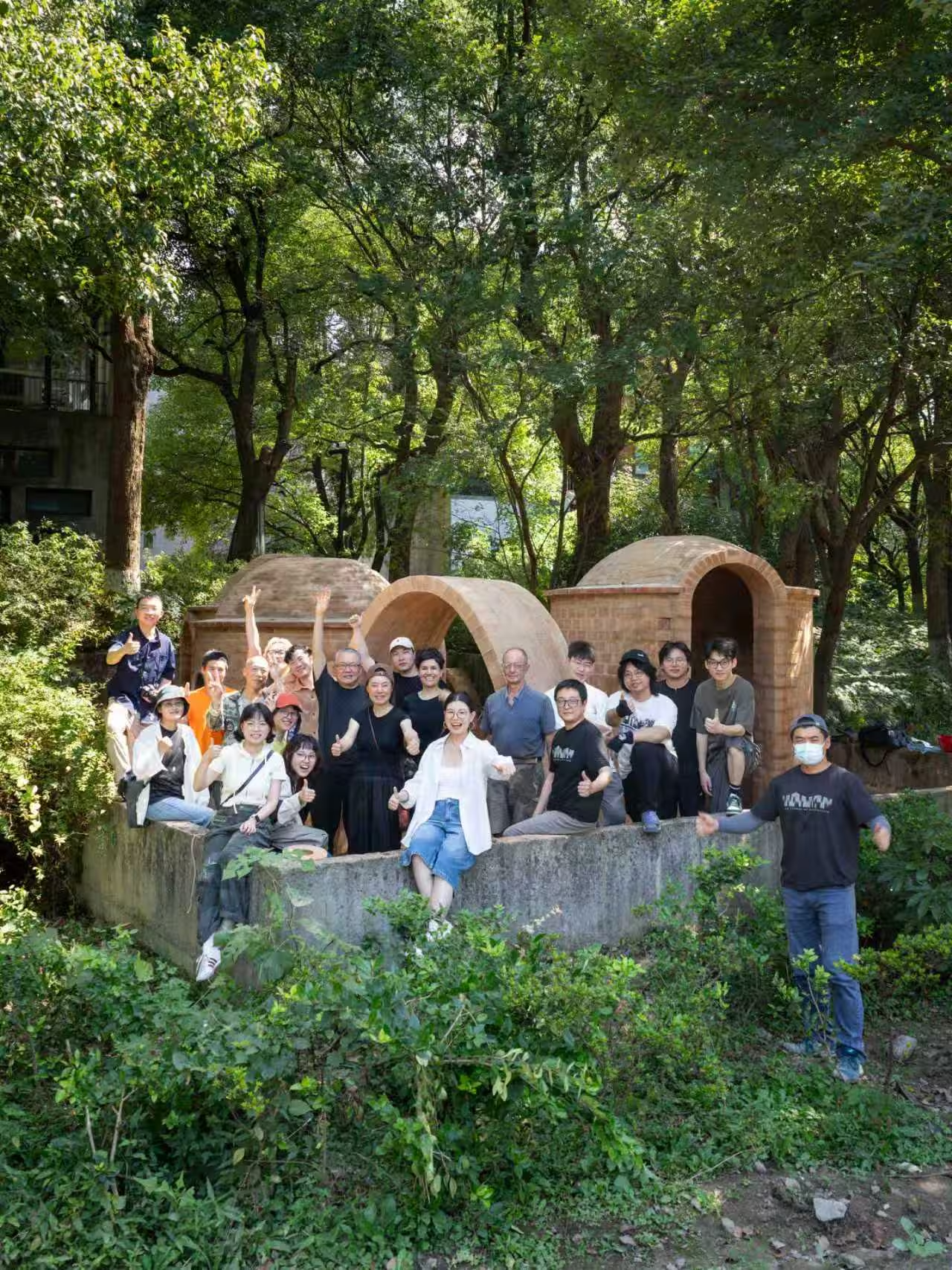
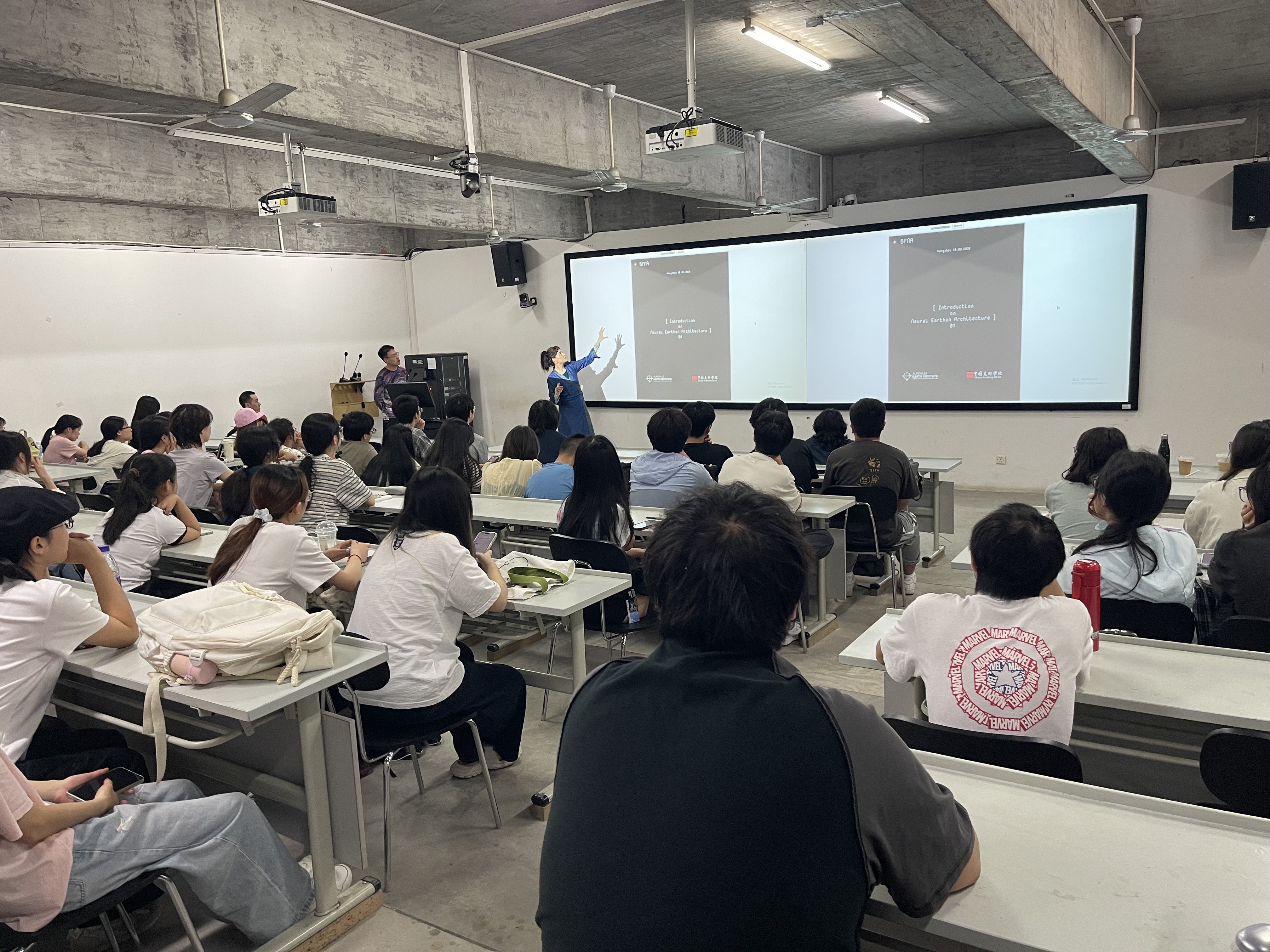
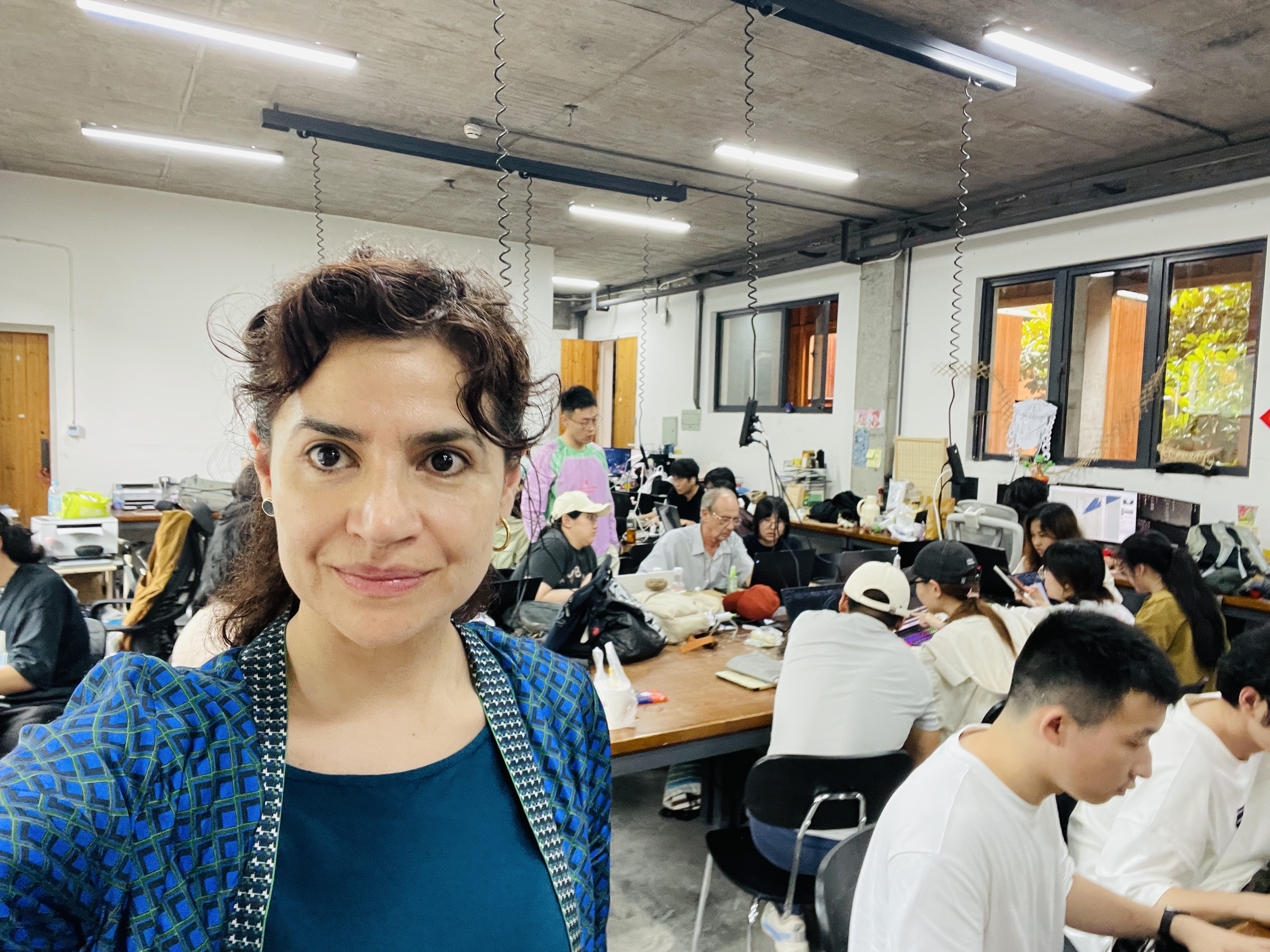
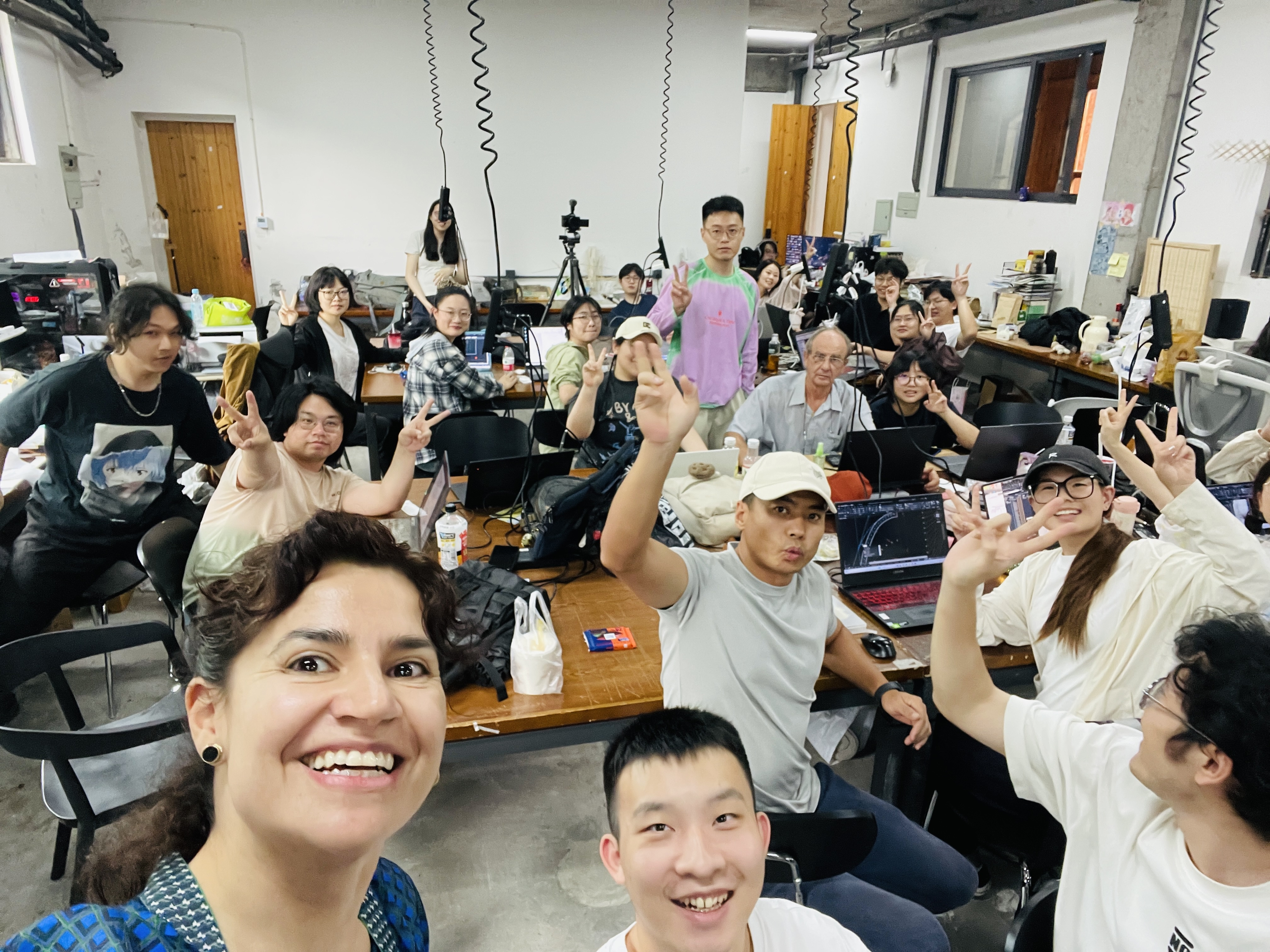
A longitudinal teaching and research programme developed by BfNA at the China Academy of Art, investigating how learning, making and inhabiting earthen architecture shape perception, cognition, behaviour and physiological response.
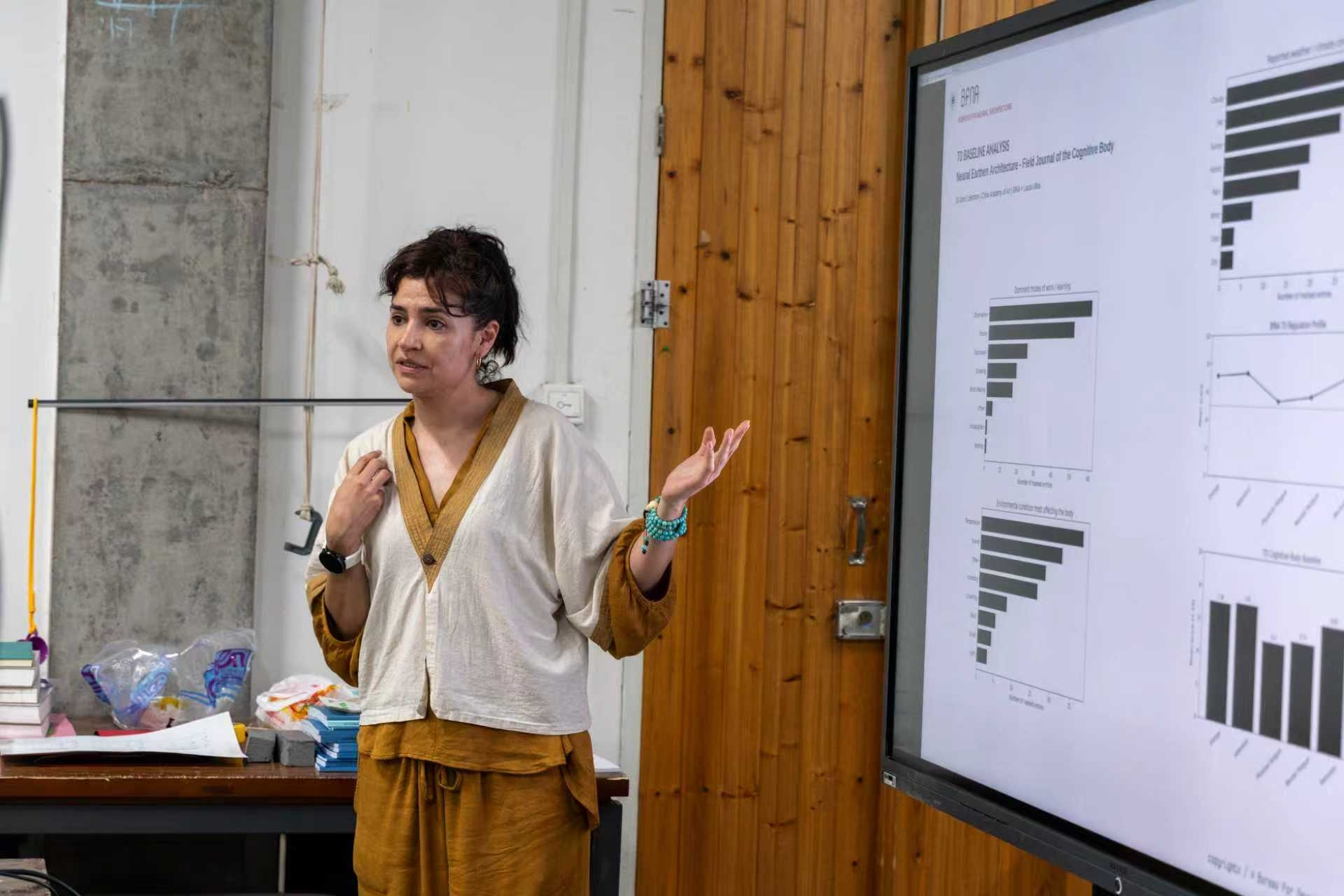
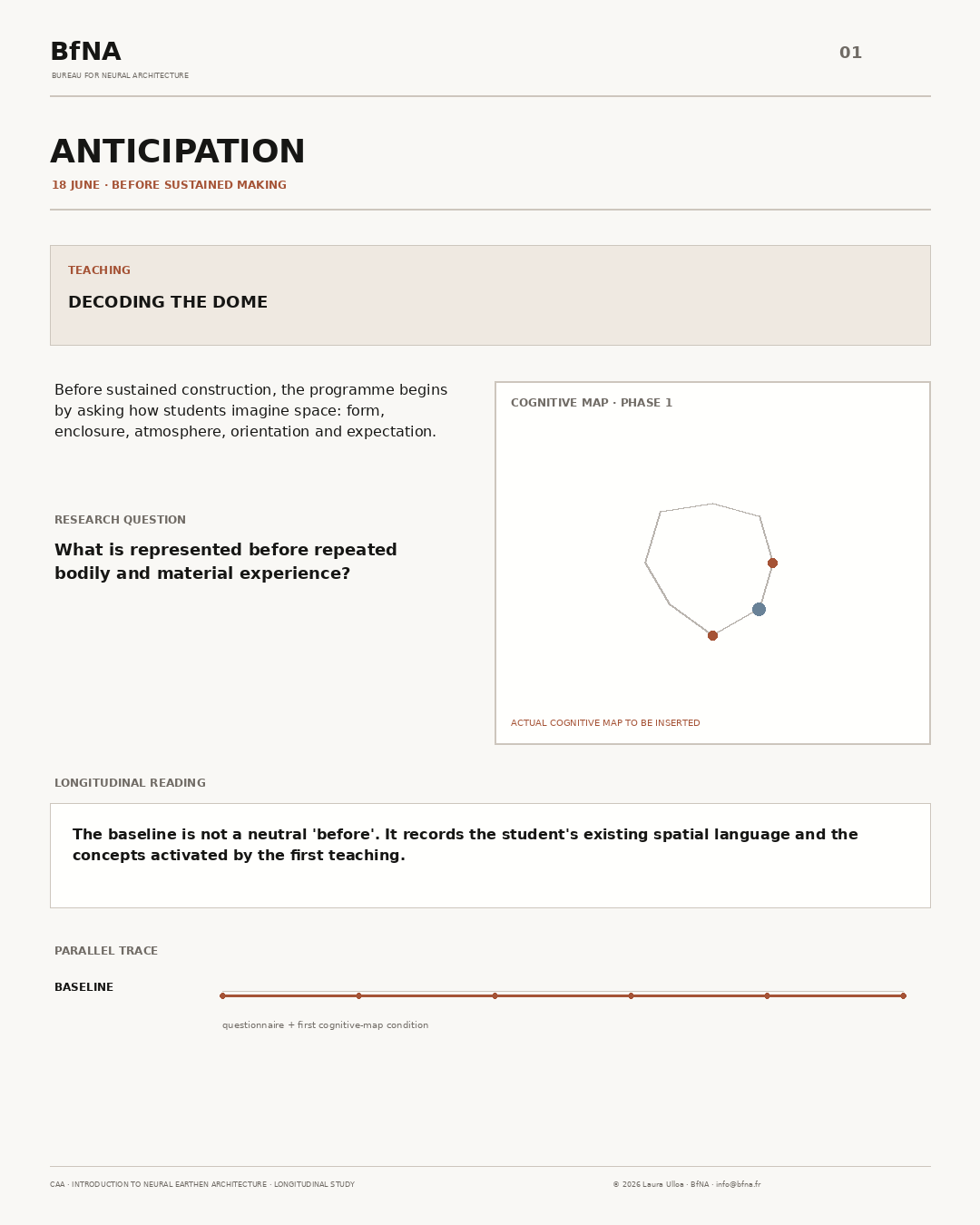
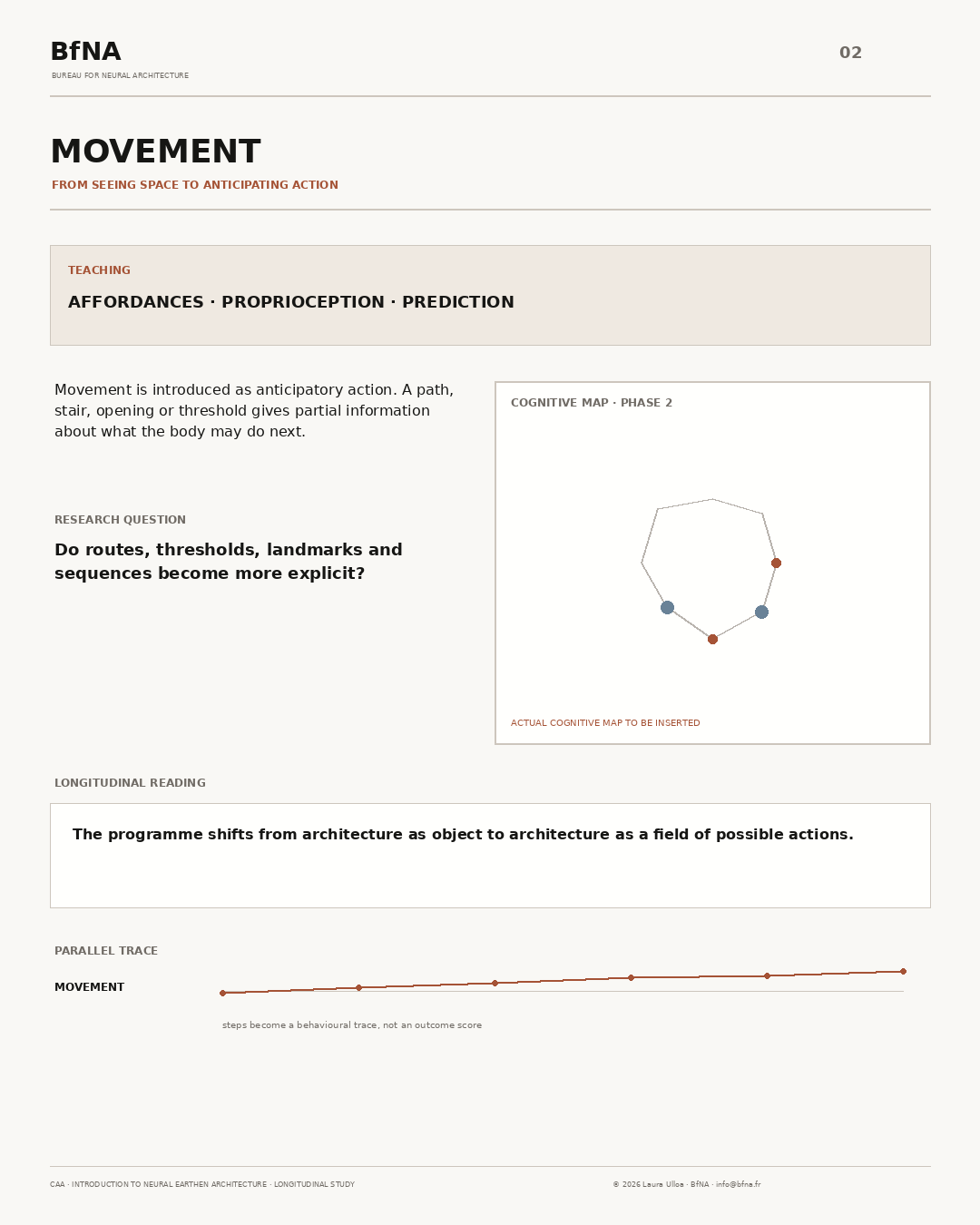
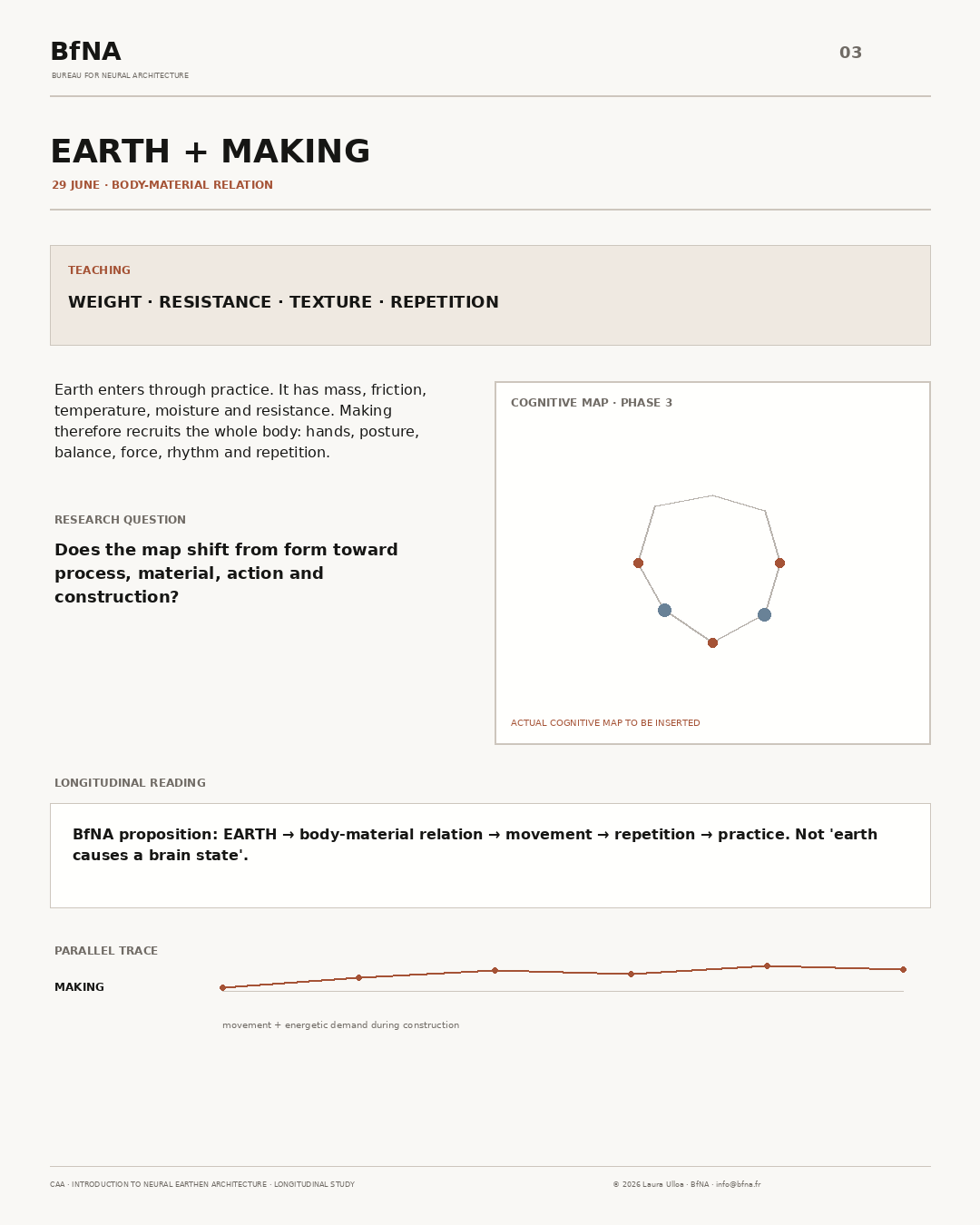
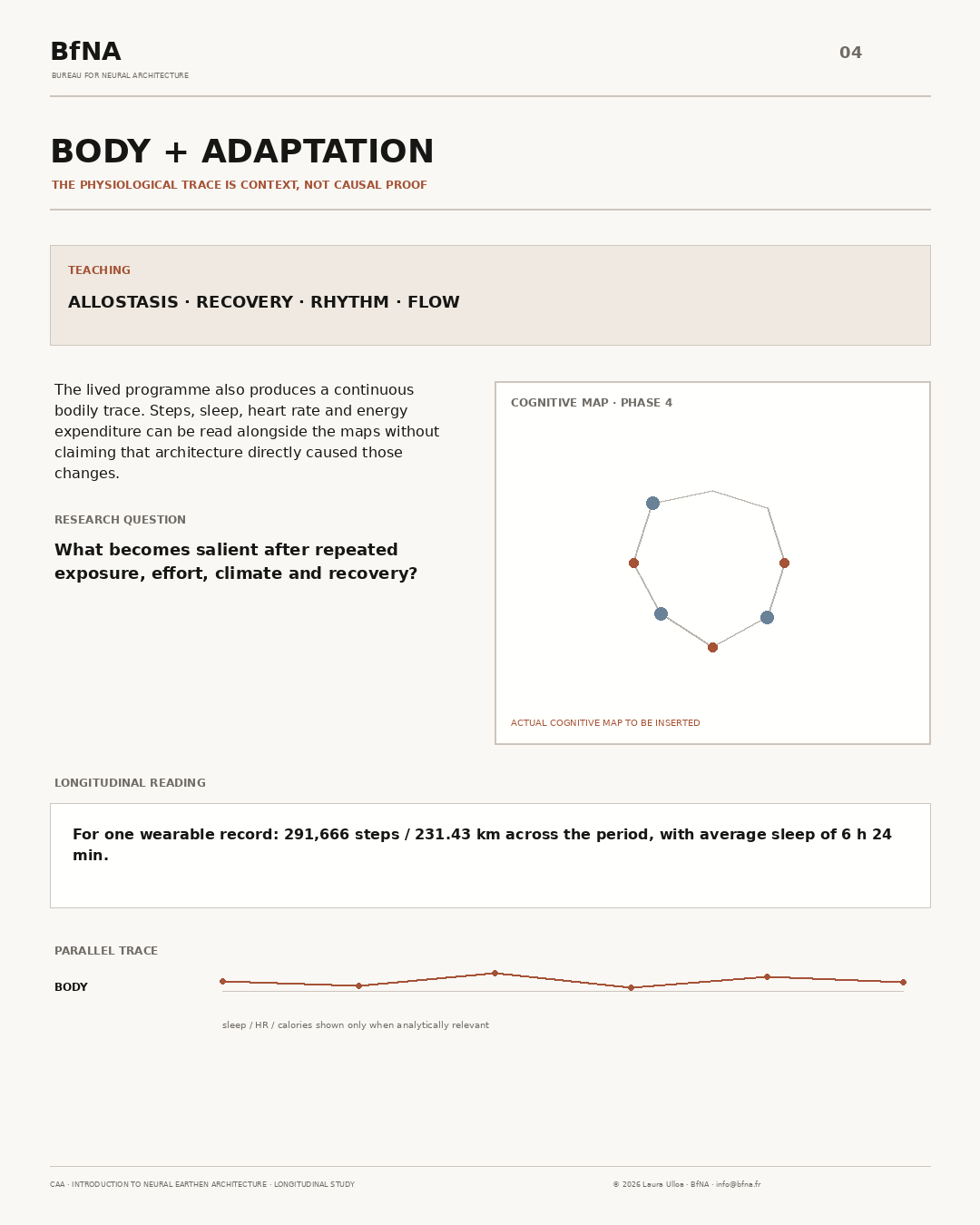
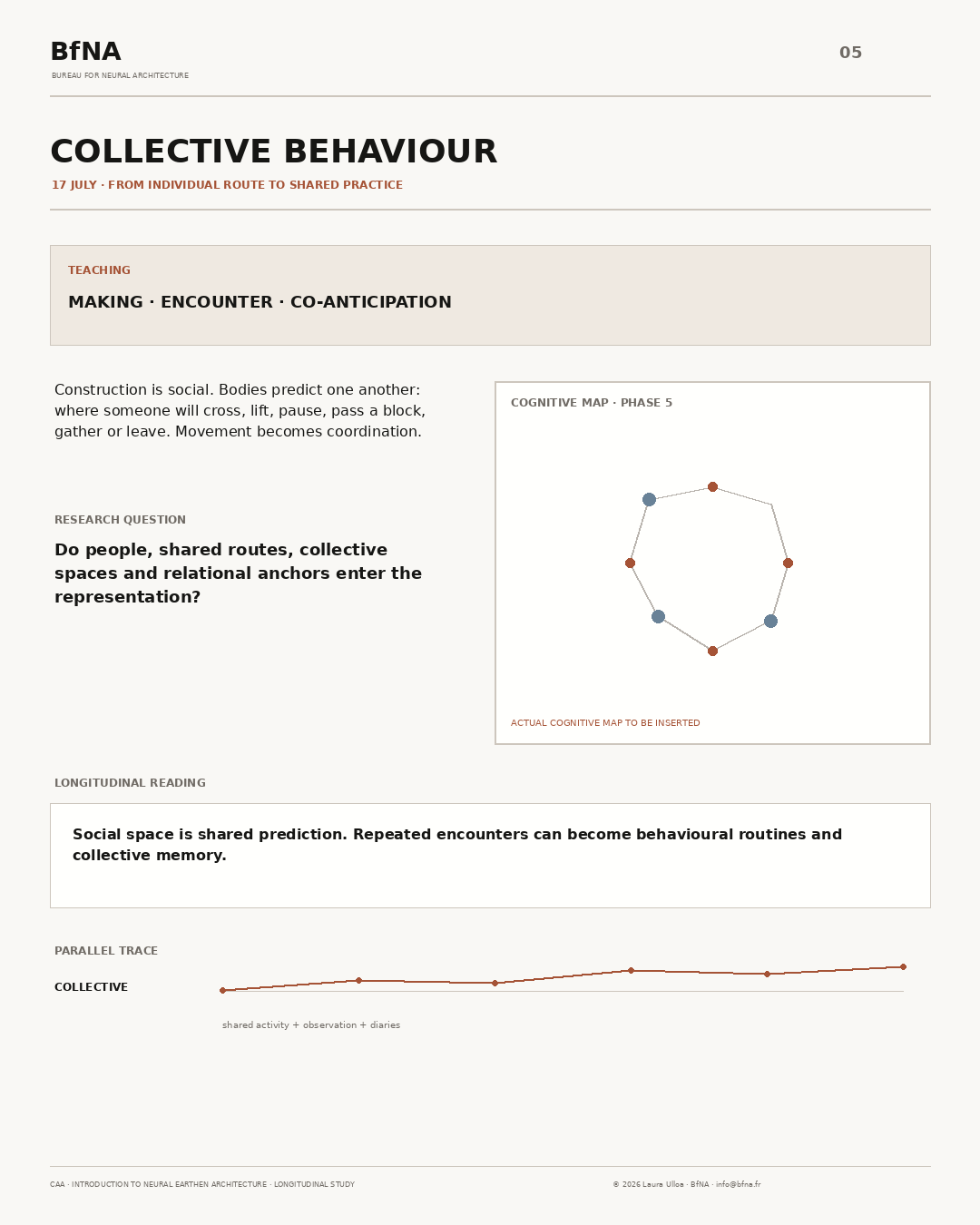
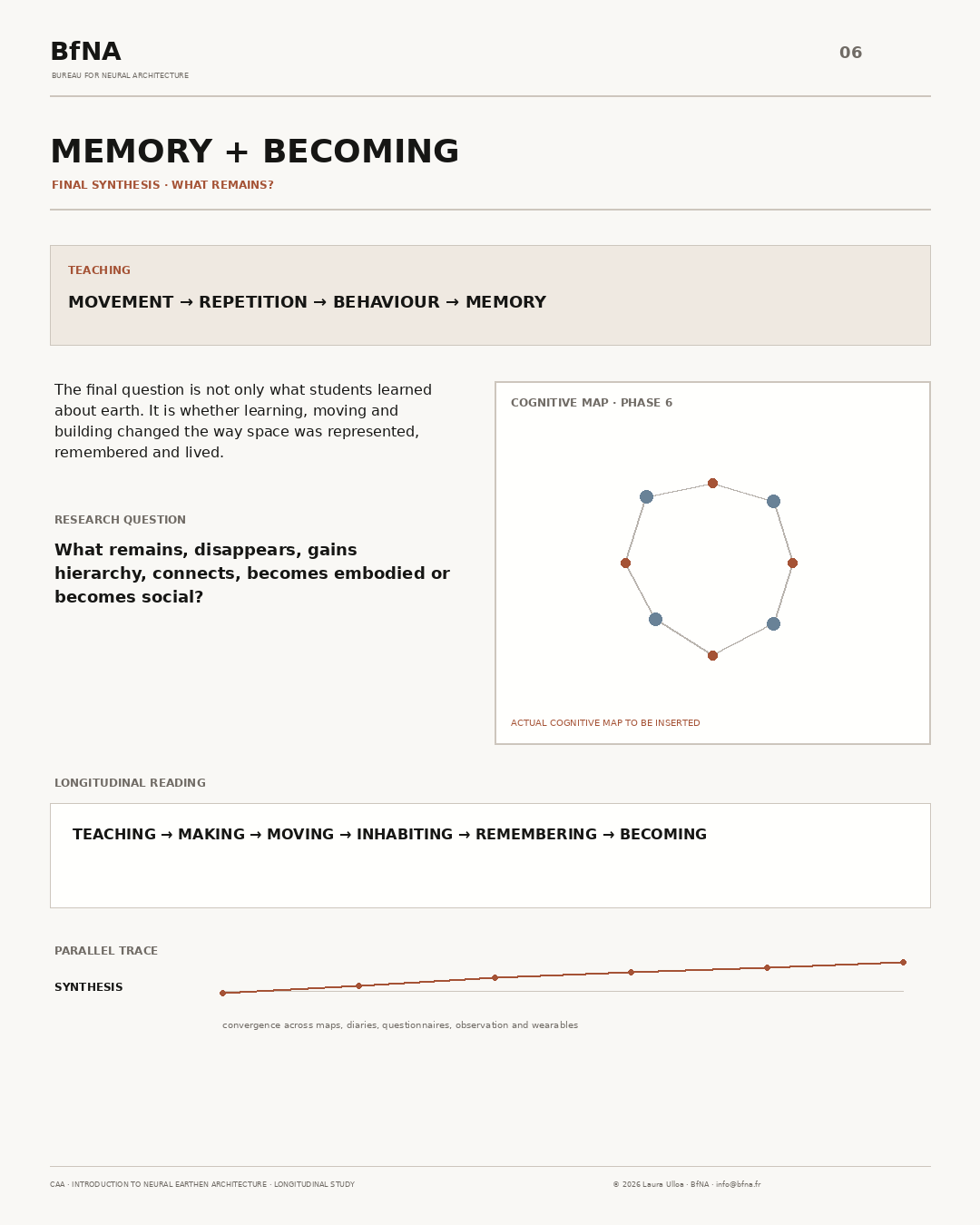
Alongside neural architecture theory and collective construction, BfNA followed students throughout the programme using longitudinal diaries and questionnaires, cognitive maps, behavioural and spatial observations, and physiological data. Together, these layers trace transformation from initial expectations and theoretical learning through material production, construction and the experience of the resulting spaces.
[Key Figures]
Longitudinal research + teaching · Neural Earthen Architecture · China Academy of Art, Hangzhou · embodied learning · earthen construction · cognitive mapping · physiological and behavioural observation



No items found.
[Neural Analysis]
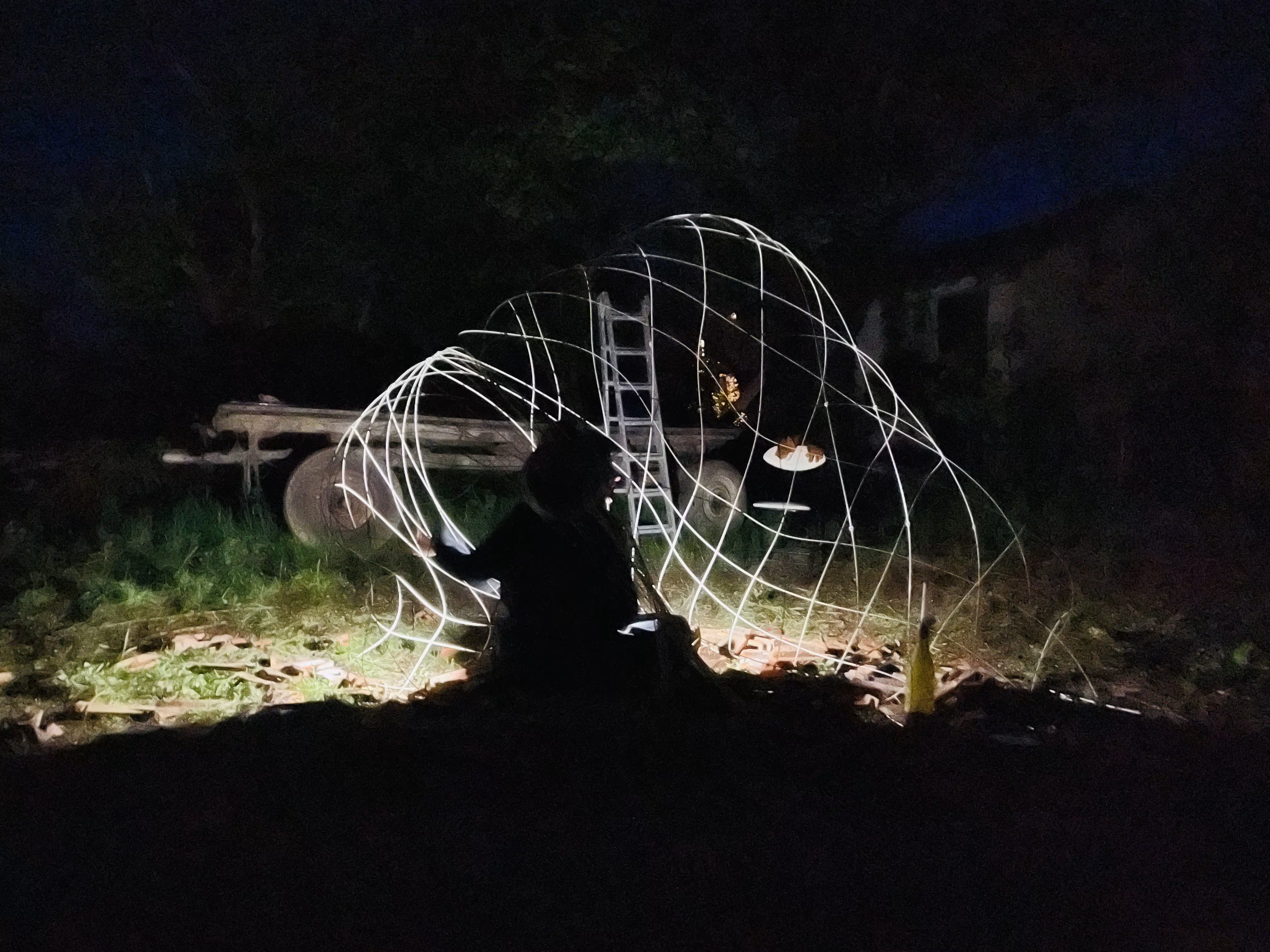
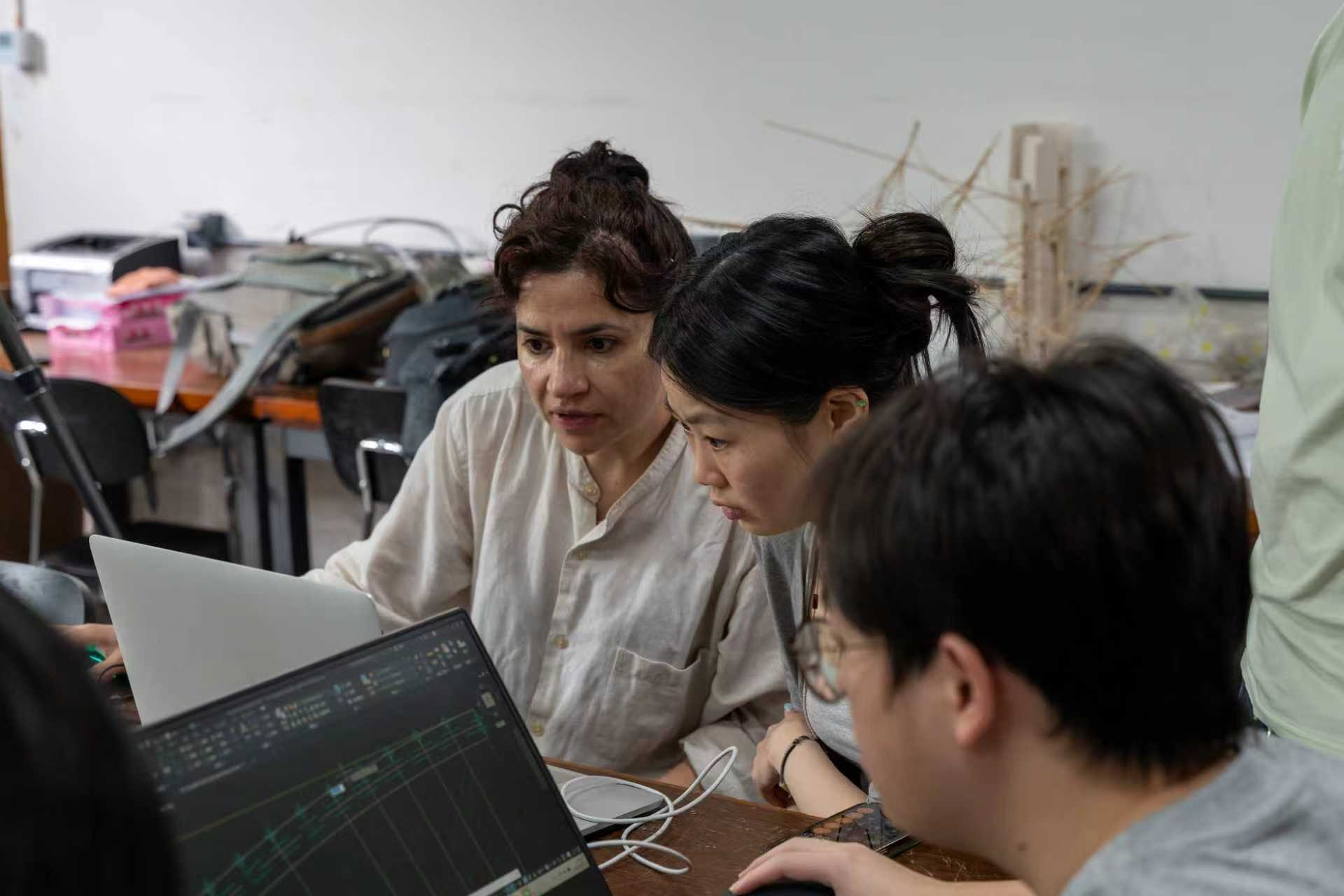
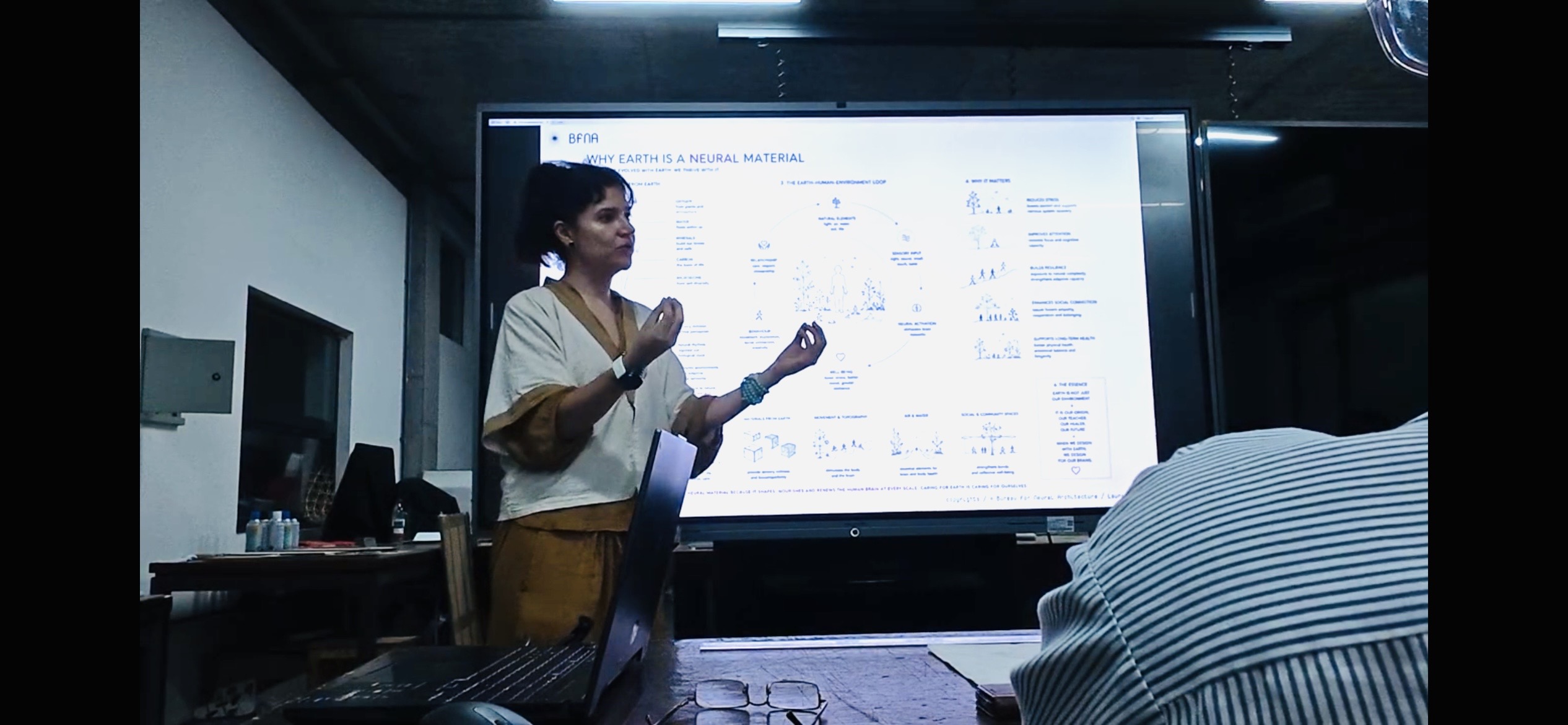
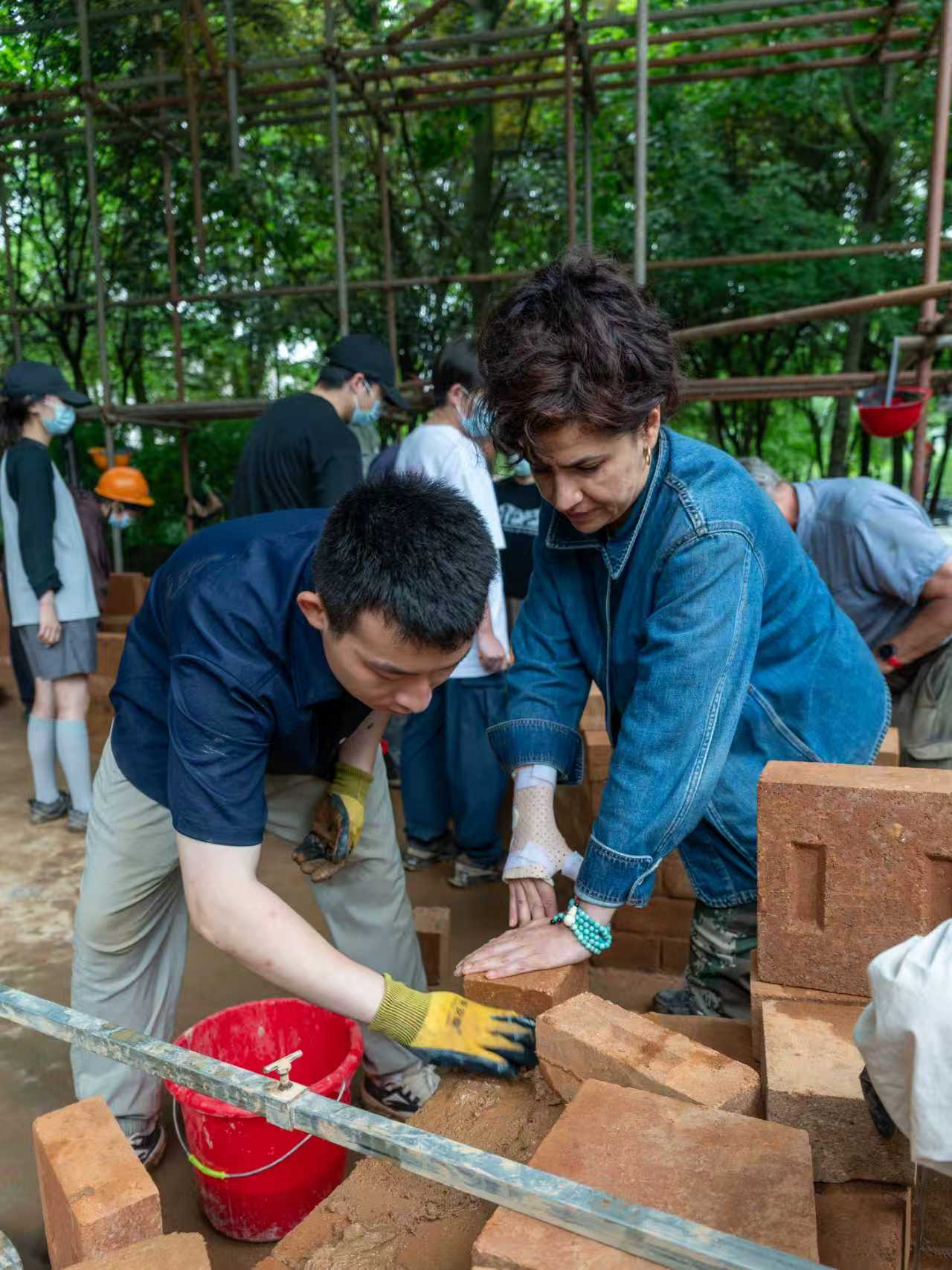
LEARNING THROUGH MAKING: Neural Earthen Architecture treats construction not simply as an outcome, but as an evolving cognitive and embodied condition. Students move between theory, material production, collective construction and inhabitation, allowing BfNA to investigate how architectural understanding develops through attention, movement, gesture, repetition and direct material engagement.
TRANSFORMATION OVER TIME [A3][T2][B3]: Longitudinal diaries and questionnaires trace changes in perception, attention, emotion, environmental awareness and collective experience throughout the programme. Cognitive maps provide a spatial layer, revealing how representations of the environment evolve before, during and after construction, while available physiological data introduce a bodily dimension to the research.
[Social Impact]
SOCIAL: Collective construction creates a shared learning environment in which knowledge is developed through cooperation, observation, negotiation and physical participation.
[ROI Sustainability]
ROI: The programme develops a transferable research and teaching methodology for evaluating how architectural education and embodied construction influence human experience, generating evidence that can inform future learning environments, design processes and post-occupancy research.
SUSTAINABILITY: Earthen construction connects low-impact material practice with embodied environmental learning, allowing sustainability to be experienced through material production, labour, climate and collective construction rather than taught as an abstract performance criterion
[Applied R&D Lens]
Track longitudinal changes in perception, attention, spatial representation, environmental awareness and embodied experience through diaries and questionnaires, cognitive maps, behavioural and spatial observation, and available physiological data.
Develop a longitudinal mixed-method protocol connecting subjective, spatial, behavioural and physiological evidence across theory, material production, construction and inhabitation, allowing BfNA to measure transformation rather than a single moment of architectural experience.
Citations:
Project source: China Academy of Art / Auroville Earth Institute / BfNA collaboration archive. Research material: longitudinal student diaries and questionnaires, cognitive maps, behavioural and spatial observations, photographic documentation and available physiological data collected during the 2026 Introduction to Neural Earthen Architecture programme.
Copyright:
Project Credits: China Academy of Art, School of Architecture · Programme commissioned by Chen Lichao, Vice Dean · Dean Wang Shu and Lu Wenyu · Earthen architecture teaching and construction: Auroville Earth Institute · Neural architecture teaching, research design and longitudinal investigation: Bureau for Neural Architecture (BfNA) / Laura Ulloa · Hangzhou, China · 2026.
Image Credits: © Chen Xi Studio, China Academy of Art, Auroville Earth Institute, Bureau for Neural Architecture and respective authors/photographers, as applicable.
Project Credits & Copyright Notice: Every effort has been made to identify and acknowledge architects, educators, researchers, collaborators, photographers and other contributors associated with the programme. Research descriptions, neural architecture analysis and research frameworks presented here have been developed and curated by Bureau for Neural Architecture (BfNA). Architectural works, teaching materials, photographs, drawings and other visual material remain the property of their respective authors and rights holders. BfNA research materials, methodologies, analyses and original research documentation remain © Bureau for Neural Architecture (BfNA), unless otherwise stated. Contributors are credited wherever information is available. All rights remain with their respective authors and rights holders.
© 2026 Bureau for Neural Architecture. Developed by Cavolo Studio.
Privacy Policy & Legal Notice
