


Directed by Laura Ulloa, BfNA explores and designs for the reciprocal dynamics between environments, cognition and collective adaptation.

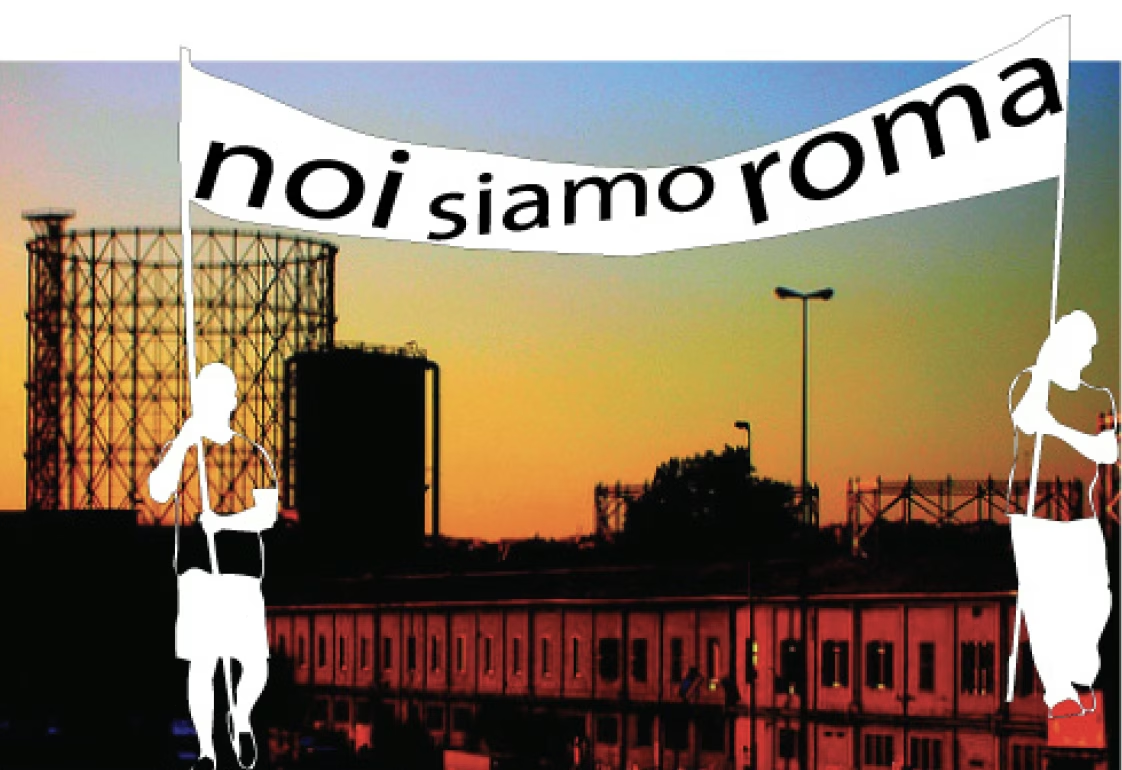
Noi Siamo Roma - AWP Competition, Rome
urban mixed-use
Rome
Italy
UNO = Ulloa + Clemens Nocker
2nd Round - AWP Competition
Noi Siamo Roma / urban mixed-use
[Summary]
A gasometer becomes civic commons / collective memory reprogrammed through open use.
[Team]
Ulloa + Clemens Nocker
[Temporal Arc]
Immediate (agency activation) · Chronic (community identity through cultural production)
[Direction of Effect]
ACTIVATE (civic agency) · ENCOUNTER (democratic programme) · ENCODE (collective identity)
[Neural Tags]
S1 = Social contact activation · S2 = Collective memory + spatial identity
[Biological System]
Autonomic regulation · Molecular signalling (dopamine) · Neuroplasticity · Reward circuitry
[Description]
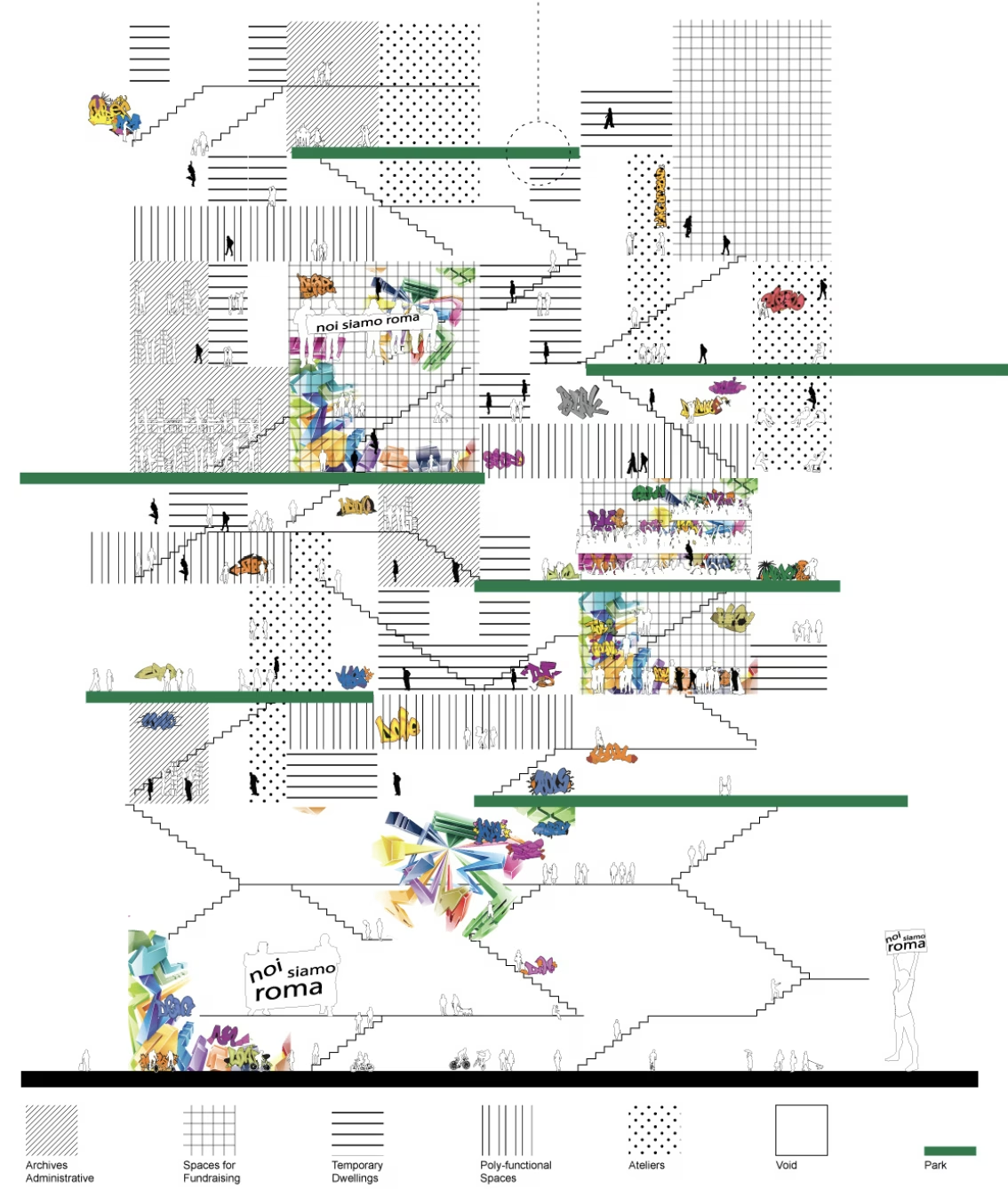
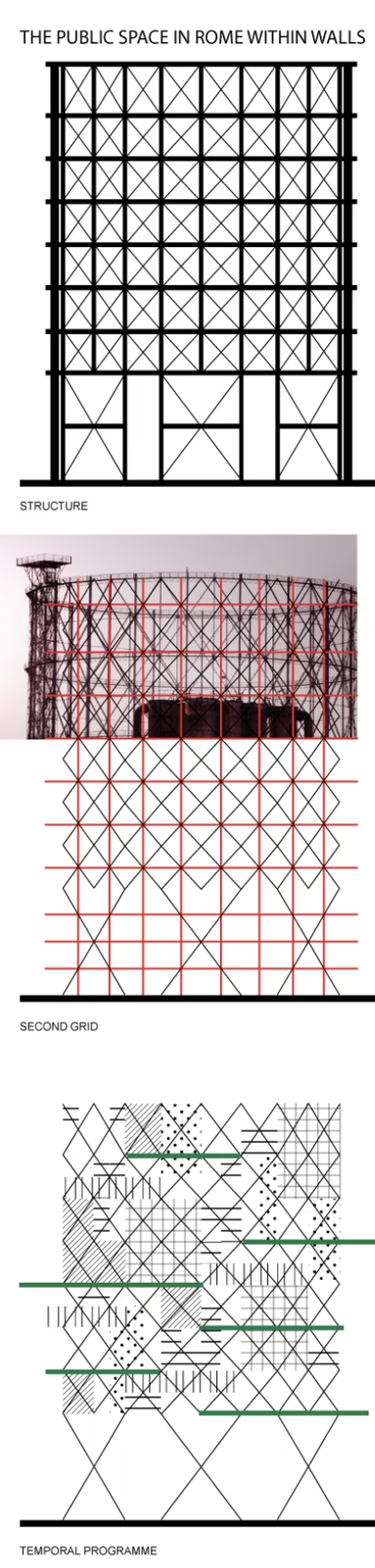
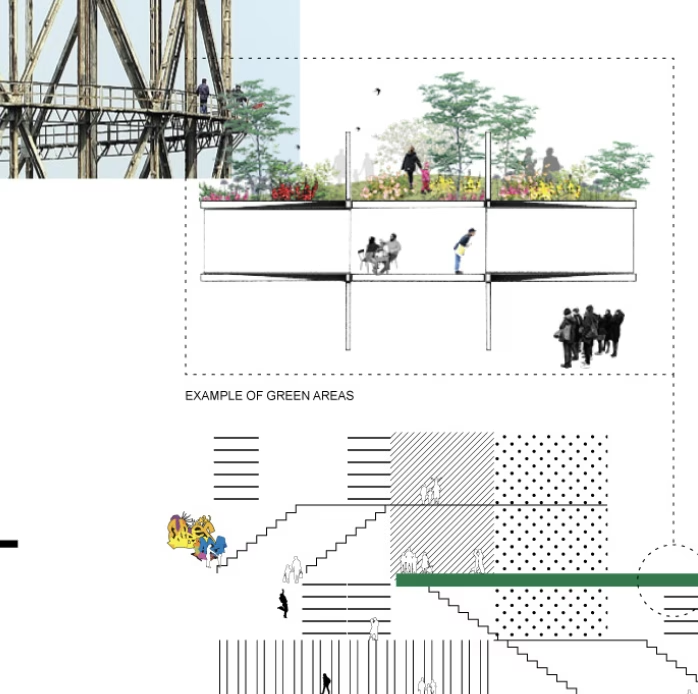
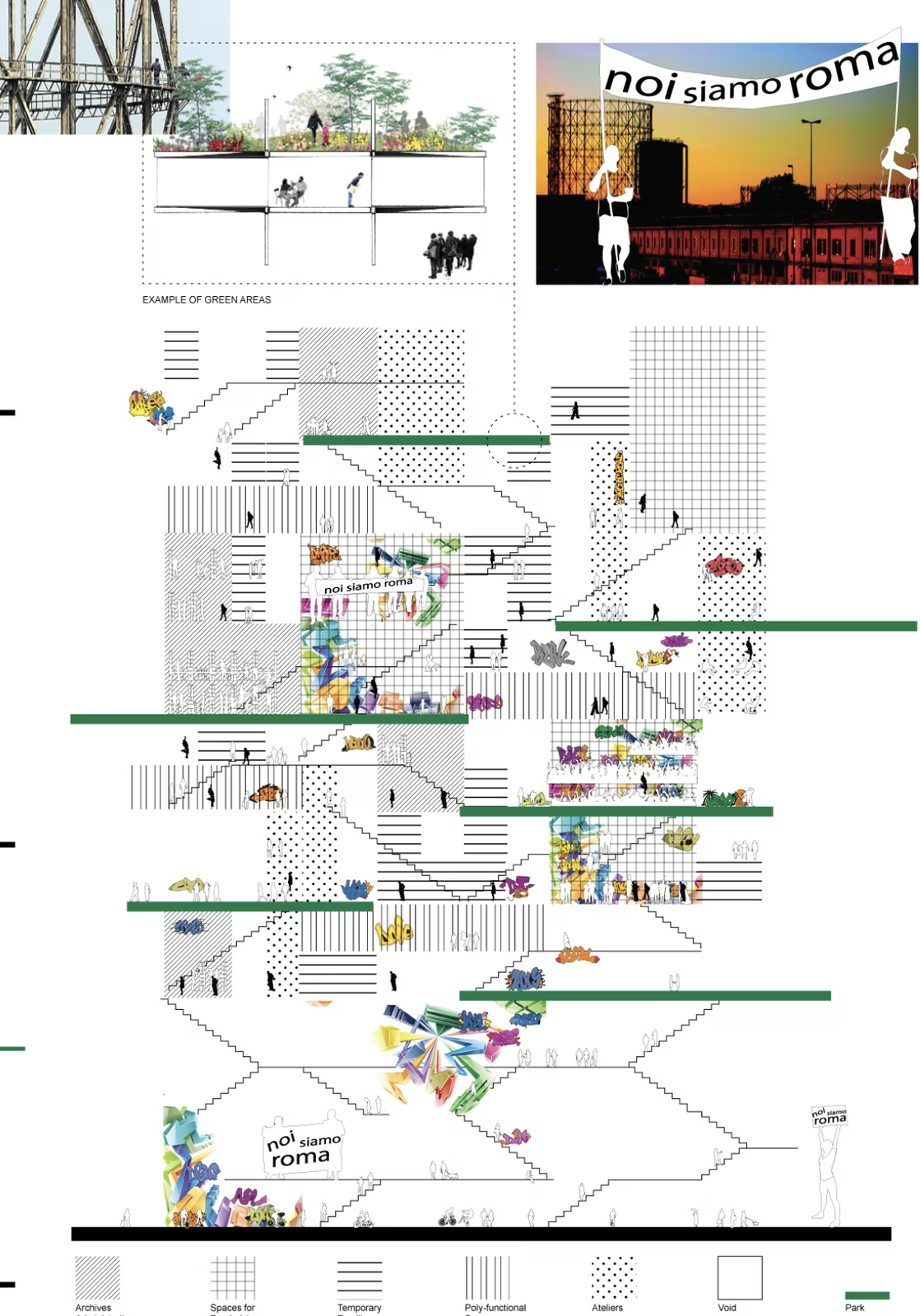
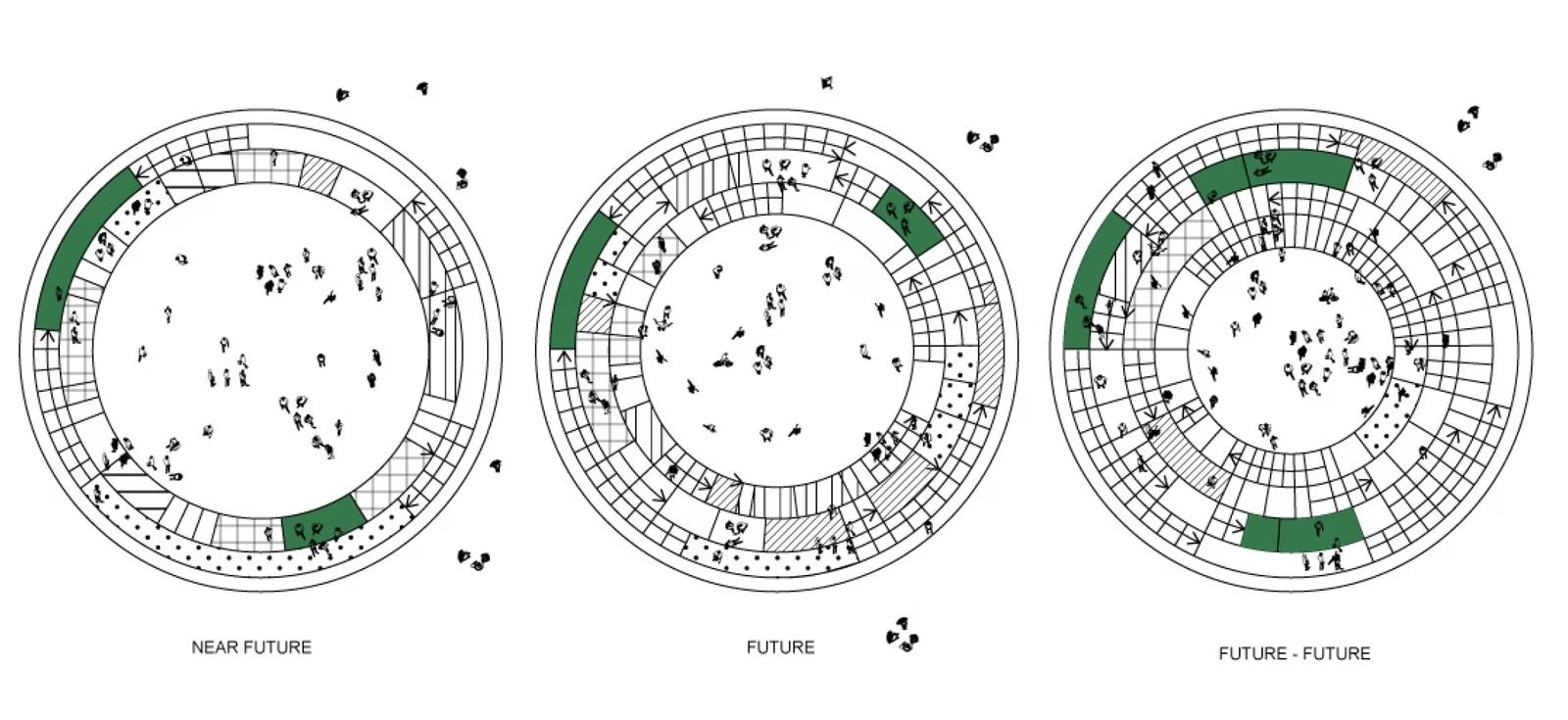
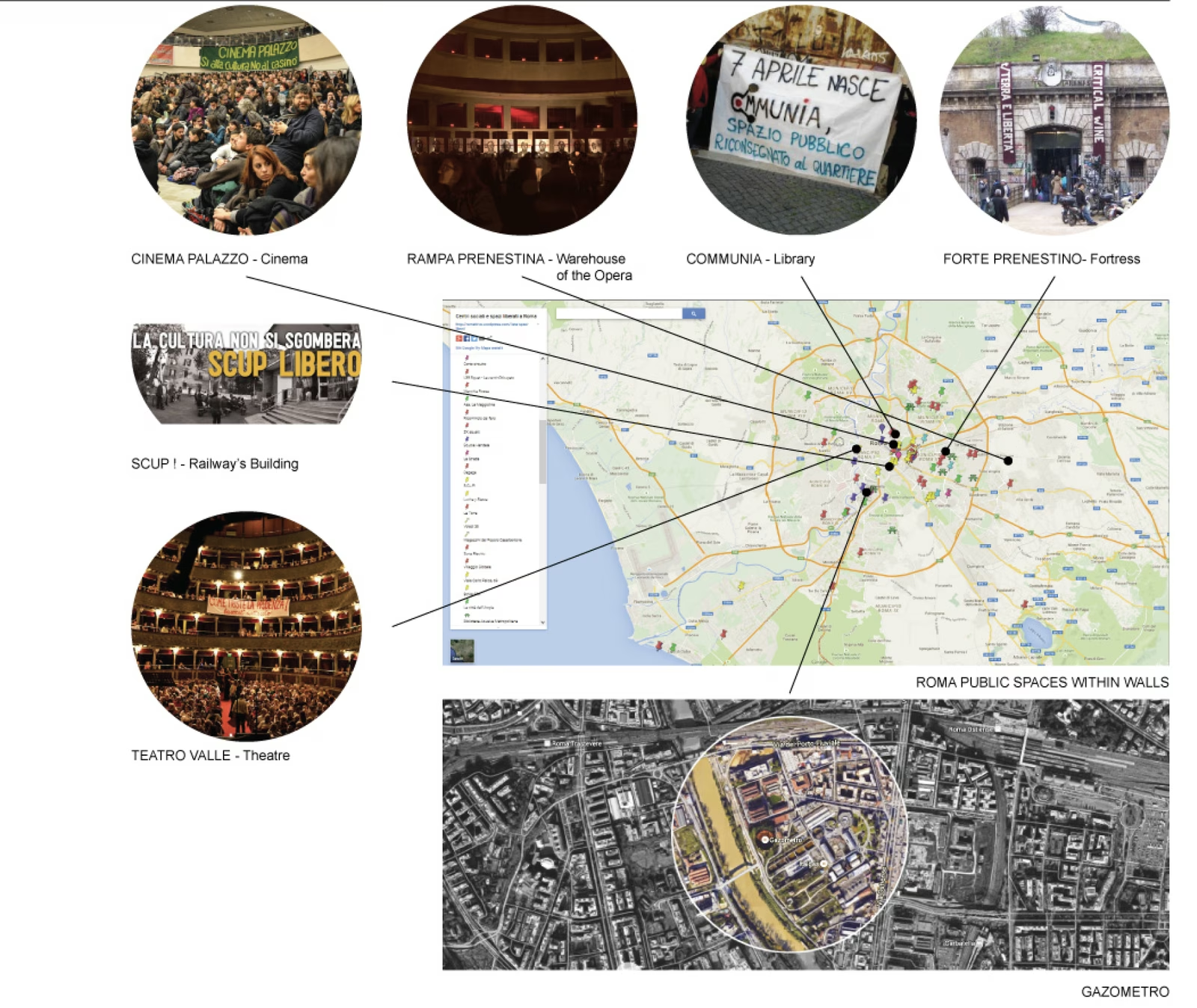
THE OPEN SPACE OF ROM WITHIN WALLS HOW DOES IT WORK? Meanwhile, many discuss what is 'OPEN SPACE' and / or 'PUBLIC SPACE'. Quoting thinkers such as Saskia Sassen, reminding us that public space is not just a space with public access. Public space has been meant since its genesis to be the space where citizens have a voice to speak up for their necessities and will. The space to practise rituals, discuss and provoke change - a space for exchange, EXCHANGE OF IDEOLOGIES, A SPACE OF CONFLICT. WHY THE GASOMETER? We agree with Tomaso Montanari that the Italian squares, the churches, the civic buildings are beautiful because they WERE BORN TO BE FOR EVERYBODY: THEIR FUNCTION WAS LETTING THE CITIZENS MEET AT AN EQUAL LEVEL. ACCESSIBLE FOR EVERYONE, TO TAKE OVER IT! The function and programme is based on an open hybrid space for many different users in form of lectures, concerts, working spaces, sports facilities, parties and many others. It is within the crossing of these different activities - INSCRIBED IN A DIRECT DEMOCRACY PROCESS - that eventually (counter)culture is produced.Noi Siamo Roma is a 2nd-round competition entry by UNO (Ulloa + Nocker) for the Think.Space European public space competition, selected from 400+ entries and exhibited in Rome and Zagreb in 2015. The project proposes the activation of Rome's 1937 Gasometer in the EUR district - a cylindrical industrial structure 63 metres high and 88 metres in diameter - as a citizen-programmed cultural commons. The programme is generated through direct democracy: citizens, not curators, determine what the space contains. Lectures, concerts, working spaces, sports facilities, and gatherings intersect in a space conceived as an open hybrid for the widest possible range of uses. Gasometer EUR, Rome. BfNA reading: this project is understood as a case study in movement, orientation, accessibility, safety, social mixing and collective behaviour. It extends beyond architectural production into environmental intelligence / how design decisions can support human adaptation, social responsibility, ecological performance and future evidence-based practice.
[Key Figures]
Typology: urban mixed-use · 2015 · ~30,000 m2 (Gasometer site, 1937) · Programme: public space + performances + archives + FabLab + temporary housing · 2nd round from 400+ international entries
No items found.
[Neural Analysis]
PALIMPSEST COGNITION: Rome is read as a layered memory system. Public space activates recognition and surprise through the collision of ancient trace and contemporary behaviour.
CIVIC AGENCY & MENTAL HEALTH [S1][S2]: Citizen participation in city-making activates the sense of agency - the opposite of learned helplessness (Seligman, 1975). Reducing feelings of powerlessness is a proven protective factor against depression (APA, 2018). MacKerron & Mourato (2013): social activities in shared spaces are among the highest positive-affect correlates [S1]. DEBATE & HIGHER COGNITION: Civic debate spaces activate prefrontal cortex (deliberation), anterior cingulate (conflict resolution), and mirror neurons (empathy) - the neural architecture of democracy. PUBLIC SPACE & STRESS [B5]: Gaekwad et al. (2023) meta-analysis: natural-feeling shared outdoor environments reduce physiological stress markers [B5]. The Gasometer's green inner courtyard adds biophilic restoration. CIVIC AGENCY & SELF-EFFICACY [S1][S2]: Seligman (1975, Helplessness): learned helplessness - feeling powerless over one's environment - is a primary driver of depression. Citizen participation in city-making directly activates self-efficacy (Bandura, 1997). A gasometer as democratically programmed cultural space is the spatial embodiment of agency. MacKerron & Mourato (2013): creative activities with others rank among the top 3 positive-affect activities. BfNA neural-sciences lens: the relevant question is not only how the project looks, but how it conditions movement, orientation, accessibility, safety, social mixing and collective behaviour over time, across different bodies, neurotypes and social realities.
[Social Impact]
SOCIAL: The project reclaims public space as a site of citizen agency rather than heritage consumption.
[ROI Sustainability]
ROI: Cultural and civic value emerge from reactivating underused spaces through low-resource public tactics.
ROI: Rome Gasometer (EUR district) is a major real estate opportunity; civic activation maximises long-term social capital value. SUSTAINABILITY: Reuse of existing 1937 gasometer structure avoids demolition - embodied carbon preserved. ADAPTIVE REUSE ROI: Gasometer conversion vs new construction: 50-70% embodied carbon saving (Italian Ministry of Culture, 2021). EUR district: prime Rome commercial rents €280-380/m2/yr. Cultural programming generates 200,000+ visitors/yr for comparable Italian venues. ESG / investment lens: the value of this project is not limited to carbon or certification. It includes public value, climate adaptation, inclusion and civic resilience, producing evidence that can inform investors, public actors, operators and future environmental standards.
[Applied R&D Lens]
Map historical traces against contemporary pedestrian use, attention points and civic appropriation.
The Gasometer is a civic agency activation opportunity of extraordinary scale. BfNA's Applied R&D would deploy Bandura's self-efficacy measurement framework across the citizen-programming community - tracking changes in perceived agency, depression screening scores, and social cohesion indicators from programme invitation through first activation and into sustained use. The participatory programming process is the independent variable; the neural health of the participating community is the dependent variable. Direct democracy as architecture. Architecture as antidepressant. The Gasometer as the measurement laboratory for both propositions simultaneously.Future data layer: deployed through BfNA, the project could become a longitudinal dataset linking environmental conditions, behavioural patterns, social outcomes and ecological performance / transforming built space into knowledge for future design.
Citations:
Sources: MacKerron & Mourato (2013) Psychol. Sci. · Seligman (1975) Helplessness · Bandura (1997) Self-Efficacy · Italian Ministry of Culture adaptive reuse guidelines (2021). · Derrida trace/différance; urban memory theory; Think.Space sources.
Copyright:
Project Credits: UNO = Ulloa + Clemens Nocker; Team: Ulloa + Clemens Nocker.Laura Role: Laura Ulloa - Project Leader / lead responsibility where documented in CV, office records or project archive.Image Credits: © Laura Ulloa / BfNA. Images and third-party material remain.Source: http://think-space.org / http://think-space.org/en/projects/think-public-space/?appNo=0000702379.Project Credits & Copyright Notice: Every effort has been made to identify and acknowledge architects, consultants, collaborators, photographers, visualisation studios and other contributors associated with each project. Project descriptions have been rewritten and curated by Bureau for Neural Architecture (BfNA). Architectural works, photographs, renderings, drawings, trademarks and visual material remain the property of their respective authors, studios, photographers, visualisation teams and rights holders. Contributors are credited wherever information is available. Rights remain with their respective authors and rights holders.
© 2026 Bureau for Neural Architecture. Developed by Cavolo Studio.
Privacy Policy & Legal Notice
