


Directed by Laura Ulloa, BfNA explores and designs for the reciprocal dynamics between environments, cognition and collective adaptation.

Tetti per Tutti - Europan / San Donà di Piave
masterplan + mixed-use therapeutic
San Donà di Piave
Italy
SM+ (Paris / Berlin)
Competition Entry
Tetti per Tutti / masterplan + mixed-use therapeutic
[Summary]
A therapeutic civic hub for children on the autism spectrum, elderly people with dementia and all generations / housing, care, farming, water, movement and public life as body-mind infrastructure.
[Team]
SM+ (Paris / Berlin) - Europan competition team
[Temporal Arc]
Immediate (noise reduction) · Circadian (daylight across day) · Chronic (allostatic load reduction across tenure)
[Direction of Effect]
RESTORE (noise and allostatic load) · REGULATE (thermal and acoustic) · ENCOUNTER (shared roof as daily commons)
[Neural Tags]
A3 = Acoustic comfort zone · L5 = Light equity · S1 = Social contact activation · T1 = Indoor air quality
[Biological System]
Allostasis · HPA axis regulation · Autonomic regulation · Molecular signalling (cortisol)
[Description]
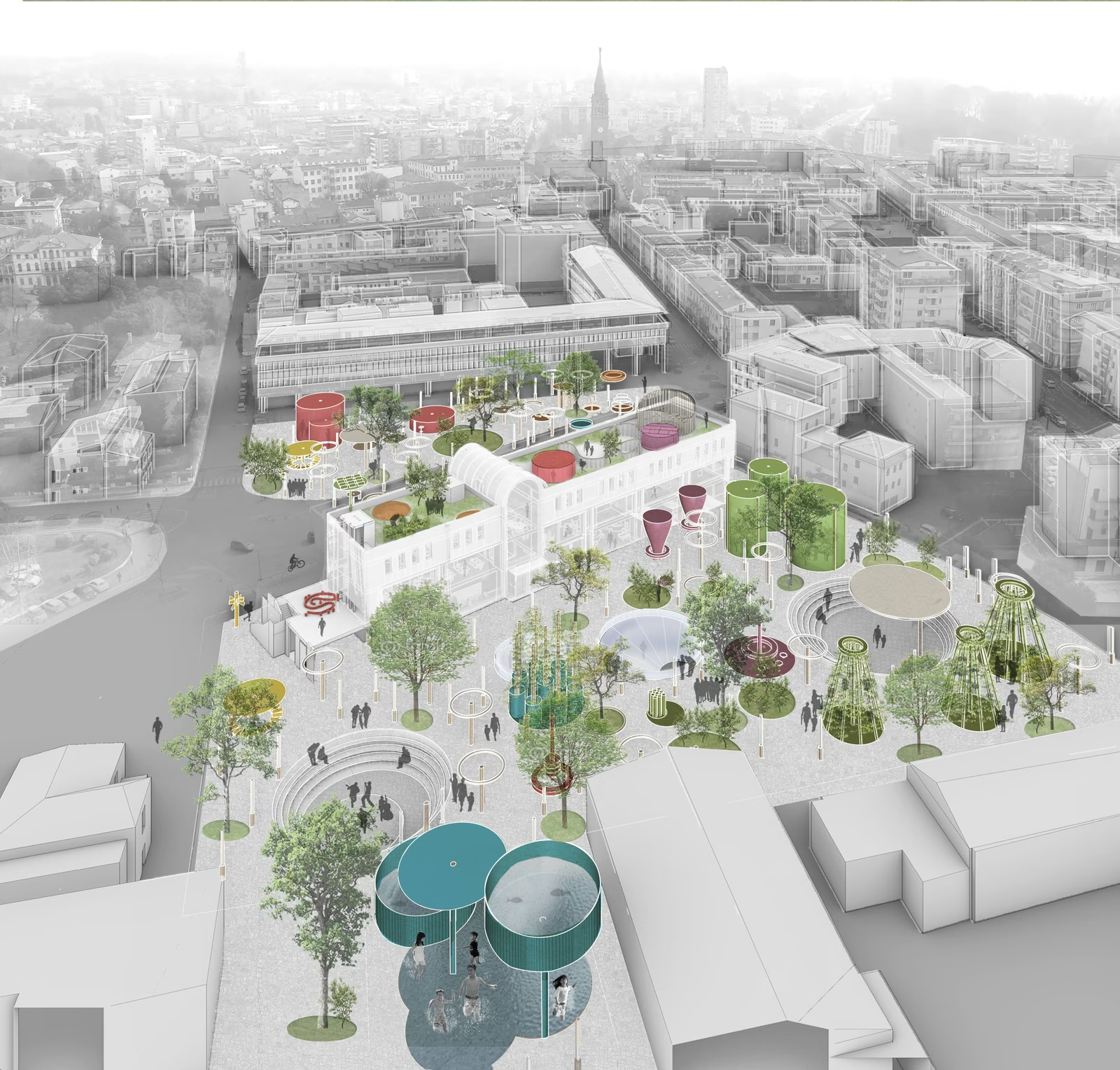
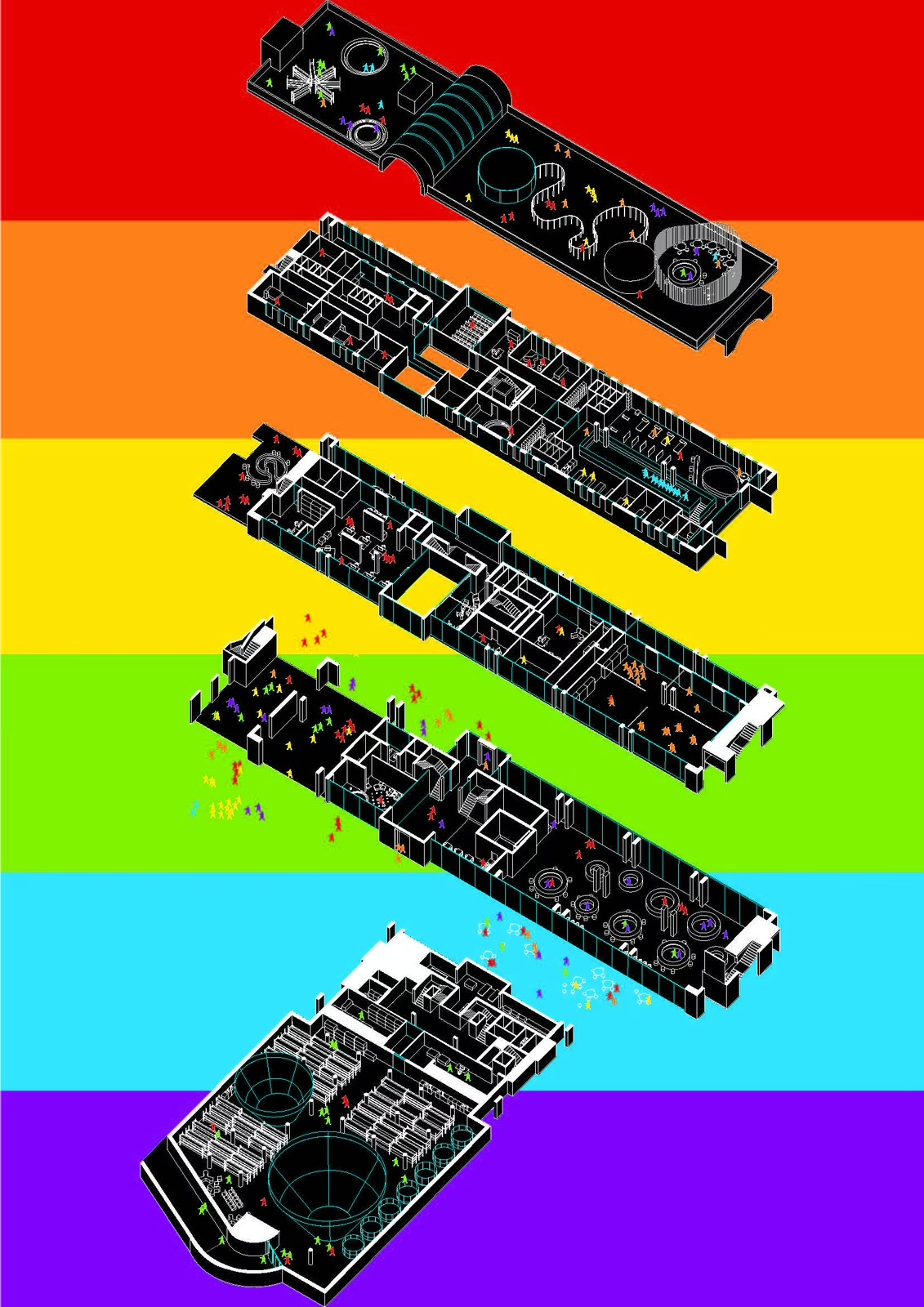
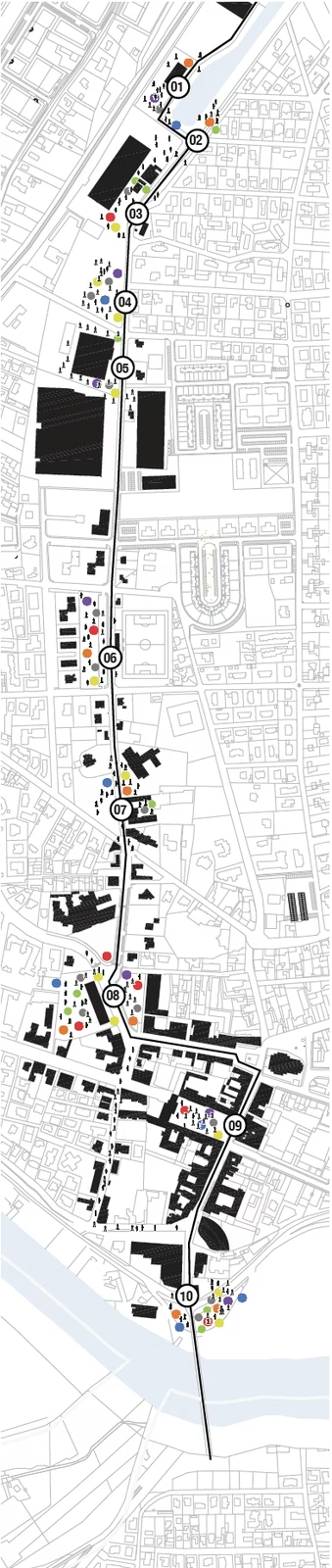
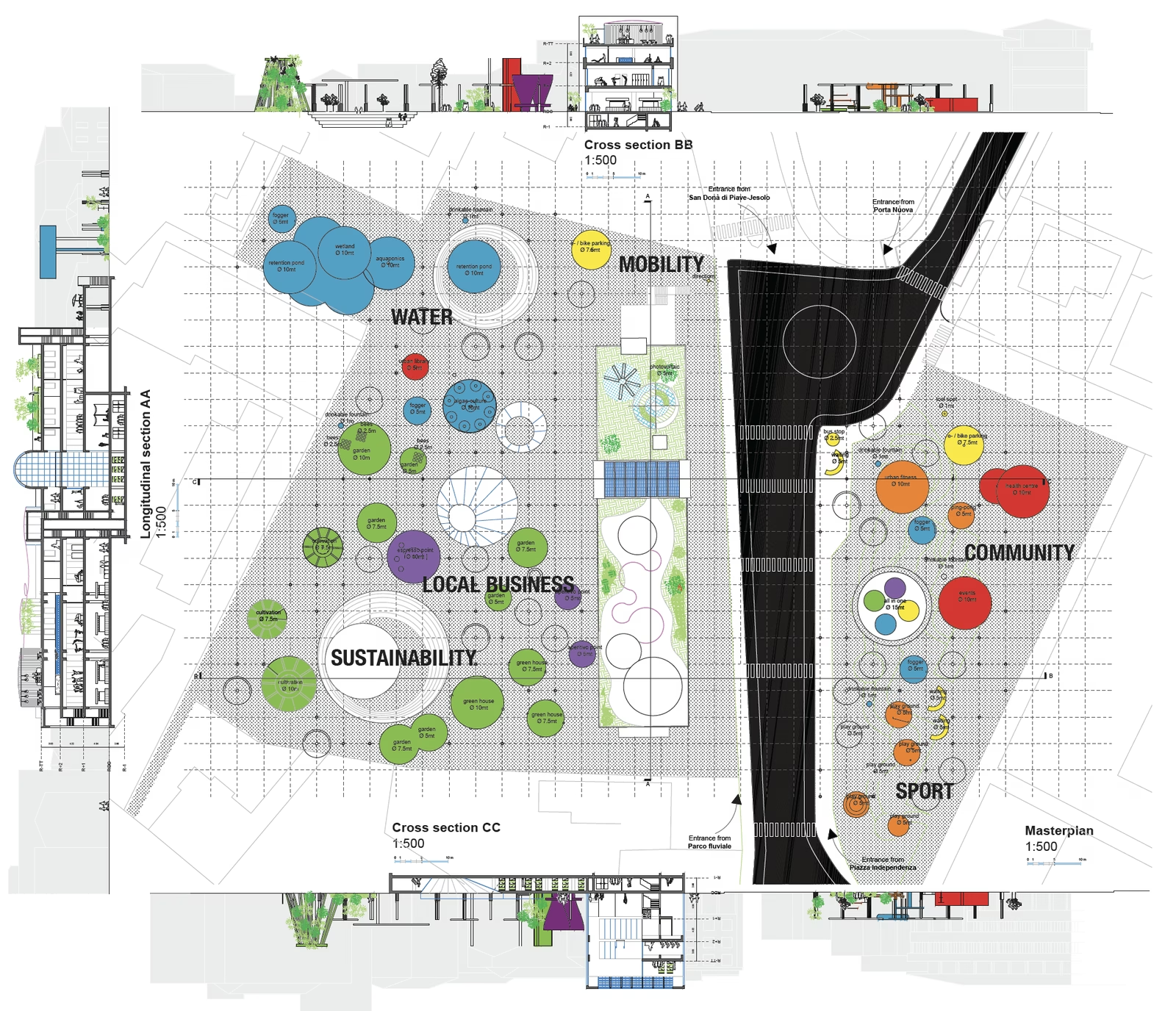
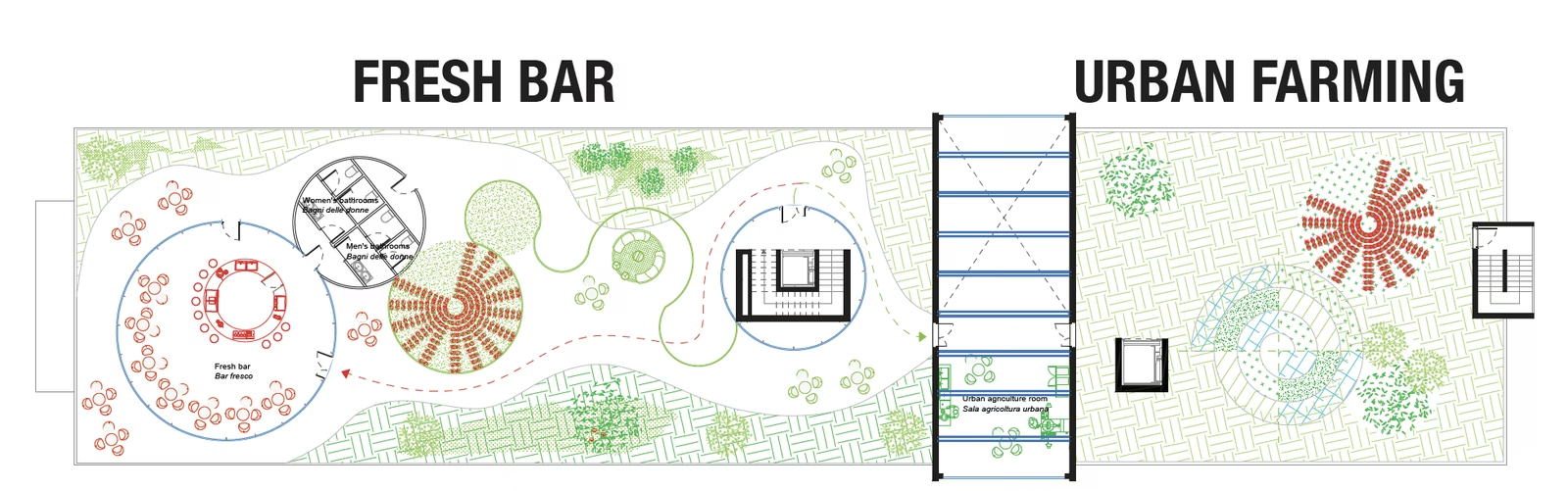
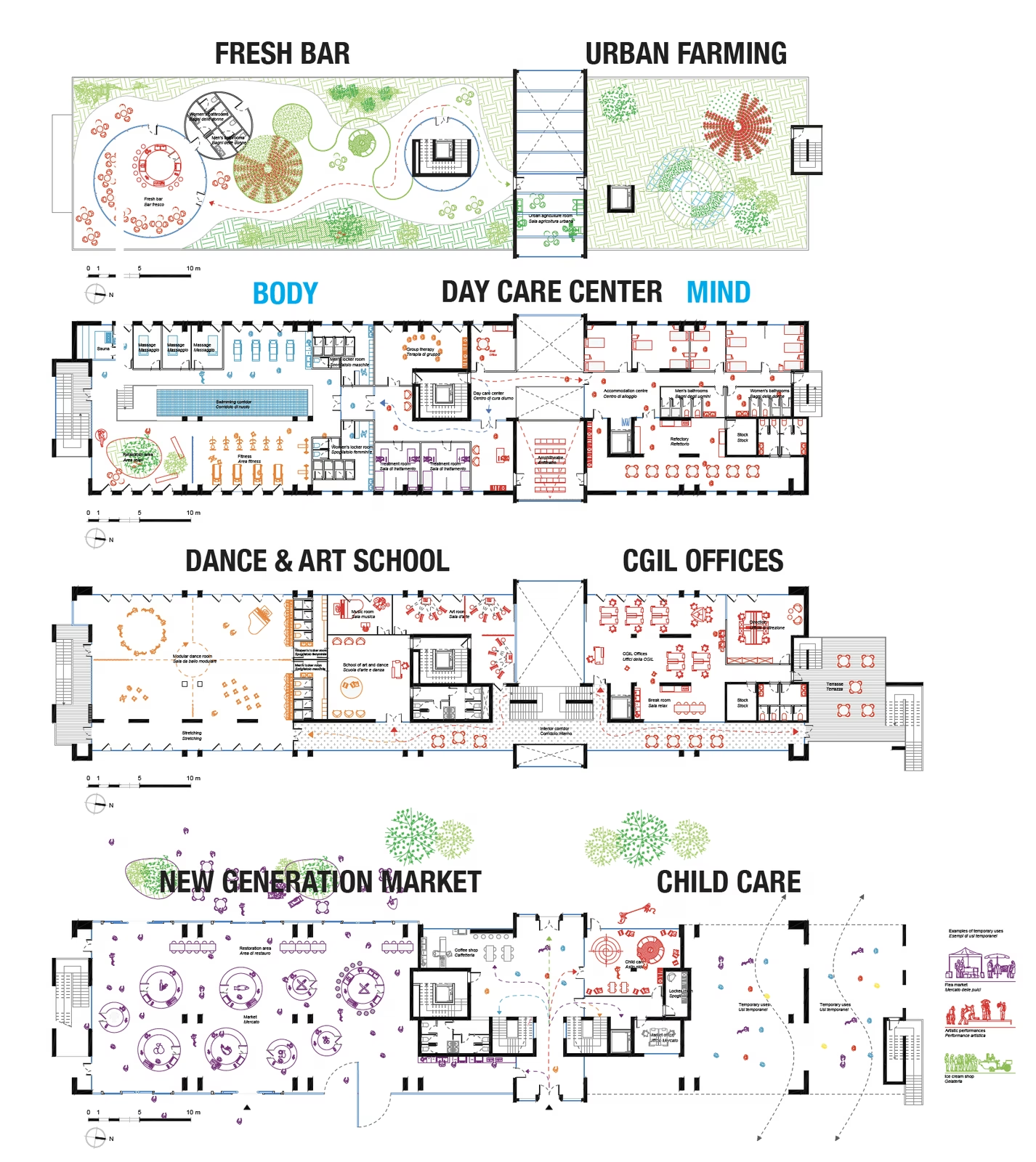
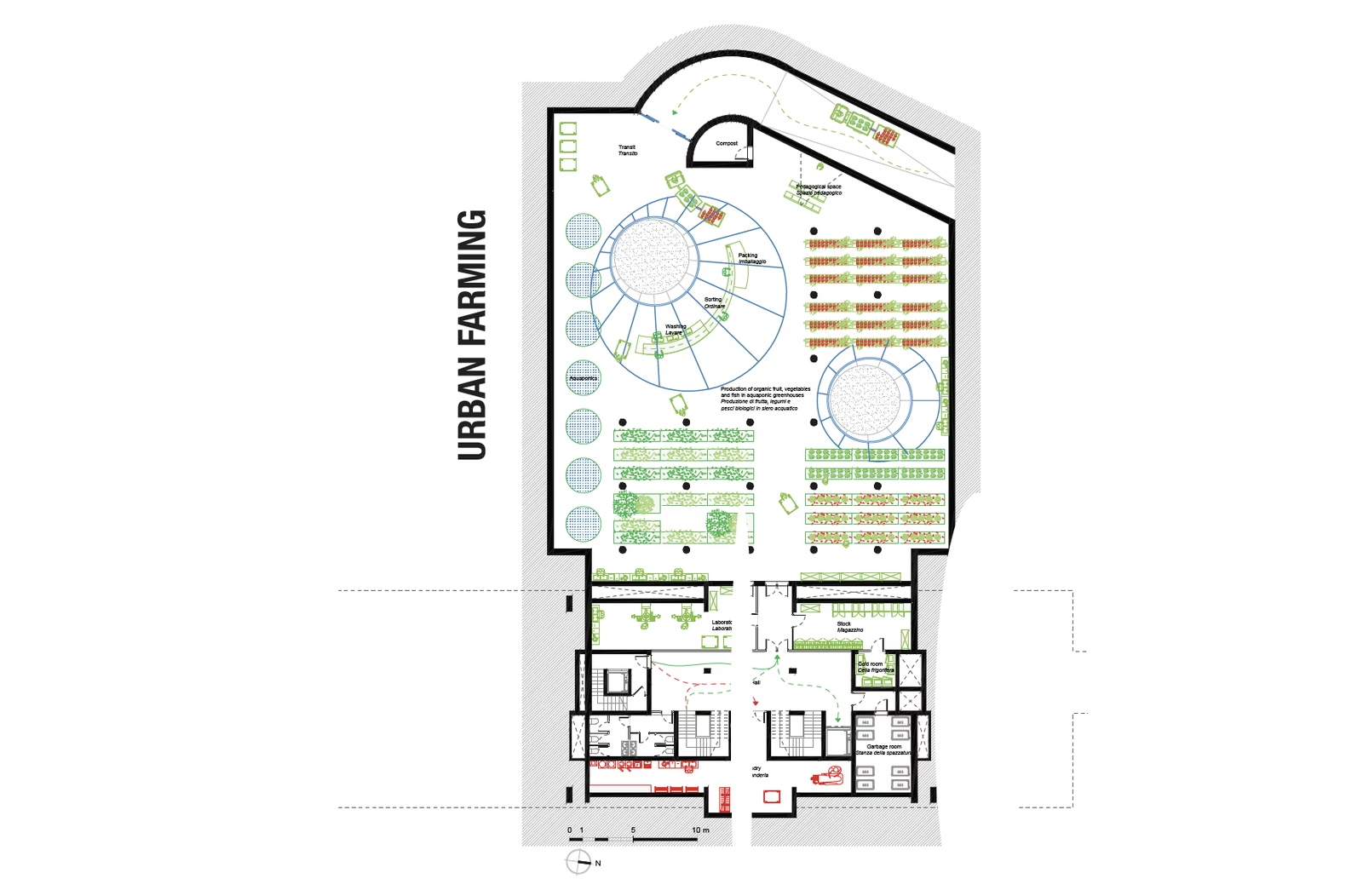
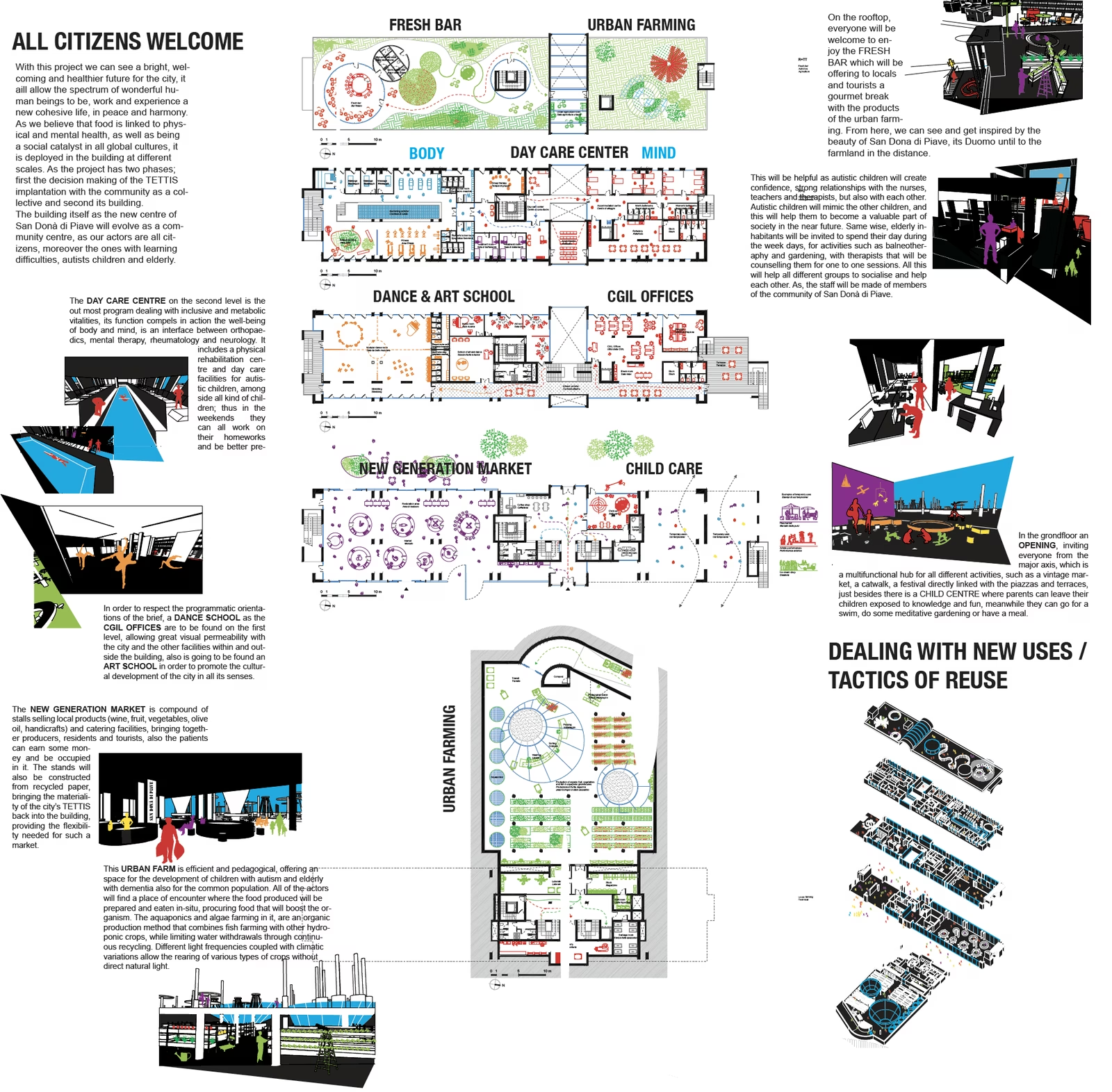
Tetti per Tutti (Roofs for All) is an Europan proposal for San Donà di Piave organised as a therapeutic, inclusive and metabolic civic centre. It combines affordable housing, child care, dance and art school, CGIL offices, a new-generation market, urban farming, aquaponics, day care, rehabilitation, group therapy, balneotherapy, gardening, public piazzas, roof farming and lightweight recyclable Tettis across the city. Its central question is not public space as image, but public space as body-mind support: how autistic children, elderly people with dementia, carers, residents, producers and visitors may share routines, movement, food, water, play and care without being segregated.
[Key Figures]
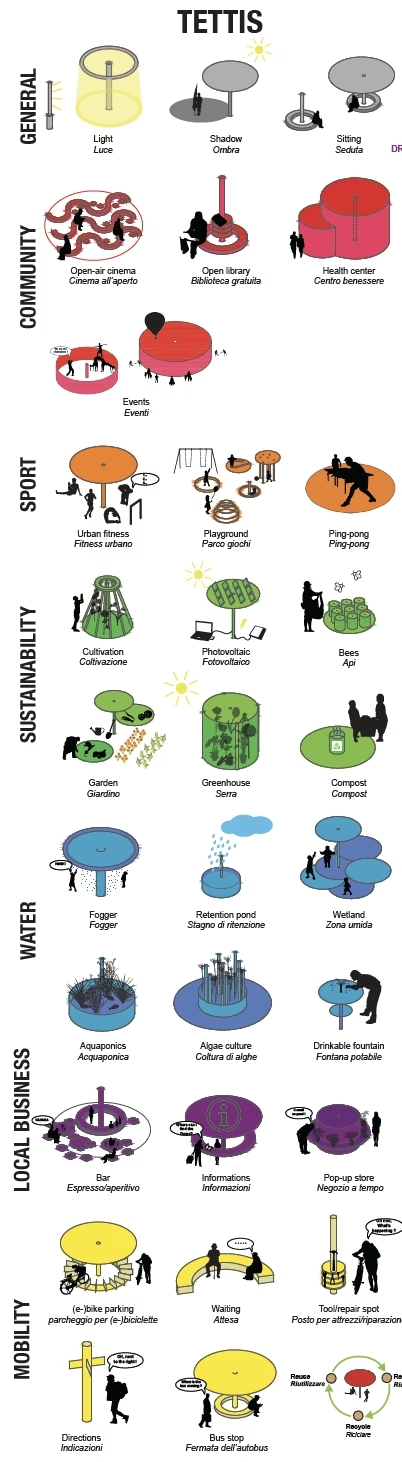
Typology: masterplan + mixed-use therapeutic · Europan proposal · San Donà di Piave · Programmes: affordable housing, day-care, rehabilitation, group therapy, dance and art school, CGIL offices, new-generation market, child care, urban farming, aquaponics, public piazzas, lightweight recyclable Tettis, water/play/fitness/community infrastructure.


No items found.
[Neural Analysis]
THERAPEUTIC CIVIC METABOLISM: Tetti per Tutti is read through body-mind regulation rather than decorative public space. The project combines predictable routines, shared food production, water play, gardening, movement, group therapy and day-care environments for autistic children and elderly people with dementia. Its neural question concerns how spatial legibility, acoustic moderation, social thresholds and metabolic programmes can reduce overload while supporting autonomy, imitation, co-presence and intergenerational care.
NEURODIVERSE + DEMENTIA SUPPORT [A3][S1][T1][B3]: The proposal can be connected to research on autism-friendly spatial predictability, sensory load management and dementia-supportive environments. The Tettis operate as low-cost affordance devices - shade, sitting, orientation, water, play, food, repair, exercise - while the ATVO building gathers care, movement and food systems into daily ritual. The key is not stimulation for its own sake, but calibrated environmental choice: retreat, participation, repetition, social contact and bodily movement.
[Social Impact]
SOCIAL: The project centres children on the autism spectrum, elderly people with dementia, carers, residents, producers and visitors within the same civic ecology. It refuses segregation by distributing care through ordinary programmes: market, child care, urban farming, day care, art, dance, water and public sport.
[ROI Sustainability]
ROI: Low-cost recyclable structures and adaptive reuse of the ATVO building create high social utility with limited material intensity. The value lies in avoided segregation, shared services, local food systems, circular material tactics and increased daily use of public infrastructure.
ROI: The project links social value to spatial adaptability: one civic framework hosts care, education, market, farming, rehabilitation and public life. Future HEI-style evaluation could quantify dwell time, perceived safety, caregiver burden, acoustic exposure, thermal comfort ranges and participation across age and neurodiversity.
[Applied R&D Lens]
Map sensory load, route legibility, retreat zones, gardening routines, water/play areas and group-therapy spaces against observed behaviour, caregiver feedback and neurodiverse participation.
Use Tetti per Tutti as an applied R&D prototype for therapeutic civic infrastructure: test how modular urban devices, food systems, water, movement and predictable routines alter stress, imitation, attention and social participation across autism-spectrum and dementia-related conditions.
Citations:
Primary project source: Laura Ulloa portfolio, Tetti per Tutti boards; programme includes child care, day-care centre, therapy rooms, rehabilitation, urban farming, aquaponics and intergenerational public space. Scientific frame: Tola et al. (2021) on autism and built environment; Fleming et al. (2008/2010) on dementia design; Gibson (1979) on affordances; Friston (2010) on adaptive inference; Zeisel et al. (2003) on treatment effects of dementia care environments.
Copyright:
Project Credits: SM+ (Paris / Berlin); Team: SM+ (Paris / Berlin) - Europan competition team.Laura Role: Laura Ulloa - Project Leader / lead responsibility where documented in CV, office records or project archive.Image Credits: © Laura Ulloa / BfNA. Images and third-party material remain.Source: source to be confirmed.Project Credits & Copyright Notice: Every effort has been made to identify and acknowledge architects, consultants, collaborators, photographers, visualisation studios and other contributors associated with each project. Project descriptions have been rewritten and curated by Bureau for Neural Architecture (BfNA). Architectural works, photographs, renderings, drawings, trademarks and visual material remain the property of their respective authors, studios, photographers, visualisation teams and rights holders. Contributors are credited wherever information is available. Rights remain with their respective authors and rights holders.
© 2026 Bureau for Neural Architecture. Developed by Cavolo Studio.
Privacy Policy & Legal Notice
